If you're shopping for a new TV, chances are you're torn between the two most popular TV technologies today: OLED and QLED. Each has its pros and cons, but there are a few reasons you should choose a QLED TV.
OLED TV prices have come down over time, and the best QLED TVs can sometimes cost as much as OLED TVs. However, in our experience, QLED TVs come in so many different configurations that it’s often easy to find a budget option that still gives you a pretty good viewing experience. For example, Sony’s 65-inch OLED TV can cost upwards of $2,000, while LG’s 65-inch QLED TV can give you a very similar viewing experience for around $1,000.
Of course, if you want a TV that can produce the best possible picture quality, you'll want to go with OLED. But QLED TVs still win out if you're looking for a TV that balances features, performance, and affordability.
More choices
OLED has expanded its product range significantly in recent years, with more sizes and models, but the selection still lags far behind that of QLED. Although QLED technology hasn't been around for very long, it has quickly gained traction and is widely adopted by many manufacturers.
Whether you’re shopping in-store or online, you’ll find more QLED models available in a wider range of sizes, brands, and prices than OLED. This variety means it’s easier to find the TV that fits your living room and viewing needs if you choose QLED.
QLED TV is very bright
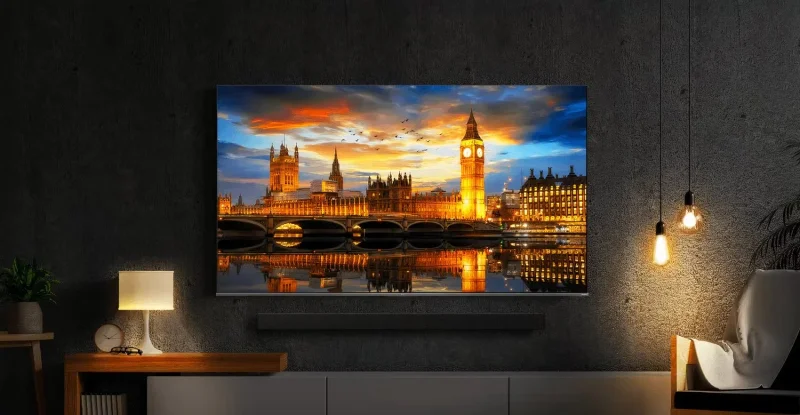
TCL QLED TV
While OLED TVs have better contrast, making images less washed out in dark areas of the screen, QLEDs are better for brightness. QLED TVs use a backlight to create brightness, rather than pixels to create light. These LED backlights produce incredibly bright images, which is great if you want to put your TV in a bright room or watch a lot of TV during the day.
OLED TVs, on the other hand, rely on light-emitting pixels to produce brightness, so even the best quality OLEDs can’t match QLEDs in terms of peak brightness. This isn’t usually an issue if you’re watching TV at night or in a dark room, but you’ll definitely want to consider this based on your viewing conditions in your home.
Less screen burn-in
Burn-in is a visible mark that forms on the screen when a static image is displayed for a long period of time. It most commonly occurs with channel logos. While all TVs are susceptible to burn-in, OLEDs are particularly susceptible. However, if you only watch TV for a few hours a day, it shouldn’t be a concern.
But if you think you and your family members might be streaming content or gaming most of the day, you're better off investing in a QLED TV that has better burn-in resistance.
Limitations of QLED TVs
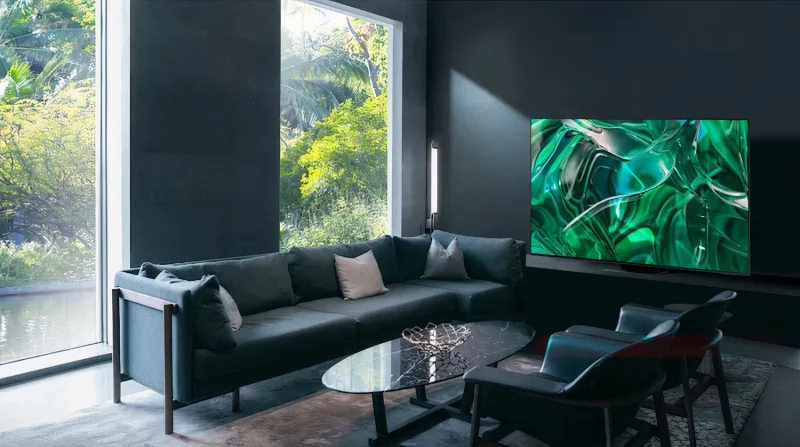
Samsung 55-inch OLED TV
While you probably won’t see yourself switching to an OLED TV anytime soon, it’s worth knowing that QLED TVs aren’t for everyone. QLEDs also have some drawbacks that can impact your viewing experience. For example, OLEDs are much more versatile than QLED TVs in terms of viewing angles. OLEDs are also more energy efficient than QLEDs.
Another area where OLED TVs win is the contrast they offer. OLED TVs can completely turn off unused pixels, greatly improving contrast and black levels. Even the best QLEDs can’t do this. You’ll notice this especially when watching movies or shows with lots of dark or high-contrast scenes. QLED TVs also have a faster response time than OLEDs, which can be important for gamers.
Despite these limitations, as a casual viewer, QLED TVs will satisfy the needs of many people and people really won't be switching to OLED anytime soon.