

When to Start Decorating for Halloween in 2026

Use a simple 2026 Halloween decorating timeline for indoor décor, outdoor displays, and fresh pumpkins, with practical adjustments for weather and events.
Meta's new AI button is appearing in WhatsApp chats, offering a quick way to interact with its AI assistant. While it may seem useful, there are a few key reasons why many people choose not to use it.
Table of Contents
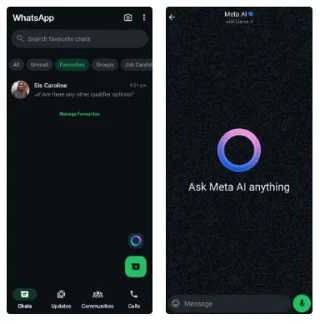
WhatsApp has always had a clean, simple interface: Just you, your chats, and a few simple tabs. That simplicity is part of what makes it so appealing, especially when compared to feature-rich messaging apps like Telegram . But with the introduction of the Meta AI button, things seem a little more complicated.
On Android and iOS, the Meta AI icon is visually distinct, drawing your attention with a light blue glow. It's not subtle, and if you don't want to use AI, it feels like an unnecessary addition that interrupts the flow of the app.
An extra button might not seem like a big deal. But these things add up and make a difference. The more features Meta has, the further WhatsApp moves away from the minimalist messaging tool many of us signed up for.
What really annoys people is that you can't remove the Meta AI button from WhatsApp, even if you never intend to use it.
There’s currently no official setting to hide or disable this feature. The button just exists, sitting there in the app whether you ask for it or not. And while you can ignore it, that doesn’t change the fact that it’s taking up space and attention in an app that once prioritized simplicity.
AI tools are absolutely worth supporting. But when something is added to the private messaging space without a clear choice, it feels more like a roadblock than a feature—and not a welcome one.
One of WhatsApp’s biggest strengths has always been its focus on human-to-human communication. You open the app, chat with family, friends, or a work group—that’s it. With Meta AI now embedded in the chat experience, that clarity begins to erode.
You can tag @Meta AI directly in group chats, just like tagging a friend. It even shows up in your contact list, which can be confusing to those who aren’t paying attention. While Meta has made an effort to make AI interactions look different, the fact remains: Bots are now part of conversations in places they weren’t before.
And that begs the question. Will future updates push Meta AI deeper into regular conversations? Will it start suggesting responses or displaying information without being asked? The integration may seem like a small step now, but it sets the stage for a more blended and potentially intrusive experience down the road.
Meta says your private WhatsApp messages are still end-to-end encrypted and the Meta AI can't access them unless you interact with it directly. That's good to know, but it doesn't mean no data is being collected.
If you chat with Meta AI on WhatsApp , Meta may use your prompts to train its models. This includes any information you enter when asking a question or creating a response. Even though the data is anonymized, it is still stored, analyzed, and used to improve Meta AI. You can reset your AI data, but that doesn’t prevent it from being collected in the future if you continue to use it.
Be wary of features that invite you to hand over more of your habits, preferences, or thoughts, especially when they’re tied to a company that already knows a lot about you. You don’t want your casual questions or writing experiments to become fuel for a bigger data engine.
There’s no shortage of AI tools out there — ChatGPT , Claude , Gemini , and countless others. The difference is that you can choose when and where to use them. If you want help writing an email, brainstorming an idea, or finding out the truth, you use them on their own terms. They don’t just insert themselves into the apps you use for private chats.
That's what's got people so concerned about Meta AI on WhatsApp. Not just because it exists — but because it's been introduced into a space where people expect personal, secure communication, and now we're being asked to adapt to it.
We shouldn’t be anti-AI. It’s just that people prefer tools that they can choose, with clearer controls and boundaries. Tools that aren’t built into the messaging platforms they rely on for real-life conversations.
Meta AI might be a great feature for some, but it’s a bit overkill for an app I use for personal chats. Thankfully, many other AI tools let you choose what you use and when. Until Meta offers more control, you’ll continue to enjoy the features you love on WhatsApp.
Use a simple 2026 Halloween decorating timeline for indoor décor, outdoor displays, and fresh pumpkins, with practical adjustments for weather and events.
Mix five vivid, approachable Halloween cocktails with measured recipes, simple prep tips, and an alcohol-free option for your party guests.
Find 15 office-friendly Halloween costume ideas for 2026, with practical checks for dress codes, respectful themes, comfort, and workplace safety.
Plan a fun elementary school Halloween party with easy crafts, games, inclusive treats, costume tips, and a sample 75-minute classroom schedule.
Compare realistic side hustles for 2026 by startup cost, fees, flexibility, and income control, with current tax and scam guidance from official sources.
Upgrade your home office ergonomics with current OSHA and NIOSH guidance on chair fit, monitor height, laptop setup, lighting, and movement.
Learn why emotional intelligence matters in leadership, where it helps most, how to strengthen it, and how to tell whether your approach is working.
A practical roadmap for moving into tech without a degree: choose an accessible role, build job-ready skills, prove them with projects, and use hiring feedback to improve.
Build a credible LinkedIn personal brand in 2026 with current profile, content, newsletter, analytics, verification, and visibility guidance from LinkedIn.
Quiet quitting and quiet firing are catchy labels, not diagnoses. Learn what is verified, what depends on context, and what employees and managers can do next.








