
VEC Voting: How to Find a Voting Center in Victoria | Nov. 28, 2026
Find a VEC voting center in Victoria, check its address and accessibility, and confirm hours. Election-day centers closed at 6 p.m. AEDT on Nov. 28, 2026.
Information checked: November 28, 2026, 10:08 UTC.
If a pharmacy offers a different version of your prescription, ask exactly what is changing before you take it: the name or manufacturer, the active ingredient, the strength, the form, or the dose. A new-looking box can contain the same medicine, but a different medicine or release type may require a prescriber’s review. Ask the pharmacist to explain the difference and confirm how to take the item you will receive.
For many medicines, a generic or another brand contains the same active ingredient. In some cases, however, the brand or formulation matters. If the pharmacy says the change is due to a shortage, ask whether a Serious Shortage Protocol (SSP) applies and whether the proposed alternative is covered by it. Do not guess from the package appearance or change your dose yourself.

Start by asking the pharmacist to compare the medicine offered with the one you expected. Ask: “Is this the same active ingredient and strength? Is the form the same, and is it immediate-release or modified-release?” You can also ask whether it is a different manufacturer or brand only, or whether the medicine itself is different.
The NHS explains that medicines may have a generic name, which identifies the active ingredient, and one or more brand names. If a prescription is written by generic name, the pharmacist may be able to dispense a suitable generic or branded product. If it is prescribed by brand in primary care, the NHS Specialist Pharmacy Service says the specified brand is generally required unless an SSP is in place.
A change in appearance alone does not prove that the medicine has changed. But do not rely on appearance to identify it. Compare the pharmacy label and patient leaflet, and ask the pharmacist to check anything you cannot match.
Some medicines need consistent products because brands can differ in how the medicine is absorbed or released. The NHS Specialist Pharmacy Service lists examples where brand prescribing may be important, including lithium, ciclosporin, carbamazepine for epilepsy, some modified-release medicines, and biologic medicines such as insulin. This is not a complete list, and it does not mean every person taking one of these medicines can never switch. It means you should ask the pharmacist to check the specific prescription and the reason for any change.
If you use an inhaler, injection, patch, liquid, or a modified-release tablet, ask whether the device, technique, timing, or dose schedule changes. Tell the pharmacist about allergies or intolerances that could affect you, difficulty swallowing, or any previous problem after a medicine change. Ask whether you need to finish your current pack first or use both packs in a particular way. Do not combine old and new products unless the pharmacist or prescriber clearly tells you to.
A pharmacy may not have a medicine in stock even when there is no prolonged national shortage. UK government guidance notes that pharmacies have different suppliers and that a temporary local supply problem does not necessarily mean the medicine is unavailable everywhere.
Ask: “Is this a local stock issue or a wider shortage? Can you check another pharmacy? Can you contact my prescriber about another suitable brand or medicine?” Government best-practice guidance describes contacting the prescriber and checking another pharmacy as options when the medicine cannot be supplied promptly and no SSP enables an alternative.
In England, an SSP is a specific authorization for a named medicine or appliance during a serious shortage. NHS Business Services Authority guidance says the pharmacist must use professional judgment to decide whether the protocol’s specified alternative is appropriate, and the patient must agree to that alternative for that dispensing month. Ask the pharmacist to identify the protocol and explain its instructions. If you do not agree, say so and ask what other safe route is available; the pharmacist may need to refer the issue to your prescriber. Shortage arrangements are devolved, so ask your local pharmacy or health service which process applies in Scotland, Wales, or Northern Ireland.
Have the pharmacist review the label with you. Confirm the medicine name, strength, dosage form, amount supplied, dose, timing, and whether the course or repeat schedule has changed. Ask whether you need to make any change to your medication list or tell another clinician who helps manage your medicines.
If the substitution is approved, keep the new packaging and leaflet, and write down the product name if you track medicines at home. If the label conflicts with what the pharmacist told you, pause and ask for clarification before taking the first dose. If you are close to running out, tell the pharmacist how many doses remain and ask for a plan that avoids an unplanned gap. Do not stop a prescribed medicine or take a different dose on your own while waiting for an answer.
If the proposed product is not clear to you, a useful sentence is: “Please show me what is the same, what is different, and what I should do next if I do not want this option.” You can also ask the pharmacist to document the advice or to contact the prescriber. The aim is to leave knowing what you are taking, why the product changed, and whom to contact if a problem arises.
Often, when the prescription is written by generic name and the product is suitable. Some prescriptions specify a brand for clinical reasons. In primary care, brand-specific prescriptions are generally dispensed as written unless an applicable SSP allows a defined alternative.
For an SSP supply in England, the patient must agree to the alternative for that dispensing month. If you do not agree, tell the pharmacist and ask them to discuss another option, such as contacting your prescriber or checking another pharmacy.
Ask the pharmacist to confirm the active ingredient, strength, form, and directions against your prescription. Different packaging or appearance can reflect another manufacturer, but appearance alone cannot confirm that the medicine is right for you.
Sources: NHS: Medicines information; NHS Specialist Pharmacy Service: Prescribing by generic or brand name; NHS Business Services Authority: Serious Shortage Protocols; GOV.UK: Best-practice guidance on medicine supply.
Find a VEC voting center in Victoria, check its address and accessibility, and confirm hours. Election-day centers closed at 6 p.m. AEDT on Nov. 28, 2026.

A practical guide to Jess Wilson’s Liberal–National platform, the PBO costings, late policy changes, and how the pledges compare with Labor.

Learn where to find official U.S. election results, how to read precinct reporting, and why a live lead or media projection is not a certified result.

Find the verified kickoff, venue, time-zone conversion, official live match center, viewing links, and Gosford travel guidance for Central Coast Mariners vs Auckland FC.

Australia led Colombia 3–1 around the 61st minute in Canberra. Here is the match context, key players, broadcast information and the Geelong rematch date.

Learn when UK pharmacists can supply a different brand or medicine, how Serious Shortage Protocols work, and what the Nov. 28, 2026 plans mean today.

Portland beat Golden State 116–94 in the NBA Cup. Find the official final score, box score, play-by-play and Australian replay options.
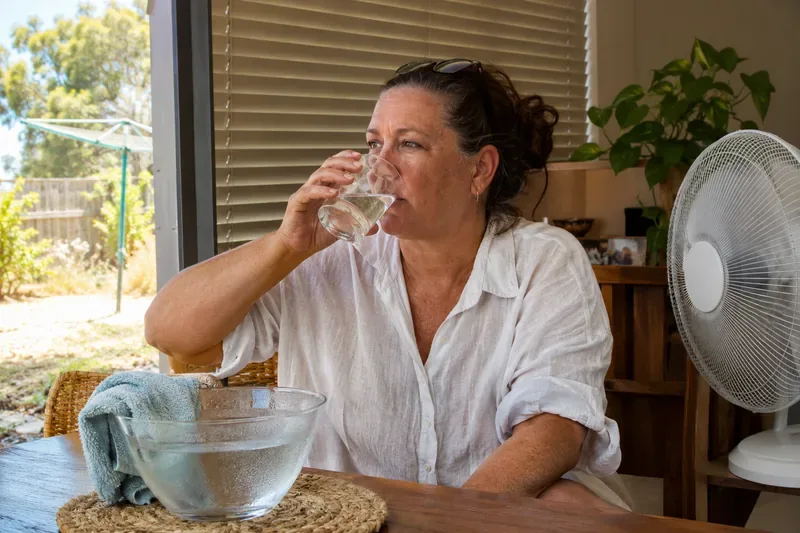
Stay safer during hot weather with practical heatwave tips: hydrate, cool your home, protect at-risk people, and recognize heat exhaustion and heatstroke.

The Spurs beat the Lakers 99–96 in San Antonio. See where to track NBA scores, box scores, game updates, and Australian tipoff times.