How to Turn Off Auto-Upload on Xbox to Protect Your Account (Nov. 21, 2026)
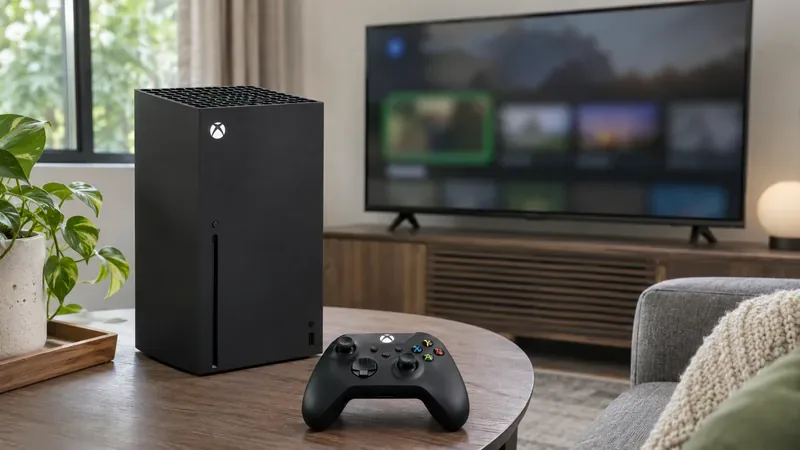
Worried about GTA VI capture reports? Turn off Xbox Network and OneDrive auto-uploads, review existing clips, and learn how to check an enforcement.
Checked: November 20, 2026, 8:16 a.m. Sydney time (AEDT, UTC+11:00; November 19, 2026, 9:16 p.m. UTC).
Australia’s storage build-out is moving from project pipeline to construction and operation. AGL said on November 18 that the first 100 battery units had been installed at its 500-megawatt (MW) Tomago Battery in the Hunter Region of New South Wales, a four-hour project still targeted for completion in late 2027. The milestone arrives as grid-scale batteries take a larger role in shifting daytime solar into evening demand, while the Australian Energy Market Operator (AEMO) reports a record connection pipeline led by batteries.
The shift is measurable, but a long list of proposed projects is not the same as capacity already supplying electricity. The clearest near-term story is twofold: newly operating assets such as NSW’s Waratah Super Battery are adding grid support now, and major projects including Tomago are still being built. Meanwhile, solar output and battery dispatch are changing wholesale market patterns, though those changes do not guarantee lower retail bills for every household.
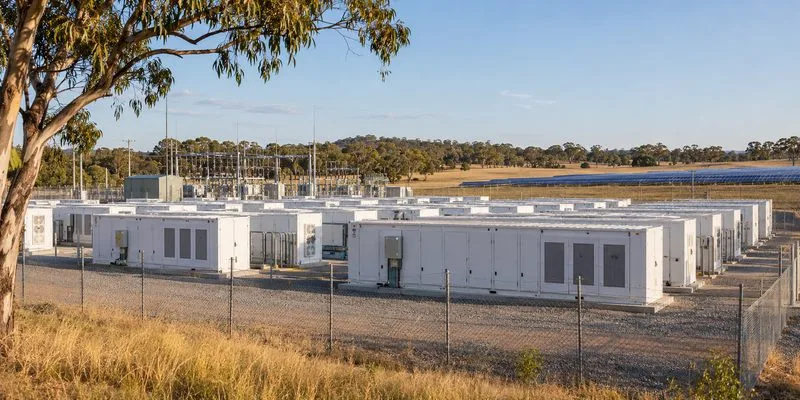
AGL’s November 18 update makes Tomago the newest significant construction milestone in this snapshot. The company says the first 100 of more than 400 battery units are now installed at the 500 MW site. Foundations are in place, work on the substation is advanced, the first of two main transformers has arrived, and crews are installing cabling and inverters. Construction began in December 2025, with more than 200 workers on site, and AGL says the project remains on track for late 2027 completion.
At four hours of storage, the project’s nameplate energy capacity is 2,000 megawatt-hours (MWh), or 2 gigawatt-hours (GWh). In simple terms, that is the amount it could deliver at 500 MW for four hours under its stated design. Actual dispatch depends on operating conditions, market instructions, and the energy available to charge it. AGL says the NSW Government awarded the project underwriting support through its Long-Term Energy Service Agreement scheme in May 2026.
For a project already moving into operations, NSW announced on September 28 that the Waratah Super Battery at the former Munmorah power station had received AEMO approval to operate at full capacity. The state describes it as combining large-scale storage, advanced control systems, and existing transmission lines to support system security while enabling more renewable energy. That approval is a concrete operational step, rather than a forecast based on a development pipeline.
AEMO’s latest Quarterly Energy Dynamics report, covering the September quarter of 2026, found renewable generation supplied a record 44.3% of output in the eastern and southern National Electricity Market (NEM). Grid-scale solar generation increased 30% year over year, while energy shifted by grid-scale batteries more than tripled. Batteries supplied 8% of NEM generation during the evening peak window, 4 p.m. to 9 p.m.; gas supplied 5.1%.
The report also recorded average NEM wholesale electricity prices of A$63 per megawatt-hour, down 27% year over year and the lowest September-quarter average since 2021. AEMO said increased battery charging and discharging contributed to lower evening peak prices, with batteries setting prices in almost half of dispatch intervals, compared with 18% a year earlier. Wholesale prices are one input into retail prices, however, and this quarterly result is not a promise that all customers will see an immediate or identical bill reduction.
Australia’s grid is not one market. AEMO separately reported that in Western Australia’s Wholesale Electricity Market, battery charging doubled and discharging rose 98% year over year during the quarter, while average real-time prices also increased. That illustrates why the effect depends on regional conditions, generation availability, demand, and network constraints.
AEMO’s October 21 Connections Scorecard put generation and storage projects progressing through the NEM connection process at 80.9 GW, 43% more than a year earlier and above the then-current 77 GW capacity figure. Grid-scale batteries represented 55% of capacity in the end-to-end process, with hybrid solar-and-battery projects at 19%. In the September quarter alone, 19 of 25 new connection applications were for batteries, accounting for 5.8 GW, or 76% of new proposed capacity.
There is a growing emphasis on duration as well as headline power. AEMO said nearly 40% of battery projects in the pipeline could provide between three and 10 hours of storage. Longer discharge windows can be useful when renewable output is low for extended periods, but a project must still secure financing, complete connection and construction, and pass commissioning before it can contribute to the grid.
Government-backed hybrid development is another part of the picture. The federal Department of Climate Change, Energy, the Environment and Water lists 19 successful projects under Capacity Investment Scheme Tender 7, announced in May. They include Birriwa Solar in NSW, a 600 MW solar project paired with 2,400 MWh of storage, and Gunning Solar Farm Hybrid, a 290 MW project with 542 MWh of storage. These are supported projects, not a claim that the facilities are already operating.
For the next year, the useful indicators are project commissioning milestones, grid connection approvals, and actual battery dispatch during high-demand periods—not just the number of announced gigawatts. AEMO says 88% of the current NEM pipeline remains in early application or proponent-implementation stages. It also notes projects can face ownership changes, redesigns, and commercial delays. The pipeline signals investor interest, but it should not be read as a guaranteed delivery schedule.
Households with rooftop solar may also see more options as batteries and virtual power plants expand, but savings depend on a home’s usage, tariff, export rules, battery size, and participation terms. AEMO’s sample analysis found households with rooftop solar and batteries drew around three-quarters less electricity from the grid during evening peaks than solar-only homes. That is an observed comparison, not a universal bill-saving estimate.
Businesses with flexible demand may benefit from more storage competing to provide evening supply and grid services. Still, outcomes will vary across the NEM and Western Australia’s separate market. The reliable takeaway from the latest data is that solar is contributing more energy and batteries are increasingly shifting it across the day; the pace and consumer impact of the transition will depend on projects making it through to operation.
AGL reported on November 18, 2026, that the first 100 units had been installed at its 500 MW Tomago Battery in NSW. Completion is targeted for late 2027.
Yes. AEMO reported grid-scale batteries supplied 8% of NEM evening peak generation during the September quarter, compared with 5.1% from gas generation.
No. AEMO says most pipeline capacity remains at early stages, and projects can face connection, design, ownership, or commercial delays.
Sources: AGL’s Tomago Battery construction update; AEMO’s Connections Scorecard release; AEMO’s Q3 2026 market assessment; NSW Government’s Waratah Super Battery update; Australian Government’s closed CIS tender results.
Worried about GTA VI capture reports? Turn off Xbox Network and OneDrive auto-uploads, review existing clips, and learn how to check an enforcement.
An Xbox player reports a two-day suspension after an auto-uploaded GTA 6 clip. Here is what Xbox’s rules confirm, what remains unverified, and how to check an enforcement.
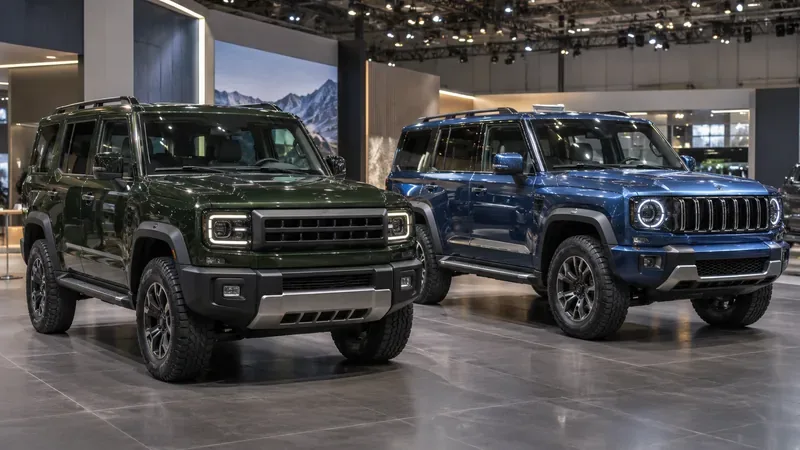
A Dutch court has barred BYD's Ti7 from EU trade over a Defender design right, but excluded BYD UK. Here's what the interim ruling means for UK buyers and EV markets.
Xbox players report suspensions after GTA 6 captures were auto-uploaded. Here’s what Xbox’s rules say, what remains unconfirmed and how to review your settings.
A Hague court ruled the BYD Ti7 infringes a JLR EU design and barred EU sales. Here is what the decision means for UK buyers and the case’s next steps.
A Dutch court has barred EU sales of BYD’s Ti7 over its resemblance to the Land Rover Defender. Here’s why JLR sued and what the ruling means for UK buyers.
SpaceX says Starshield has more than $6 billion in multiyear U.S. contracts. Recent Ukraine service disputes put reliability, control and oversight in focus.
Starshield is SpaceX’s government-focused satellite system for secure communications, Earth observation, and hosted payloads. Compare its mission, security, users, and public limits with Starlink.
Canada’s gas average reached 144.4¢/L on Nov. 20, about 27¢ lower than a month earlier. See what the drop may mean for commuters and household budgets.
SpaceX’s Starshield combines secure communications, sensing and hosted payloads. Here’s what recent U.S. space-network plans could mean for Canada and allied defence.