How to Turn Off Auto-Upload on Xbox to Protect Your Account (Nov. 21, 2026)
Worried about GTA VI capture reports? Turn off Xbox Network and OneDrive auto-uploads, review existing clips, and learn how to check an enforcement.
Information checked: Saturday, November 21, 2026, at 4:07 a.m. UTC. SpaceX describes Starshield as a government-focused satellite network built on Starlink technology and launch infrastructure, with three stated mission areas: Earth observation, secure communications, and hosted payloads. Starlink, by comparison, is the commercial low-Earth-orbit broadband service available to homes, businesses, and other customers, including in Canada.
The simplest distinction is purpose. Starlink connects customer terminals to internet service. Starshield is designed to support government and national-security missions that may involve communications, sensor data, or equipment hosted on satellites. Some technical foundations overlap, but Starshield is not simply a different name for a consumer Starlink subscription. Public materials do not reveal every customer configuration, satellite capability, or classified operating detail.

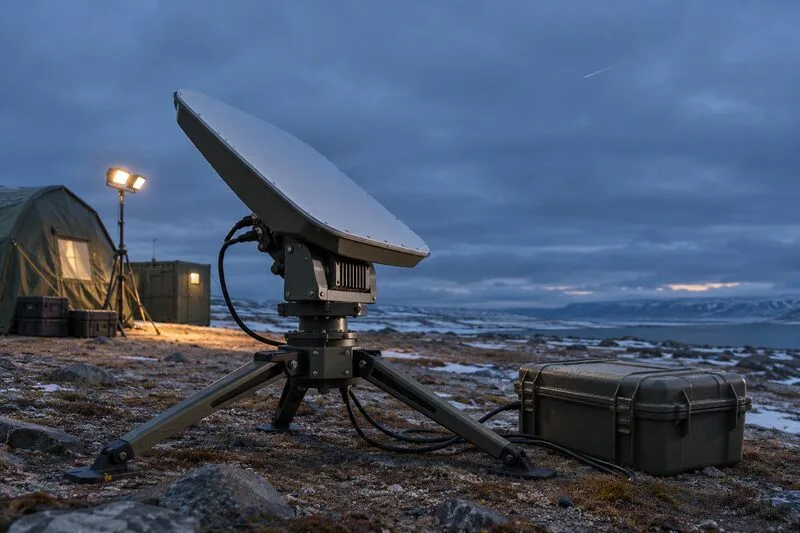
Starshield is SpaceX’s name for a secured satellite network and related space capabilities for government entities. SpaceX says the system leverages the technology, manufacturing, and launch capability behind Starlink, while tailoring its services and equipment for government missions. Its public description identifies three areas:
That list describes broad mission categories, not a full technical specification. SpaceX does not publicly disclose all Starshield satellites, their precise sensors, coverage schedules, encryption implementation, or customer tasking. Details may vary by contract and mission, and some are not public.
| Feature | Starlink | Starshield |
|---|---|---|
| Primary purpose | Commercial internet connectivity | Government and national-security space capabilities |
| Main public use | Broadband for homes, businesses, mobility, and some government users | Secure communications, Earth observation, and hosted payload missions |
| Customer access | Service plans and hardware offered through Starlink channels, subject to local availability | Government procurement and mission-specific arrangements |
| Security description | SpaceX says Starlink uses end-to-end user-data encryption | SpaceX says it adds high-assurance cryptographic capability for classified payloads and secure data processing |
The table reflects public-facing descriptions, not a claim that every Starlink and Starshield component is technically separate. SpaceX says that Starshield draws on Starlink technology and that Starlink laser communications terminals can be integrated with partner satellites. The networks can therefore share engineering, manufacturing, or communications elements while serving different users and requirements.
SpaceX publicly identifies Earth observation and sensing payloads as part of Starshield’s mission set. Separately, the U.S. National Reconnaissance Office (NRO) has described its own proliferated satellite architecture, intended to increase the number and diversity of satellites and improve the timeliness and resilience of intelligence collection. The NRO says its first launch in that architecture, NROL-146, took place on May 22, 2024, with SpaceX and the U.S. Space Force. Public announcements do not establish that every NRO satellite or mission is a Starshield spacecraft, nor do they disclose specific sensor performance or collection targets.
In other words, Starshield can support sensing and government data delivery, but claims about exactly what an individual satellite can see or monitor should not be inferred from the name alone. Reliable public information supports the broad mission description; operational details can remain classified.
SpaceX’s Starlink help guidance distinguishes ordinary commercial Starlink services from Starshield communications services. It says Starlink plans can serve civil-government users, including international civil-government agencies, while describing Starshield communications as designed for U.S. national-defense use cases for the Department of Defense and other government partners. SpaceX also points to U.S. government procurement channels for Starshield. This is not a statement that Canadian agencies can buy or use Starshield under the same terms. Prospective public-sector customers would need to confirm eligibility, procurement rules, security requirements, and availability directly with SpaceX and the relevant government authorities.
For Canadian households and businesses asking about satellite internet, Starlink is the publicly marketed product. SpaceX’s Canada site lists residential and roaming service plans, subject to coverage, service terms, and plan limitations. A customer should check the current Canadian availability map and service terms for their address rather than assuming a plan or performance level is offered everywhere.
Using a shared technology and launch base can reduce the time and cost required to develop and deploy space systems, while the larger low-Earth-orbit network concept can provide multiple communication paths. SpaceX describes its proliferated architecture as resilient and scalable. Those are company-stated design goals, not guarantees that a service will never experience outages, interference, cyber risk, or physical disruption.
For governments, the key difference is the mission package: dedicated equipment, higher-assurance security capabilities, contractual controls, and payload integration aimed at government needs. For an ordinary internet user, Starshield is not a consumer upgrade or a plan that can be selected in the Starlink app.
No. They share technology and launch infrastructure, but Starlink is commercial broadband and Starshield is designed for government and national-security missions.
SpaceX describes Starshield as a government-focused service, not a public consumer subscription. Commercial customers should look at Starlink plans.
SpaceX says Earth observation is one mission area, but public sources do not disclose every satellite’s sensors, tasking, or collection coverage.
Sources: SpaceX’s Starshield overview; Starlink guidance on government purchases; NRO’s NROL-146 mission page; Starlink Canada residential service.
Worried about GTA VI capture reports? Turn off Xbox Network and OneDrive auto-uploads, review existing clips, and learn how to check an enforcement.
An Xbox player reports a two-day suspension after an auto-uploaded GTA 6 clip. Here is what Xbox’s rules confirm, what remains unverified, and how to check an enforcement.
A Dutch court has barred BYD's Ti7 from EU trade over a Defender design right, but excluded BYD UK. Here's what the interim ruling means for UK buyers and EV markets.
Xbox players report suspensions after GTA 6 captures were auto-uploaded. Here’s what Xbox’s rules say, what remains unconfirmed and how to review your settings.
A Hague court ruled the BYD Ti7 infringes a JLR EU design and barred EU sales. Here is what the decision means for UK buyers and the case’s next steps.
A Dutch court has barred EU sales of BYD’s Ti7 over its resemblance to the Land Rover Defender. Here’s why JLR sued and what the ruling means for UK buyers.
SpaceX says Starshield has more than $6 billion in multiyear U.S. contracts. Recent Ukraine service disputes put reliability, control and oversight in focus.
Starshield is SpaceX’s government-focused satellite system for secure communications, Earth observation, and hosted payloads. Compare its mission, security, users, and public limits with Starlink.
Canada’s gas average reached 144.4¢/L on Nov. 20, about 27¢ lower than a month earlier. See what the drop may mean for commuters and household budgets.
SpaceX’s Starshield combines secure communications, sensing and hosted payloads. Here’s what recent U.S. space-network plans could mean for Canada and allied defence.