How to Turn Off Auto-Upload on Xbox to Protect Your Account (Nov. 21, 2026)

Worried about GTA VI capture reports? Turn off Xbox Network and OneDrive auto-uploads, review existing clips, and learn how to check an enforcement.
Updated: November 21, 2026, 5:05 a.m. CET (UTC+01:00)
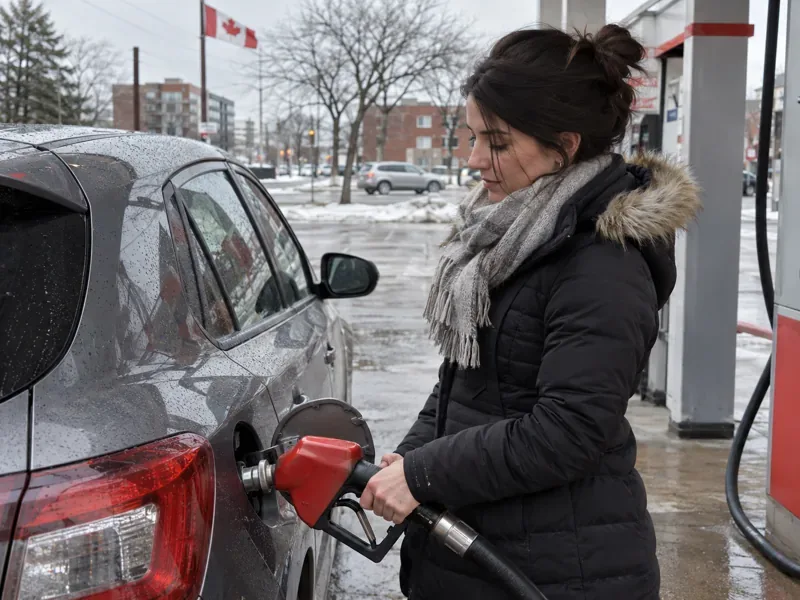
Lower pump prices are bringing measurable relief to Canadian drivers: the Canadian Automobile Association (CAA) recorded a national average of 144.4 cents per litre on November 20, its lowest reading in the previous month. That is about 27 cents below the level a month earlier. For a 50-litre fill, a driver paying the national average would spend roughly $13.50 less than at the higher price; a 60-litre fill would cost about $16.20 less. Actual prices vary by city, province, station and day. CAA’s national gas-price tracker
The savings matter most to commuters who drive often or have few practical alternatives to a car. But the drop does not mean every household will see a matching reduction in its total monthly bills, and it is no guarantee that prices will keep falling. Global oil supply has improved, while the federal excise-tax pause is also holding down the price drivers pay. Both conditions could change.
The simplest way to estimate the benefit is to multiply the price change by the number of litres purchased. A 27-cent drop saves $13.50 on 50 litres. Someone buying 50 litres every week would save about $54 over four weeks if the lower price held throughout that period. That is an illustration, not a promise: the CAA figure is a national average snapshot, and local prices may be higher or lower.
For a household budget, compare spending rather than assuming a fixed monthly saving. Check the price and litres on recent receipts, then compare them with the next few fill-ups. A commuter who drives a long distance, uses a less fuel-efficient vehicle or makes several weekly trips will generally feel a larger dollar effect than a household that fills up occasionally. These savings apply to gasoline purchases; they do not directly lower rent, utility bills or grocery prices.
Gasoline prices reflect several costs, including crude oil, refining, transportation, marketing and taxes. A shift in global crude supply can affect wholesale fuel costs, but it does not translate instantly or uniformly into every local pump price. The International Energy Agency’s November report says global oil supply rose in October and expects the market to move into surplus in the fourth quarter of 2026. That is a forecast based on current balances, not a guarantee of cheaper gasoline: disruptions to shipping, geopolitical events or refinery problems could change the picture. IEA Oil Market Report, November 2026
Tax policy is another part of the current price environment. The federal government says the gasoline excise tax is suspended through January 31, 2027. From February 1 through March 31, the scheduled rate is five cents per litre, before returning to the regular 10-cent rate on April 1. The federal pause has been in place since April 20, 2026, so it helps explain why the current pump price is lower than it would be with the full federal excise tax, but it does not by itself explain the latest month-to-month decline. Provincial taxes and sales taxes also differ across Canada. Department of Finance Canada: federal fuel excise tax relief
Lower gasoline prices can ease direct travel costs and may reduce some transport expenses for businesses, including delivery and freight. Any pass-through to prices on store shelves is uncertain and may take time. Fuel is only one cost among labour, rent, inputs and distribution, so a change at the pump should not be read as a forecast that grocery prices will fall by the same amount.
Statistics Canada reported that gasoline prices fell 2.5% month over month in October, while the year-over-year comparison was affected by the unusual movement in prices a year earlier. That shows why a recent decline and the broader cost-of-living picture can tell different stories. Statistics Canada, Consumer Price Index, October 2026
Drivers can use a few practical steps without assuming that today’s price will last. Compare nearby stations using a reliable price tracker, while accounting for the extra distance and time required to reach a cheaper pump. Combine errands and avoid unnecessary trips where feasible. Keep tyres properly inflated and follow the vehicle’s maintenance schedule; aggressive acceleration and excessive idling can use more fuel. For budget planning, treat the lower price as variable and avoid building a new recurring expense around a temporary saving.
Drivers should also look at their own consumption rather than only the sign at the station. A household can estimate fuel use from litres purchased and kilometres driven over several weeks. That makes it easier to see whether the price decline is actually reducing spending or whether additional driving is offsetting the per-litre savings.
The IEA’s projected supply surplus supports the possibility of continued pressure on oil prices, but its outlook depends on supply flows and demand assumptions. In Canada, regional refining capacity, seasonal fuel specifications, transportation and local competition also matter. The current federal excise-tax schedule means a portion of today’s relief is temporary: the rate is due to rise to five cents per litre in February, then return to 10 cents in April 2027. Other market moves could outweigh or offset that scheduled change. Drivers should plan using their local prices and treat further declines as uncertain.
CAA’s national average was 144.4 cents per litre. Local prices differ, and the figure is a dated national snapshot.
It saves about $13.50 on 50 litres or $16.20 on 60 litres, assuming the full price difference applies.
The scheduled rate is five cents per litre from February 1 to March 31, 2027, and the regular 10-cent rate returns April 1, 2027.
Worried about GTA VI capture reports? Turn off Xbox Network and OneDrive auto-uploads, review existing clips, and learn how to check an enforcement.
An Xbox player reports a two-day suspension after an auto-uploaded GTA 6 clip. Here is what Xbox’s rules confirm, what remains unverified, and how to check an enforcement.
A Dutch court has barred BYD's Ti7 from EU trade over a Defender design right, but excluded BYD UK. Here's what the interim ruling means for UK buyers and EV markets.
Xbox players report suspensions after GTA 6 captures were auto-uploaded. Here’s what Xbox’s rules say, what remains unconfirmed and how to review your settings.
A Hague court ruled the BYD Ti7 infringes a JLR EU design and barred EU sales. Here is what the decision means for UK buyers and the case’s next steps.
A Dutch court has barred EU sales of BYD’s Ti7 over its resemblance to the Land Rover Defender. Here’s why JLR sued and what the ruling means for UK buyers.
SpaceX says Starshield has more than $6 billion in multiyear U.S. contracts. Recent Ukraine service disputes put reliability, control and oversight in focus.
Starshield is SpaceX’s government-focused satellite system for secure communications, Earth observation, and hosted payloads. Compare its mission, security, users, and public limits with Starlink.
Canada’s gas average reached 144.4¢/L on Nov. 20, about 27¢ lower than a month earlier. See what the drop may mean for commuters and household budgets.
SpaceX’s Starshield combines secure communications, sensing and hosted payloads. Here’s what recent U.S. space-network plans could mean for Canada and allied defence.