Home
» Today
»
Bell Cyber Incident: Secure Your Account and Spot Scams | Nov. 23, 2026
Bell Cyber Incident: Secure Your Account and Spot Scams | Nov. 23, 2026
Updated: November 23, 2026, 3:14 p.m. EST (Toronto, UTC−05:00; 8:14 p.m. UTC). Bell’s public incident notice and current Canadian cybersecurity guidance were checked at this time.
Bell says an unknown party gained unauthorized access to an internal system on November 17, 2026, and that some customer personal information may have been involved. The company says the information may include names, mailing addresses, phone numbers, email addresses, account numbers, product details, business names and the date and amount of a customer’s last payment. Bell says credit card numbers and bank account information were not affected, the threat actor was removed, and customer services were not disrupted.
For customers, the immediate concern is the risk of convincing follow-up scams that use real account details. Bell says it is contacting affected residential and business customers directly, but anyone should verify messages through a trusted channel instead of clicking an unexpected link. The company has not stated on its notice how many customers were affected. Its listed brands include Bell, Bell Aliant, Bell MTS, Virgin Plus and Lucky Mobile.
Destaques
Check Bell’s official cyber notice and your account by opening Bell’s website or MyBell yourself, not through an unexpected message.
Bell says contact and account details may have been accessed; it says bank account and credit card numbers were not affected.
Use a unique MyBell password, review account activity, and never share a one-time verification code, password or PIN.
Call Bell Loss Prevention at 1-800-509-9904 immediately if you see unauthorized activity or suspect your SIM was compromised.
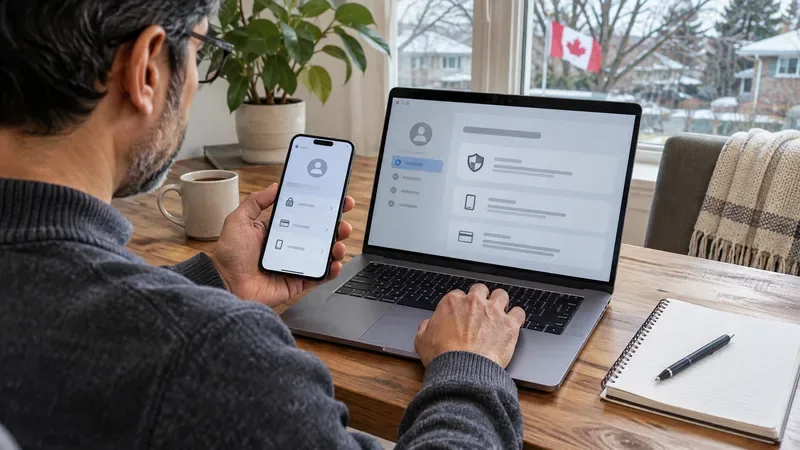
Illustrative image of a customer reviewing account security; it does not depict a Bell customer or the incident.
What happened in the Bell cyber incident?
Bell’s public cybersecurity notice says an unknown party accessed an internal Bell system on November 17. Bell says it removed the threat actor after discovering the incident, began emergency protocols and continues to monitor its systems. Bell also says its RCMP cybercrime unit has been engaged and that it will advise other regulators as required. The company says it will update its page if new information becomes available.
The scope described by Bell is personal contact and account information, not payment-card or banking details. That distinction matters: Bell says the latter sensitive financial information was not impacted, but contact and billing details can still help a scammer make a message or phone call sound legitimate. The Canadian Press reported that Bell identified residential and business customers across Bell and the related brands listed above. No public total for affected customers was given in the sources checked.
What should Bell customers do right now?
1. Confirm notices through Bell’s official channels
Do not use a link or phone number in a surprising text, email or call to check whether you are affected. Type Bell’s address into your browser or use the MyBell app you already have. Read the company’s incident notice and look for any direct notification in the account or contact details you normally use. Bell says it will contact affected customers directly; a message claiming to be that notice is not proof by itself.
2. Inspect MyBell for changes you did not make
Review your current services, account profile and recent bills or transactions. Watch for an unfamiliar new line, device upgrade, plan change, contact email or phone-number change. Bell specifically advises customers to monitor their accounts and report suspicious activity. If you find a change you did not authorize, contact Bell Loss Prevention at 1-800-509-9904. Bell also lists that number for customers who suspect a device or SIM card has been compromised.
3. Secure your password and verification methods
If your MyBell password is reused on another service, change it to a unique password or passphrase. Change it immediately if you see an unfamiliar login or account change, or if you entered it on a page reached from an unsolicited message. Bell says MyBell uses multi-factor authentication (MFA), sending one-time codes to contact details in the profile. Check that the email address and phone number on file are yours. Never tell a caller or texter a verification code, password or PIN; enter a code only into the MyBell sign-in or profile process you initiated.
4. Treat personalized messages as unverified
A message may include your name, phone number, Bell product or last payment amount and still be fraudulent. Bell says it will never contact customers to ask for bank account information, passwords or PINs. The Canadian Centre for Cyber Security warns that social-engineering attempts can use email, text, phone calls and impersonation, and can create urgent pressure. Do not open suspicious attachments, scan unexpected QR codes, or sign in through unsolicited links. Bell says suspicious emails appearing to come from Bell can be forwarded to phish@bell.ca; suspicious texts can be forwarded to 7726 (SPAM).
What if you clicked a link or shared information?
If you entered your Bell password, change it from the official MyBell site or app, and update it anywhere else you reused it. If you disclosed banking or payment information, contact your bank using the number on your card or its official app. If your phone unexpectedly loses service, or you receive an unrequested SIM or number-change notification, use another phone to contact Bell Loss Prevention promptly; tell them you suspect a SIM or account takeover and ask them to secure the account. Save suspicious messages and note the time and any changes you observe.
If you experience fraud or identity theft, report it to local police and the Canadian Anti-Fraud Centre. The Government of Canada’s cybercrime guidance also advises notifying your bank and credit-card providers if their accounts may be affected, and contacting credit-reporting agencies about a fraud alert when appropriate. These are precautionary steps for suspected misuse; Bell has said bank-account and card numbers were not accessed in this incident.
What is known—and what is not yet confirmed?
Bell’s notice confirms unauthorized access to an internal system on November 17 and names categories of information that may have been affected. Bell says it removed the actor, there has been no impact to customer services, and highly sensitive payment information was not involved. The investigation remains ongoing. The public notice does not provide an affected-customer count, explain how the intrusion occurred, or say that every Bell customer’s information was accessed. Do not assume that every customer was affected, but use the same caution with unexpected messages regardless.
Frequently asked questions
Do Bell customers need to change their passwords?
Bell has not instructed every customer to reset a password. Change yours if it is reused, you shared it, or you notice suspicious account activity; use a unique password and access MyBell directly.
Were bank or credit card details exposed?
Bell says bank account and credit card numbers were not impacted. It says contact and account information may have been involved.
Where should customers report suspicious Bell messages?
Bell says forward suspicious emails to phish@bell.ca and suspicious text messages to 7726. If your Bell account or SIM shows unauthorized activity, call Bell Loss Prevention at 1-800-509-9904.