Information checked: Monday, November 23, 2026, 9:48 a.m. Pacific Standard Time (UTC−08:00; 17:48 UTC), which was Tuesday, November 24, 2026, 4:48 a.m. Australian Eastern Daylight Time (UTC+11:00). The market figures below are earlier snapshots: New York at 11:36 a.m. Eastern Standard Time (UTC−05:00; 16:36 UTC) and noon EST (17:00 UTC; 4:00 a.m. AEDT on November 24). Trading was still underway.
NVDA stock rebounded sharply on November 23 after Nvidia announced that its board had reinstated Jensen Huang as president and CEO. Reuters reported Nvidia shares up about 33% at 11:36 a.m. New York time, while the Associated Press reported a 32.7% rise at noon. The news reversed a period of leadership uncertainty and helped lift other AI-linked shares and major U.S. indexes. It was a powerful single-session move, but it did not erase all of the prior week’s losses or establish a closing price.
The strongest explanation is a combination of a clear company-specific catalyst, relief buying after a steep sell-off, and a still-strong operating backdrop. Each factor has different evidentiary weight: Huang’s reinstatement is confirmed company news; the market’s reaction is observable; and claims about future AI demand or continued gains remain forecasts.
Destaques
Nvidia’s board reinstated Huang effective immediately on November 23; the independent board investigation it had announced earlier will continue.
At noon in New York, EST (UTC−05:00; 17:00 UTC), AP reported Nvidia up 32.7%, the S&P 500 up 5%, and the Nasdaq Composite up 6.8%.
Reuters reported that short sellers faced an estimated $12.2 billion in paper losses, but cited ORTEX data indicating only just over 1% of Nvidia’s float was short—evidence against describing the move as primarily a short squeeze.
Nvidia’s latest reported quarter included $107.6 billion in Data Center revenue, up 110% year over year; this supports the business backdrop but was not new information on November 23.
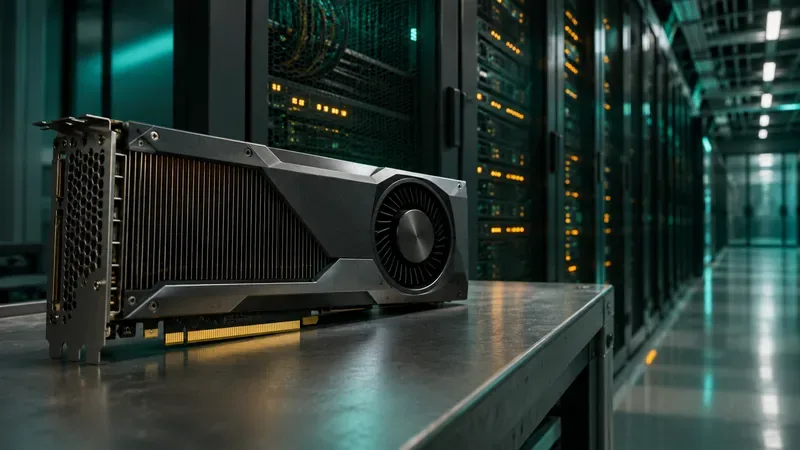
Illustrative image of graphics hardware in a technology lab. It is not a photograph of Nvidia products, facilities, or the November 23 trading session.
What triggered Nvidia’s November 23 rebound?
Nvidia’s official November 23 announcement said the board unanimously reinstated Huang as president, chief executive, and a board director, effective immediately. The company said the board had considered his candor and ability to lead. Nvidia also said its independent committee’s investigation into reports that Huang had been targeted by a foreign intelligence effort would continue. That makes the decision a verified governance development, while the investigation remains unresolved.
The timing offered investors a direct change from the leadership uncertainty that had weighed on the shares. AP reported that Nvidia had fallen nearly 23% during the previous week before the Monday surge. When a high-profile stock has already dropped sharply, investors who had reduced exposure may buy back shares after a major uncertainty appears to ease. That is a plausible market mechanism, not proof of what any specific investor did.
The gains spread beyond Nvidia. AP’s noon snapshot put the S&P 500 up 5%, the Nasdaq up 6.8%, and the Dow up 1,508 points, or 3.1%. The broad advance indicates that the move was part of a wider risk-on session, not just a change in Nvidia’s own quote. AP also reported that cloud-computing provider CoreWeave rose 23.5%, illustrating how investors connected Nvidia demand with companies that rent access to AI computing capacity.
Was the rally caused by a short squeeze?
Short covering may have added buying, but Reuters’ November 23 report cautioned against calling this primarily a short squeeze. Citing ORTEX estimates, Reuters said short sellers faced about $12.2 billion in paper losses at the reported share price. The same report said just over 1% of Nvidia’s float was short and quoted an ORTEX co-founder saying the move looked more like a reaction to the reinstatement news than a squeeze.
Those figures are estimates and snapshots, not audited company data. They help frame positioning but cannot identify every trade behind the rally. The simplest confirmed driver remains the announcement itself, amplified by the broader rebound after last week’s sell-off.
Do Nvidia’s earnings support the rebound?
The company’s fundamentals give investors a reason to keep watching its AI business, although the results were released six days before the rally. In its November 17 fiscal third-quarter report, Nvidia posted revenue of $115.8 billion, up 103% from a year earlier. Data Center revenue reached $107.6 billion, up 110% year over year. The company also forecast fiscal fourth-quarter revenue of $130 billion, plus or minus 3%, and said that forecast assumed no Data Center compute revenue from China.
These are reported results and company guidance, not evidence that Monday’s share move guarantees future growth. The quarterly release also notes that production and shipments of Vera Rubin NVL72 systems had begun. Investors may view that as evidence of product execution and a large installed demand pipeline. Whether demand can continue to absorb new capacity at attractive returns will depend on customers’ spending, deployment schedules, and revenue from AI services.
What could reverse the rally?
A sharp rebound does not settle continuing questions about AI-company valuations, data-center spending, financing costs, power requirements, or the pace at which customers can earn returns on expensive infrastructure. AP noted that AI stocks had experienced rapid reversals and that concerns about valuations, regulation, and borrowing costs remained. A later share-price decline would not by itself disprove demand; similarly, a large gain does not prove that every AI investment will pay off.
For Australian investors, NVDA is a U.S.-listed stock priced in U.S. dollars. A local portfolio’s Australian-dollar return can therefore differ from the share’s U.S.-dollar move because the exchange rate changes as well. The cited New York noon update occurred at 5:00 p.m. UTC on November 23, or 4:00 a.m. AEDT on November 24. That conversion helps explain why Australian readers may see the market development during their early morning, while the U.S. trading session is continuing.
What should investors watch after Nvidia’s rebound?
Check whether the gains hold beyond the initial response to Huang’s return, and compare Nvidia with semiconductor peers, cloud providers, and the broader Nasdaq. Then watch company disclosures: future revenue, Data Center growth, product shipments, customer commitments, and management’s guidance matter more to the operating case than a single day’s percentage move. The ongoing board investigation is another unresolved item, according to Nvidia’s announcement.
The verified conclusion is narrow but useful: Nvidia’s board reinstated its co-founder and CEO, and the share price and broader market rallied sharply in response. Strong recent Data Center results help explain why investors remain focused on Nvidia’s AI role, while the size of the rally also reflects relief after a volatile decline. Whether the rebound lasts will depend on future execution and the durability of customer demand, neither of which can be established by one trading session.
FAQ
Why is NVDA stock rebounding?
The immediate catalyst was Nvidia’s announcement that its board reinstated Jensen Huang as CEO. Relief buying after a steep decline and a broader market rebound also contributed to the session’s context.
Did short covering cause Nvidia’s rally?
It may have contributed, but Reuters cited ORTEX data showing just over 1% of Nvidia’s float was short, and reported that the move appeared more news-driven than a short squeeze.
Does the rally mean Nvidia’s AI demand is guaranteed to grow?
No. Nvidia’s latest results show strong reported Data Center revenue and its guidance points to continued growth, but future demand and customer returns remain uncertain.