How to Turn Off Auto-Upload on Xbox to Protect Your Account (Nov. 21, 2026)

Worried about GTA VI capture reports? Turn off Xbox Network and OneDrive auto-uploads, review existing clips, and learn how to check an enforcement.
Verified and updated: November 21, 2026, at 4:04 a.m. UTC.
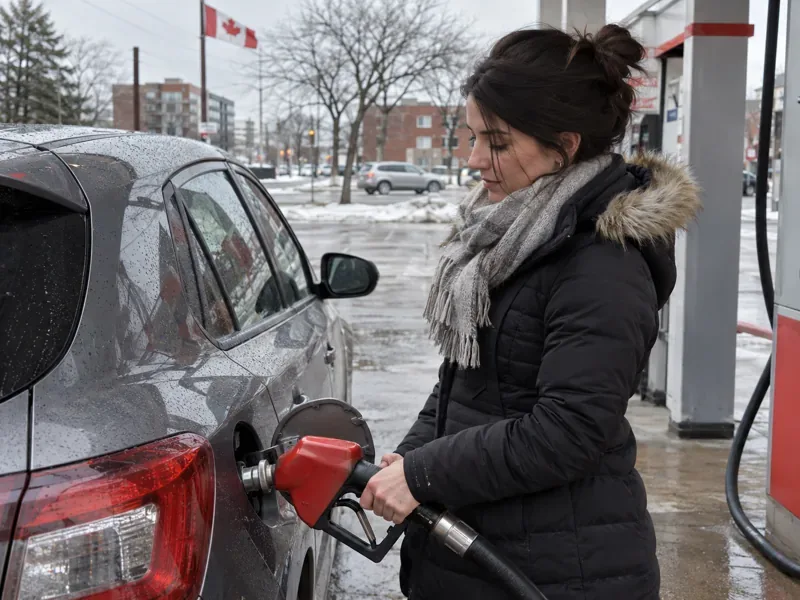
Canada’s average gasoline price has fallen sharply over the past month. The Canadian Automobile Association (CAA) reported a national average of 144.4¢ per litre on November 20, down 26.9¢ from 171.3¢ a month earlier and 5.5¢ from a week earlier. The decline is widespread enough to register in the national figure, but it does not mean every province, city or station has seen the same drop. The latest CAA reading remains 8.2¢/L above its year-earlier average.
The timing coincides with signs that global oil supply is recovering after a supply squeeze, while seasonal changes and movements in crude and refined-fuel markets also shape Canadian pump prices. The relief is real; how long it lasts is uncertain. CAA’s daily national price series and its explanation of price factors provide the latest figures and context.
CAA’s November 20 data places the national average at 144.4¢/L, compared with 149.9¢/L a week earlier and 171.3¢/L a month earlier. That is a month-over-month decrease of 26.9¢/L—close to the 25-to-30-cent range being discussed by drivers. The same series lists 136.2¢/L as the average a year ago, so the current reading is still higher on that comparison.
These figures are national averages, not a promise about the price at a particular pump. CAA says local prices can vary with fuel grade, taxes, competition, station size and location. Differences in regional supply and distribution also mean that the national change can conceal very different local experiences.
There is no single national switch that sets the retail price. CAA identifies crude-oil supply and demand, retail margins, seasonal shifts, weather, geopolitical conflict, reserve levels, refining capacity and the U.S. dollar among the factors that can move prices. A change in global oil markets can feed into wholesale costs, but the timing and size of the pass-through to motorists vary.
Recent reporting points to an easing in the global supply squeeze. On November 13, Axios reported that crude exports from the Persian Gulf region had risen to 82% of pre-war levels in October. It also cited the International Energy Agency’s assessment that global supply was exceeding demand for the first time since the conflict began, with a market surplus expected in the quarter. Those indicators help explain why oil-market pressure may have eased, but they do not establish that every Canadian price decline came from one cause. Axios’s report on oil supply and shipping risks also notes that insurance, freight costs and the threat of renewed disruption continue to weigh on markets.
Seasonal demand can contribute as well. As colder weather arrives and driving patterns change, demand for fuel may shift. The effect is not automatic or uniform: crude prices, refinery operations, transport costs, currency movements and local competition all influence what drivers ultimately pay.
The latest data confirms a substantial recent decrease; it does not prove that the decline will continue. If supply remains stronger and crude and wholesale fuel costs stay lower, pump prices may face less upward pressure. Renewed disruption to oil shipments, refinery constraints, a weaker Canadian dollar or a change in seasonal demand could slow or reverse that trend. These are conditional factors, not a forecast of a specific price or date.
Statistics Canada’s monthly series is useful for longer-term comparisons, but it is not a real-time pump tracker. Its latest release, on November 16, covers October 2026 data. For week-to-week context, CAA’s daily average is more timely; drivers looking for a local price should compare nearby stations and check their provincial or regional reporting sources. Statistics Canada’s monthly retail gasoline price table provides the official monthly series.
A lower per-litre price reduces the cost of filling a tank, though the exact savings depend on tank size and the price at the driver’s usual station. For a 50-litre fill, a 26.9¢/L difference works out to $13.45 compared with a month earlier, if the local price fell by the same amount. That is an illustration using the national-average change, not a guarantee of savings for every motorist.
The key signal for now is the scale and pace of the national decline, alongside the fact that prices remain above their level a year ago. CAA updates its national average daily, so the next readings can show whether the recent easing continues or levels off.
CAA reported a national average of 144.4¢/L on November 20, 2026.
The CAA national average is down 26.9¢/L from its October 20 comparison.
That is uncertain. Further easing depends on supply, crude and wholesale costs, shipping conditions, refining and regional factors.
Worried about GTA VI capture reports? Turn off Xbox Network and OneDrive auto-uploads, review existing clips, and learn how to check an enforcement.
An Xbox player reports a two-day suspension after an auto-uploaded GTA 6 clip. Here is what Xbox’s rules confirm, what remains unverified, and how to check an enforcement.
A Dutch court has barred BYD's Ti7 from EU trade over a Defender design right, but excluded BYD UK. Here's what the interim ruling means for UK buyers and EV markets.
Xbox players report suspensions after GTA 6 captures were auto-uploaded. Here’s what Xbox’s rules say, what remains unconfirmed and how to review your settings.
A Hague court ruled the BYD Ti7 infringes a JLR EU design and barred EU sales. Here is what the decision means for UK buyers and the case’s next steps.
A Dutch court has barred EU sales of BYD’s Ti7 over its resemblance to the Land Rover Defender. Here’s why JLR sued and what the ruling means for UK buyers.
SpaceX says Starshield has more than $6 billion in multiyear U.S. contracts. Recent Ukraine service disputes put reliability, control and oversight in focus.
Starshield is SpaceX’s government-focused satellite system for secure communications, Earth observation, and hosted payloads. Compare its mission, security, users, and public limits with Starlink.
Canada’s gas average reached 144.4¢/L on Nov. 20, about 27¢ lower than a month earlier. See what the drop may mean for commuters and household budgets.
SpaceX’s Starshield combines secure communications, sensing and hosted payloads. Here’s what recent U.S. space-network plans could mean for Canada and allied defence.