Verified and updated: November 23, 2026, 5:06 a.m. UTC.
Keyless entry makes it possible to unlock and start some cars while the key fob stays in your pocket. That convenience can create an opening for relay theft: criminals use equipment to pass a signal between a fob and a nearby vehicle, making the car behave as though its authorised key is present. UK police continue to advise owners of keyless vehicles to protect both main and spare keys, check their pouch works, and add physical security where practical.
Relay theft is only one way a car can be stolen. Keys can be taken in a burglary, and other methods may target the vehicle’s electronic systems. Understanding what the relay method does—and what it does not do—helps drivers choose sensible precautions without assuming every keyless car is equally vulnerable.
Destaques
- Relay theft imitates the key’s proximity; it does not require the thief to take the fob.
- Keep all fobs away from doors and windows, and use a tested signal-blocking pouch.
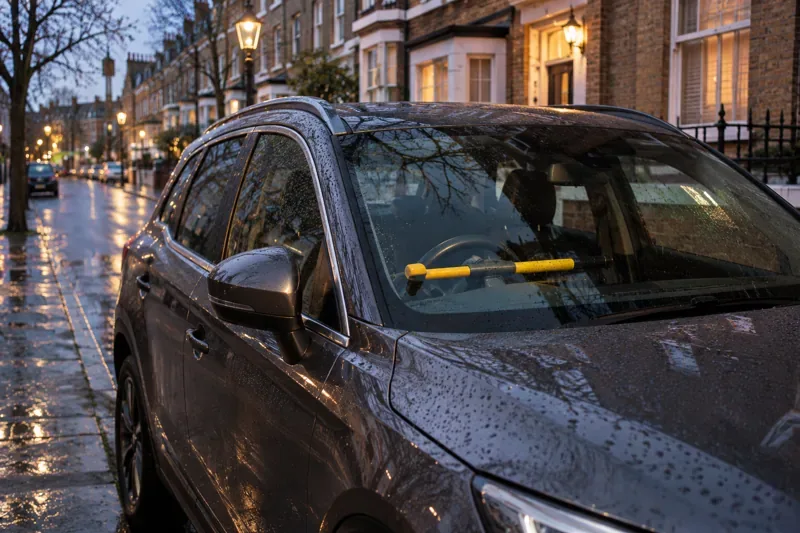
- A steering-wheel lock adds a visible physical barrier to electronic security.
- Ask the vehicle maker or dealer about disabling passive entry, fob sleep features, and available security updates.
How does a keyless relay attack work?
Many vehicles with passive keyless entry communicate wirelessly with a fob. When the fob is close enough, the car can unlock; when the fob is inside the cabin, the vehicle may allow the engine to start. In a relay attack, devices operated near the key and the car pass or extend that communication. The vehicle is tricked into treating the fob as nearby, even though it remains inside a home or elsewhere close by.
Police Scotland describes keyless theft as using a device that acts like the key fob, while the Police Service of Northern Ireland explains that the system is fooled into believing the key is close. The equipment involved is specialist; this article does not provide instructions for building or using it. The practical point for an owner is that the fob’s physical distance from the car may not be enough protection if its signal can be relayed.
After the car unlocks, an attacker may be able to start it and drive away. On many models, the engine does not stop simply because the fob is no longer nearby once the car is running. The exact behaviour depends on the vehicle, so consult its manual or manufacturer rather than assuming a single rule applies to every model.
What other methods do car thieves use?
“Keyless theft” is sometimes used broadly, but relay theft is a specific technique. Other routes include stealing the physical key, taking keys during a home burglary, exploiting electronic systems in or around a vehicle, or breaking in to steal valuables or parts. Police Scotland lists true key theft, keyless theft, and on-board diagnostic theft as distinct categories. Each calls for different safeguards, so a Faraday pouch alone is not a complete vehicle-security plan.
Relay attacks are associated with passive-entry systems: if you must physically use a key to unlock and start the vehicle, that particular relay method does not apply in the same way. This does not mean the vehicle is immune to theft through other means.
How can you protect a keyless car?
Store and test every key
Keep the main fob and any spare away from exterior doors and windows. A signal-blocking pouch or container can help block communication, but check that it works with your own car: place the fob inside, stand beside the vehicle, and see whether the car still responds. If it does, reseal or replace the pouch and test again. Police Scotland and Thatcham Research both recommend protecting spare fobs as well as the everyday key.
Check the settings and fob features
Look in the owner’s manual or ask the manufacturer whether passive entry can be switched off, whether the fob has a motion-activated sleep function, and whether a security software update is available. Features vary by make, model, year, and market; do not assume a feature exists because a different car has it.
Add a visible physical deterrent
A steering-wheel lock or another suitable physical device creates an obstacle that cannot be bypassed just by convincing the car to detect a key. Park in a locked garage when available, or choose a well-lit, overlooked location. Lock the car every time and check the doors rather than relying only on a flash or beep.
Consider tracking and insurance implications
A tracker may help locate a vehicle after theft, but it does not prevent the theft itself or guarantee recovery. Check what security equipment your insurer requires, whether an approved tracker affects cover, and what steps to take after a theft. Requirements vary between policies, so confirm them directly with your insurer before buying equipment or relying on a particular device.
For second-hand vehicles, ask a reputable dealer or qualified auto locksmith whether all keys are accounted for and whether the vehicle’s keys should be reprogrammed. If you notice suspicious activity, report it to police; call emergency services if there is an immediate threat to someone’s safety.
What is the outlook for keyless car security?
Manufacturers continue to develop ways to make passive-entry systems harder to relay, and some vehicles use approaches such as motion-sensing fobs or ultra-wideband technology. Availability and protection differ by vehicle, and no feature should be treated as a guarantee. Owners can check with the manufacturer for model-specific details, keep software current where updates are offered, and combine electronic protections with a physical deterrent. These steps reduce opportunities; they cannot promise that a car will never be targeted.
Frequently asked questions
Can a keyless car be stolen while the key is inside the house?
Yes. A relay attack can make the car detect a fob that remains indoors. Keep the key away from exterior openings and test a signal-blocking pouch.
Does a Faraday pouch stop every kind of car theft?
No. It is intended to block a fob’s wireless signal and help against relay attacks. It does not prevent theft of the key, other electronic methods, or a break-in.
Are all keyless cars equally vulnerable?
No. Systems and security features vary by make, model, year, and settings. Ask the manufacturer or dealer about your specific vehicle.
Sources