How to register, create a class and add students in Google Classroom

Video How to register, create a class and add students in Google Classroom

At a time when the outbreak of pneumonia caused by the Conora virus is complicated, online classes are becoming extremely useful. Google Classroom by Google is a service of free online classes to connect teachers and students when not in school.

Google Classroom online classroom fully supports basic features such as student management, document sharing, exam submission, exam returning, etc. Google Classroom has a simple, easy-to-use interface for both students and teachers. Let's Download.com.vn learn about online classroom Google Classroom. 

Not only is it simple to operate like a normal chat group like on Viber , Telegram or Zalo, but Google Classroom will meet all the practical needs of a classroom that combines daily real classes and online classes. You can even share Google Drive documents with students and classmates very easily.

Download Google Classroom for iOS Download Google Classroom for Android

Through the Google Classroom app, teachers will be more proactive in transferring knowledge to students without being limited by class time and students can be more active in learning as well as consult. of teachers. Certainly, the classroom created by Google Classroom will create a positive, modern learning environment and save time for everyone. Below we will show you how to use Google Classroom in the most basic way.

How to sign up for a Google Classroom account

To use the Google Classroom service you can use your Google account or education email account format abc@edu.com .

If you don't have a Gmail or Google account, you can see how to create a Google account .

How to create a class on Google Classroom

Step 1:

Access to address: https://classroom.google.com/h

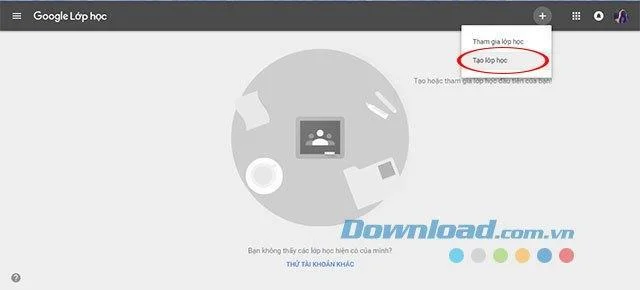
Then click the plus sign (upper right corner) and select Create Class .

How to register, create a class and add students in Google Classroom

Step 2:

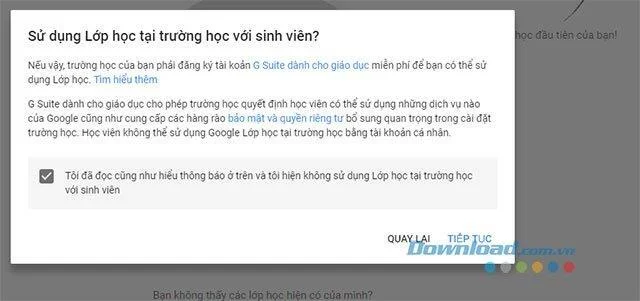
Shortly thereafter the Notice of Classroom Use at school with student? Check the box I have read and understand the message above and I do not currently use Classroom at school with students. Then select Continue.

How to register, create a class and add students in Google Classroom

Note: If you do not use your email to log into Google Classroom abc@edu.com you will receive this notification.

Step 3:

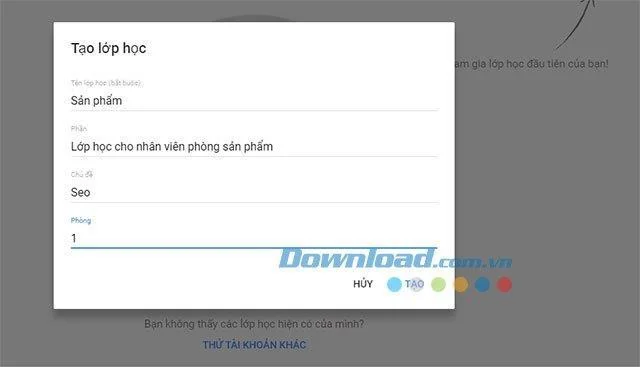
We will begin to enter information about the class we are creating, including: the class name and the description of your class. Then click Create .

How to register, create a class and add students in Google Classroom

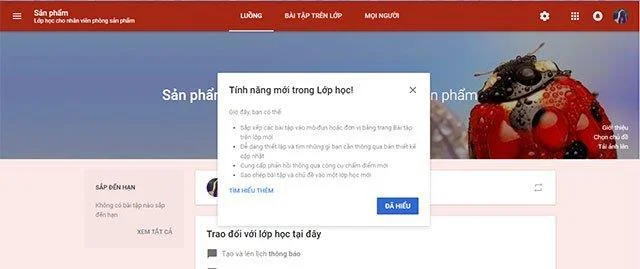
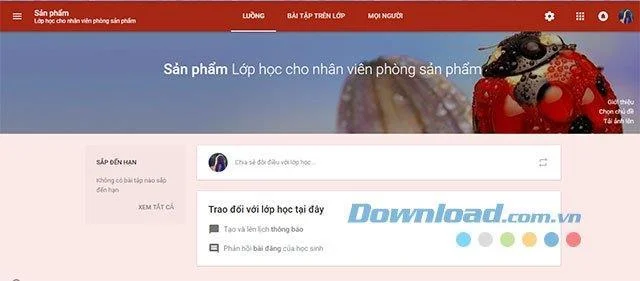
Immediately the class has been created with a notice of classroom features, you should read carefully to better understand the features that can be implemented in the classroom and click Understand to come to the class you have created.

How to register, create a class and add students in Google Classroom
New features in the classroom

How to register, create a class and add students in Google Classroom
The main class interface

How to add students to the classroom on Google Classroom

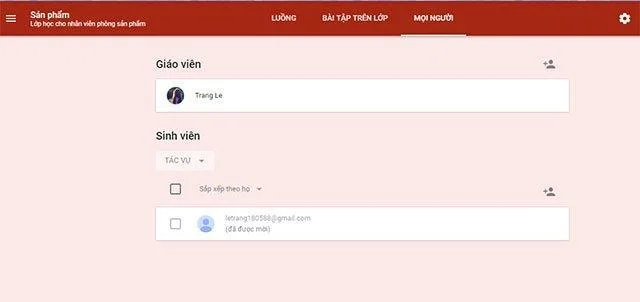
In the main interface of the class created above, select Go to People on the menu. This page is divided into 2 sections Teacher and Student. As the class has just been created, there will be no students, you can start adding students to your class in the following two ways.

Option 1: Invite students to class by email

Step 1:

Click on the icon of the person with the plus sign.

In the Invite students interface , enter his or her email address in the Name or email address field and click Invite to send the invitation.

How to register, create a class and add students in Google Classroom

Note: you enter the student name then the suggestion will appear for you to choose, because the account we use in Google Classroom is also your Gmail account or Google account.

Step 2:

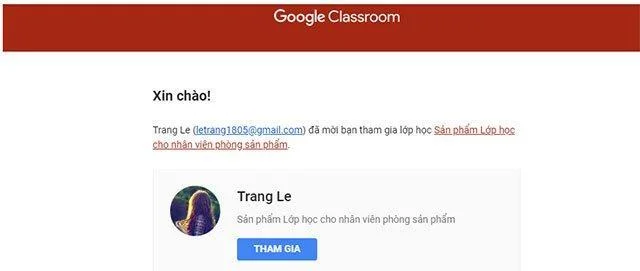
Students with the email address entered above receive a direct link to your class. After clicking the invite link and agree that person will officially be a member of the class you created.

How to register, create a class and add students in Google Classroom

Option 2: Invite students to class by class code

If you don't know the exact email address of each person you want to send into the classroom, send your class code, copy the code below and send it via chat apps like Facebook Messenger , Zalo, Whats App , etc.

Step 2:

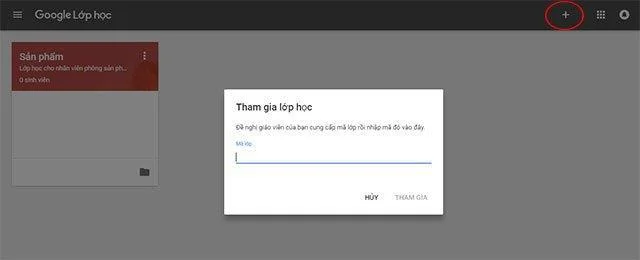
The person you invited will visit https://classroom.google.com/h , then click the plus sign in the upper right corner -> Join the class .

Step 3:

Then the Join Class window appears, enter the code received via the message and click Join.

How to register, create a class and add students in Google Classroom

Above we have shown you how to create a class and invite students to the classroom on the Google Classroom app. In addition to working on the web, you can also use Google Classroom on iPhone and Android to join classes and manage your class very quickly and easily.

Invite students to your class

You can invite students to enroll in your class in 3 ways:

  • Send an invite link—Students click the link to join.
    This feature is rolling out over the next week. 
  • Send an email invite—Students can join from the email or in Classroom. 
  • Share a class code—Students enter the code in Classroom.

If students have trouble with the link or code, you can reset them, or send students an email invite instead.

For instructions to join a class, students can go to Join a class as a student.

Note: Students can unenroll themselves from classes. If they unenroll, their grades are removed.

Computer 

Invite students 

Invite students with an invite link

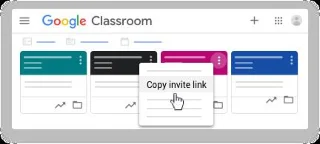
Each class you create has an invite link. You can share the link with students so they can join your class.

  1. Go to classroom.google.com.
  2. On the class card, click More Copy invite link.

  3. Paste the link into an email for your students. 
    When students get your email, they click the link to join your class. 

Note: If you don’t see Copy invite link, make sure you have Invite codes enabled.

Invite students with an email invite

You can send an email invite to individual students or to a group of students. Students can accept the invite in the email or in Classroom.

Note: To invite a group of students, you can use the email alias for the Google Group. You don't have to be a member or owner of the group, but you must be able to view group members and email addresses. If you can't view this information, ask your administrator to change the permissions.

  1. Go to classroom.google.com.

  2. Click the class you want to invite students to.

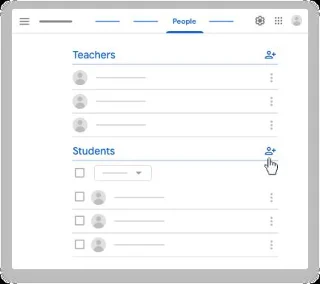
  3. At the top, click PeopleInvite students .

  4. Enter the email address of a student or group.
    As you enter text, an autocomplete list might appear under Search Results.
  5. (Optional) Under Search results, click a student or a group.
  6. (Optional) To invite more students or groups, repeat steps 4 and 5.
  7. Click Invite.

Note: If you have trouble adding an email address, it might be outside of your school’s domain.

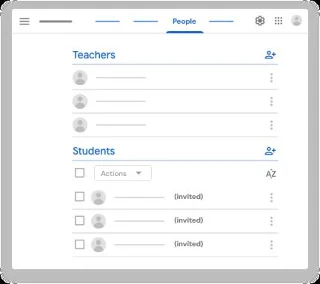
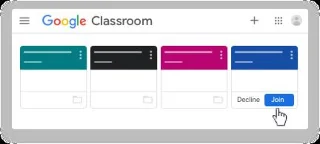
After you send the invite:

  • Your class list updates to show the names of invited students.
  • Your students can click Join in the email or on the class card.

Invite students with a class code

Each class you create has a class code. You can share the code with students so they can join your class. To share the code, paste it into an email, display it with a projector, or write it on the board.

  1. Go to classroom.google.com.

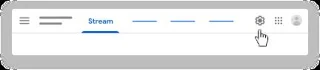
  2. Click the classSettings .

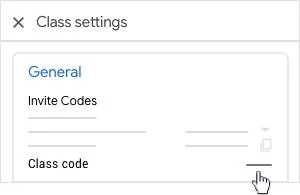
  3. (Optional) To copy the code so you can paste it into an email, under General, next to Class code, copy the code.
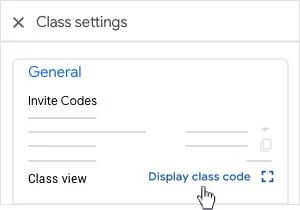
  4. (Optional) To display the code with a projector, under General, next to Class view, click Display class code.

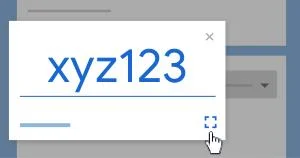
    To get a larger view of the code, click Full screen .

    Tip: In any class,you can quickly display the code from the Stream page. Under the class name, next to the code, click Full screen . For a larger view, click Full screen  again. 
  5. Along with the code, give the students these instructions:
    1. Go to classroom.google.com.
    2. On the Classes page, click Add Join class.

    3. Enter the code and click Join.

Manage your invite link or class code

For each class, you have an invite link and a class code, known as the Invite codes. You can share the invite codes with students, so they can join the class.

By default, the invite codes are on (enabled).

You can:

  • Reset invite codes, if you have trouble with them.
  • Disable invite codes, so new students can't join your class.
  • Enable invite codes, so new students can join your class.
    You only need to do this if you disabled the codes.

When you reset or enable invite codes, Classroom creates new invite codes. The previous codes won't work.

  1. Go to classroom.google.com.
  2. Click the classSettings .

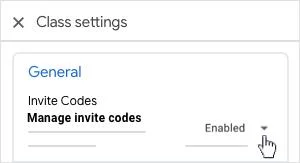
  3. Next to Manage invite codes, click the Down arrow  and choose an option:

    • To reset the invite codes, tap Reset invite codes.

    • To disable the invite codes, tap Disable invite codes.

    • To enable the invite codes, tap Enable invite codes.

  4. (Optional) To copy the class code, next to Class code, copy the code.
  5. (Optional)To copy the invite link, next to Invite link, click Copy invite link .

For more details, go to Invite students with a class code or Invite students with an invite link, above.

Invite students from outside the school domain

You can invite students from outside of your school's or organization's domain the same way you invite students from your domain, but your IT administrator has to turn on the setting. 

If you’re an administrator, to turn the setting on or off, go to Configure class settings.

Class size limits

G Suite for Education accounts

For teachers with a G Suite for Education account, Classroom has the following size limitations for each class:

  • Maximum number of teachers: 20
  • Maximum number of members (teachers and students): 1,000

Note: Classroom uses Google Groups for all students and teachers. Each person can only be in a certain number of groups. For more information, see the Membership section of Understand Groups policies and limits.

Leave a Comment

Side Hustles That Actually Pay in 2026: 7 Realistic Options and the Tradeoffs to Know

Side Hustles That Actually Pay in 2026: 7 Realistic Options and the Tradeoffs to Know

Compare realistic side hustles for 2026 by startup cost, fees, flexibility, and income control, with current tax and scam guidance from official sources.

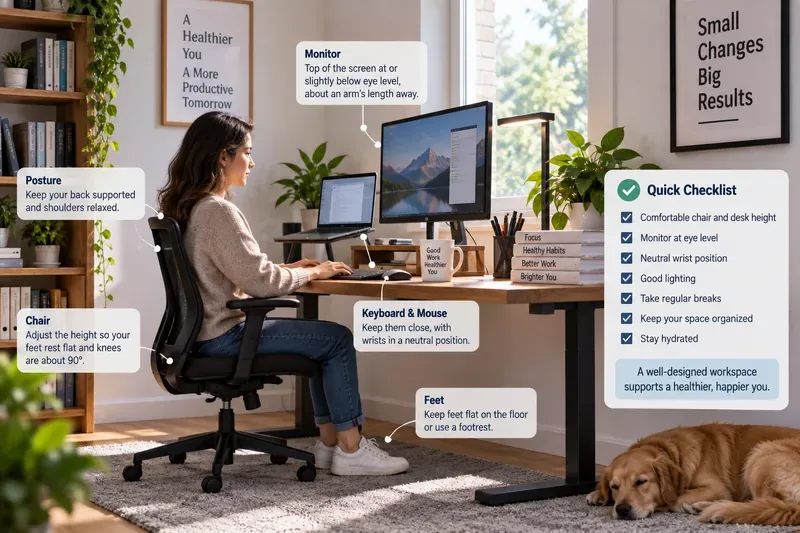
Remote Work Ergonomics in 2026: Upgrade Your Home Office Without Overbuying

Remote Work Ergonomics in 2026: Upgrade Your Home Office Without Overbuying

Upgrade your home office ergonomics with current OSHA and NIOSH guidance on chair fit, monitor height, laptop setup, lighting, and movement.

Why Emotional Intelligence Matters in Leadership—and How to Build It

Why Emotional Intelligence Matters in Leadership—and How to Build It

Learn why emotional intelligence matters in leadership, where it helps most, how to strengthen it, and how to tell whether your approach is working.

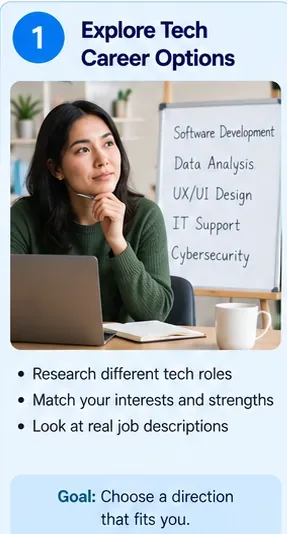
How to Transition to a Tech Career Without a Degree: A Results-First Roadmap for 2026

How to Transition to a Tech Career Without a Degree: A Results-First Roadmap for 2026

A practical roadmap for moving into tech without a degree: choose an accessible role, build job-ready skills, prove them with projects, and use hiring feedback to improve.

Building a Personal Brand on LinkedIn in 2026: What Still Works, What Changed, and What to Ignore

Building a Personal Brand on LinkedIn in 2026: What Still Works, What Changed, and What to Ignore

Build a credible LinkedIn personal brand in 2026 with current profile, content, newsletter, analytics, verification, and visibility guidance from LinkedIn.

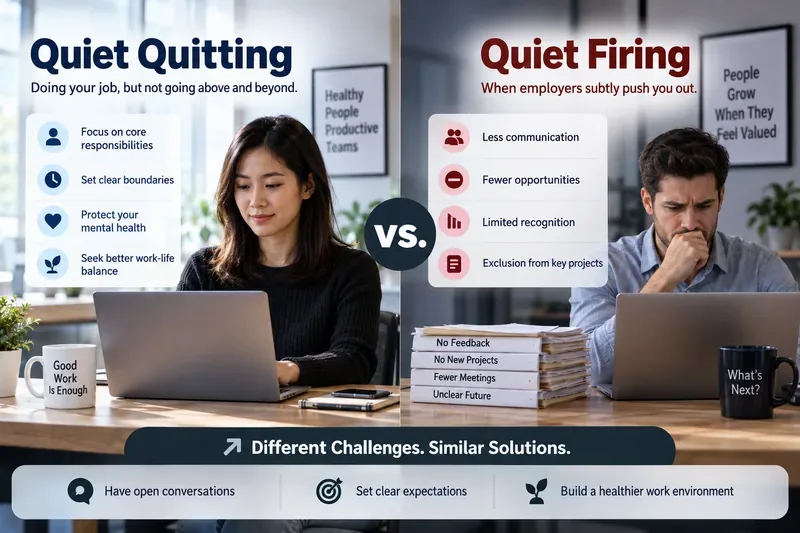
Quiet Quitting vs. Quiet Firing in 2026: What’s Really Changing at Work

Quiet Quitting vs. Quiet Firing in 2026: What’s Really Changing at Work

Quiet quitting and quiet firing are catchy labels, not diagnoses. Learn what is verified, what depends on context, and what employees and managers can do next.

The Rise of the Fractional Executive: When Part-Time C-Suite Leadership Makes Sense

The Rise of the Fractional Executive: When Part-Time C-Suite Leadership Makes Sense

Fractional executives offer senior leadership without a full-time hire. Learn when the model works, what to ask, and the risks to manage.

How to Negotiate a Raise During Q4 Performance Reviews: A Practical 2026 Decision Guide

How to Negotiate a Raise During Q4 Performance Reviews: A Practical 2026 Decision Guide

Prepare a stronger Q4 raise request with current wage data, timing options, compensation tradeoffs, and scripts for yes, partial, or no outcomes.

6 High-Income Skills You Can Start Learning Before 2026 Ends

6 High-Income Skills You Can Start Learning Before 2026 Ends

Choose a high-income skill you can realistically start before 2026 ends, with current pay data, learning priorities, and a practical self-check.

Mastering the Hybrid Work Schedule: A Practical Framework That Actually Holds Up

Mastering the Hybrid Work Schedule: A Practical Framework That Actually Holds Up

Build a hybrid work schedule around tasks, team overlap, and measurable outcomes. See sample patterns, warning signs, and when to adjust your plan.