Build a PipeWire Output Toggle Script That Moves Active Audio

Switch Debian audio between named PipeWire outputs with a pactl script that updates the default sink and reroutes streams already playing.
Incorrect or improperly changed Display Settings in Windows 11 can cause issues like distorted images, unusual resolutions, or mismatched color profiles. When you encounter such a situation, you can restore Display Settings on Windows 11. Here is how to restore Display Settings on Windows 11.
Restore Windows 11 Display Settings via Settings
Step 1:
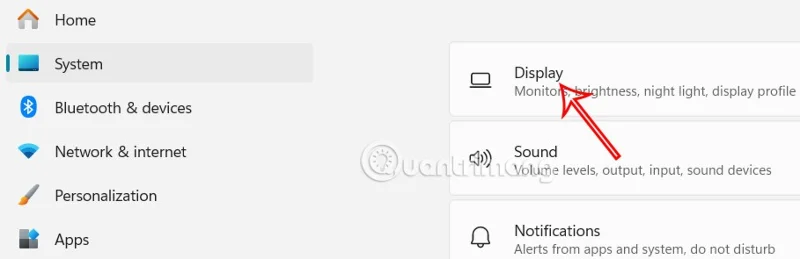
Press Windows + I to open Settings , then click on System and select Display in the content next to it.
Step 2:
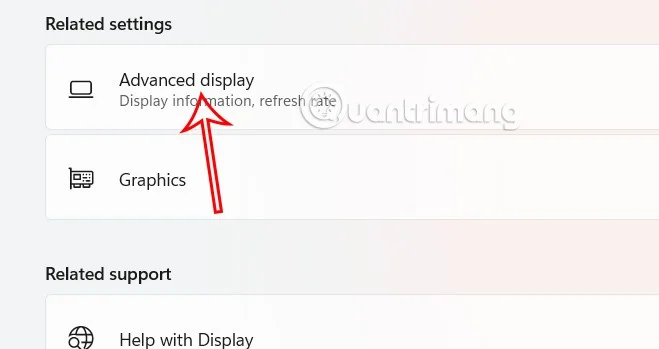
To display the new settings, scroll down and click Advanced display.
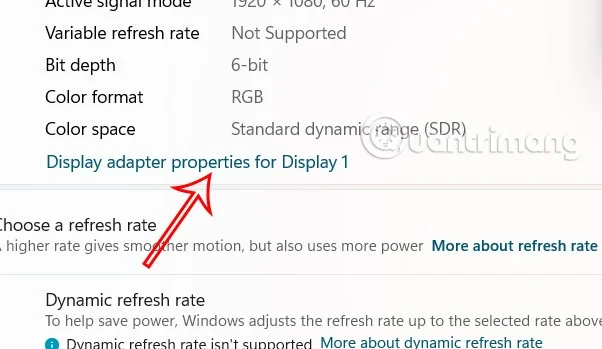
Here you select Display adapter properties for Display 1 or the appropriate number if you have multiple monitors.
Step 3:
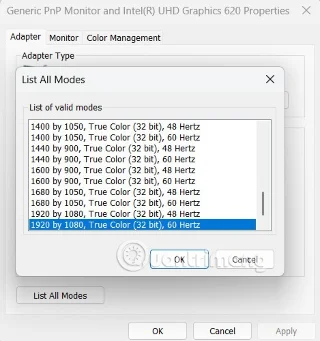
In this new window under the Adapter tab you click on the List All Modes button . You will see a list of all available screen resolutions and refresh rates supported by your monitor and graphics adapter.
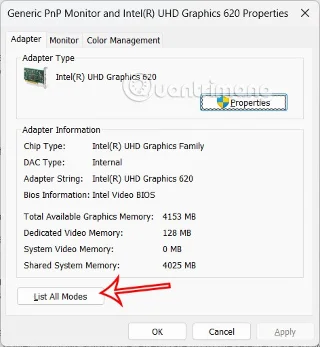
Select the recommended display resolution and refresh rate as soon as you click, then press OK to save the settings.
Restore Default Settings Windows 11 via Device Manager
Step 1:
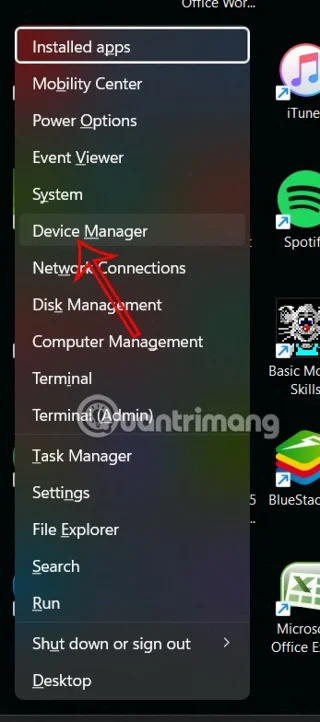
Users press the Windows + X key combination and select Device Manager from the displayed list.
Step 2:
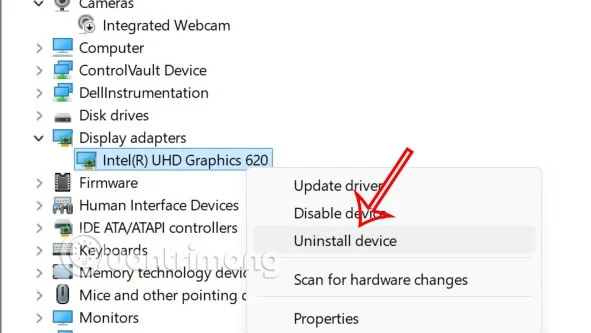
Click on Display adapters, then right-click on the graphics section and select Uninstall device to remove it.
Check Attempt to remove the driver for this device , then click Uninstall to uninstall. Once finished, restart your computer. Windows will automatically reinstall the default display driver, restoring your display settings to their original state.
Reset Display Settings via Graphics Control Panel
We open Graphics Control Panel, if using Intel graphics, right-click on the screen and select Intel Graphics Settings. If using NVIDIA or AMD graphics, right-click on the wallpaper and select NVIDIA Control Panel or AMD Radeon Settings.
In the graphical control panel interface, go to the Preferences, Settings or System tab and click Restore Defaults to restore the settings.
Switch Debian audio between named PipeWire outputs with a pactl script that updates the default sink and reroutes streams already playing.
Get your Bluetooth headset mic working by selecting the right input, using a hands-free audio profile, and checking Ubuntu’s PipeWire route.
Learn why Flatpak apps may ignore Ubuntu 24.04 GTK themes and follow safe steps to check theme extensions, refresh Flatpak apps, and diagnose portal issues.
Install Ubuntu 24.04 alongside Windows 11 with BitLocker safely. Compare separate-drive and shared-drive paths, recovery keys, partitioning, and boot checks.
Diagnose NVIDIA driver failures after an Ubuntu kernel update. Check DKMS and Secure Boot, rebuild the matching module, enroll a MOK, and verify the fix.
Fix Ubuntu 24.04 Wi-Fi drops after suspend with checks for NetworkManager, radio blocks, updates, power saving, and drivers—then verify each resume.
Learn why tracker-miner-fs-3 uses high CPU in Ubuntu GNOME and how to check indexing, exclude folders, update Ubuntu, or safely rebuild the search index.
Fix Debian’s UEFI boot error by checking boot mode, the EFI System Partition, GRUB files, and firmware boot order—without reinstalling Debian first.
The Outlook Inbox Repair Tool fixes corrupted PST files quickly so you can recover emails and restore normal Outlook function. Follow these exact steps to run scanpst.exe without data loss.
Get the Adobe PDF Installer Offline to install Acrobat Reader on any PC without needing internet during setup. Follow these exact steps for the full standalone package.








