Home
» Today
»
Immigration After the 2026 Midterms: What Congress Could Change About Trumps Policies
Immigration After the 2026 Midterms: What Congress Could Change About Trumps Policies
As of November 4, 2026: The Associated Press has projected that Democrats will control both chambers of Congress after the November 3 midterm elections. Those are media calls, not certified state results. Even if the projected majorities hold, the election does not itself change immigration law: the 119th Congress remains in office until the next Congress convenes, and any statutory change must pass the legislative process.
Congress can change immigration statutes and funding through legislation, while agencies administer the law and courts review disputes.
The practical distinction is between law Congress has enacted, money it has appropriated, and how the executive branch carries out existing law. A change in party control can affect hearings, negotiations, and future bills. It does not grant anyone legal status, change visa eligibility, cancel a removal order, or end removals automatically.
Quick guide: what Congress can and cannot change
Area
Congressional lever
What it does not do by itself
Immigration statutes
Amend the Immigration and Nationality Act, including rules for visas, asylum, detention, and removal.
A bill or campaign promise is not law; both chambers must pass the same text and the President must sign it, unless Congress overrides a veto.
Agency funding
Set annual funding, attach conditions, require reports, or enact or rescind money through a law.
A new annual budget does not necessarily erase funds already made available for multiple years.
Oversight
Hold hearings, request records, investigate agencies, and use committee subpoena powers under chamber rules.
A hearing does not itself change a person’s case, suspend an executive order, or create a new immigration status.
Executive enforcement choices
Clarify or narrow statutory authority and impose lawful limits through legislation.
Congressional leaders cannot directly rewrite an agency memo or instantly dictate every case-level decision.
When does the incoming Congress take power?
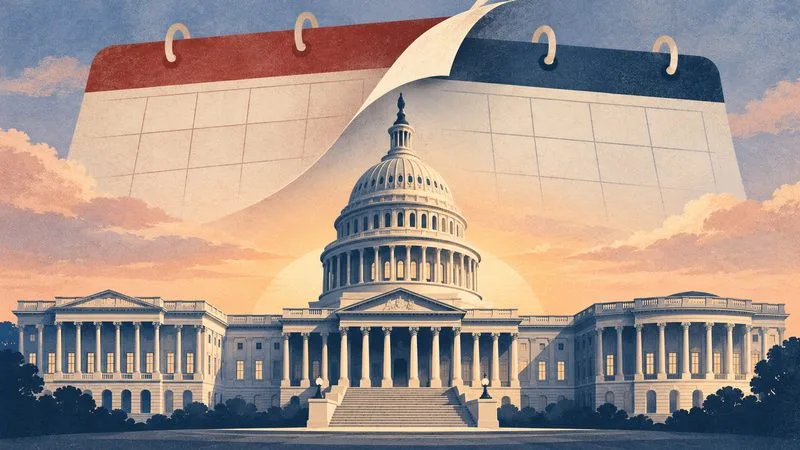
The 2026 election chose a new House and Senate, not a new President. Under the constitutional default described by the Senate, a new Congress convenes at noon on January 3 of an odd-numbered year. For January 3, 2027, that is noon Eastern Standard Time (EST, UTC−5), or 5:00 p.m. UTC, unless a law sets another time or date. Until then, the currently seated 119th Congress can still act during the post-election, or “lame-duck,” period. Bills from the 119th Congress that have not become law expire when the 120th Congress begins and generally must be reintroduced.
That timing matters for immigration funding. Congress enacted the Continuing Appropriations and Extensions Act, 2027 (Public Law 119-103) on September 2. It provides temporary FY2027 funding for covered federal activities through December 11, 2026, unless the relevant full-year appropriations law is enacted sooner. The outgoing Congress therefore faces a funding deadline before the new Congress convenes. A stopgap funding law is not, by itself, a broad rewrite of immigration eligibility or asylum law.
What could change through legislation?
1. Immigration rules written into statute
Congress has broad authority to legislate on immigration and naturalization. It can amend statutory eligibility categories, visa limits, asylum procedures, detention rules, removal procedures, and the authorities delegated to federal agencies. The starting point is the text of a bill, not a headline about a bill being introduced.
For example, H.R. 4393, the DIGNIDAD Act of 2025, was introduced in the House and referred to committees. Its introduction is a proposal, not an enacted path to legal status. A bill needs committee action, votes in both chambers on identical text, and presidential action. The House may pass legislation by a simple majority, but Senate debate rules can make cloture a hurdle: the Senate’s general cloture threshold for legislation is three-fifths of senators duly chosen and sworn, normally 60 votes. A President can veto a bill; overriding a veto requires two-thirds in each chamber.
Useful check: Look for a Public Law number or a signed law in the official record. “Introduced,” “referred,” or “passed one chamber” does not mean the rule is in force.
2. Border and agency funding
Annual appropriations can fund or limit particular programs, add reporting requirements, and condition how specified funds may be used. But Congress has already enacted money outside the regular annual funding process. Public Law 119-21, enacted July 4, 2025, included multi-year funding for CBP and ICE, with some amounts available through September 30, 2029. It includes funding categories such as personnel, facilities, vehicles, and detention capacity. As a result, a later annual DHS appropriations bill should not be read as automatically turning off every existing immigration-enforcement account. Congress can pass later legislation that changes or rescinds funds, but that also requires the ordinary lawmaking process and presidential action or a veto override.
As of November 4, the enacted FY2027 stopgap is the near-term funding framework. Whether Congress will replace it with a full-year DHS bill, extend it, attach new restrictions, or reach a different agreement before December 11 is not settled by the election result. A funding deadline can create bargaining leverage, but it does not guarantee that either side’s requested policy language will become law.
3. Oversight of DHS, ICE, CBP, and USCIS
Congressional committees can scrutinize enforcement practices, detention conditions, case-processing backlogs, spending, and compliance with statutory duties. Hearings, document requests, subpoenas, inspector-general findings, and mandatory reports can create a public record or inform legislation. The new majority can also change what its committees prioritize. These steps may increase pressure on an administration, but oversight alone does not provide an individual with lawful status or stop a removal case.
What remains with the executive branch and the courts?
Federal law assigns the Secretary of Homeland Security responsibility for administering and enforcing much of the immigration code. Within the bounds Congress set, DHS can make operational choices, issue guidance, and set enforcement priorities. A President may direct executive agencies, but an executive order cannot amend the Immigration and Nationality Act. Agencies remain subject to statutes, required procedures, and judicial review; a court can block or limit a policy, and Congress can amend the statute that supplies its authority.
Asylum illustrates why readers should distinguish a statute from a court ruling or agency procedure. The Supreme Court’s June 25, 2026 decision in Mullin v. Al Otro Lado addressed a narrow question under two INA provisions: it held that a person still standing in Mexico had not yet “arrived in the United States” for purposes of those provisions, and said the wisdom of the metering policy was not before the Court. The decision did not decide every asylum question or eliminate the statutory process for people who qualify to apply under current law. Congress could amend the relevant statutes, but until a new law takes effect, the current statutory text and controlling court orders matter.
USCIS instructions also state a general one-year filing deadline for asylum applications, subject to statutory exceptions. Election coverage does not extend that deadline. Procedures and court orders can change, so check the current USCIS Form I-589 page and filing instructions and the notices in your own case.
What immigrants and families should check now
Keep following existing notices and deadlines. Do not assume a pending bill, an election projection, or a future congressional hearing changes a filing date or court appearance.
Identify the source of a claimed change. Check whether it is an enacted statute, a final agency rule or policy, a court order, a temporary funding provision, or only a proposal.
Use current government instructions. Review USCIS updates and the relevant immigration-court or agency notices; a general news article cannot determine an individual case.
Get case-specific help when a deadline or removal order is involved. Consult a licensed immigration attorney or accredited representative. This article is general information, not legal advice.
Reporting checked November 4, 2026. Election calls and legislative proposals are identified as such; this article does not predict a final policy agreement.