Home
» Today
»
Trumps Tariffs After the 2026 Midterms: Can Congress Change US Trade Policy?
Trumps Tariffs After the 2026 Midterms: Can Congress Change US Trade Policy?
As of November 4, 2026: The Associated Press has called Democratic control of both chambers of Congress after the November 3 midterm elections. Some individual races are still unresolved, and AP’s calls are not the same as state certification. The result changes who is expected to lead Congress next year; it does not change the tariff schedule overnight, and a midterm election does not elect or replace the president.
The practical answer is that Congress can change trade law, but the incoming majority cannot simply cancel every tariff by winning an election. The outgoing Congress remains in session during the transition, and the next Congress must pass legislation through both chambers. Existing delegated presidential powers, court rulings, vetoes, Senate procedures, and the exact tariff measure all matter.
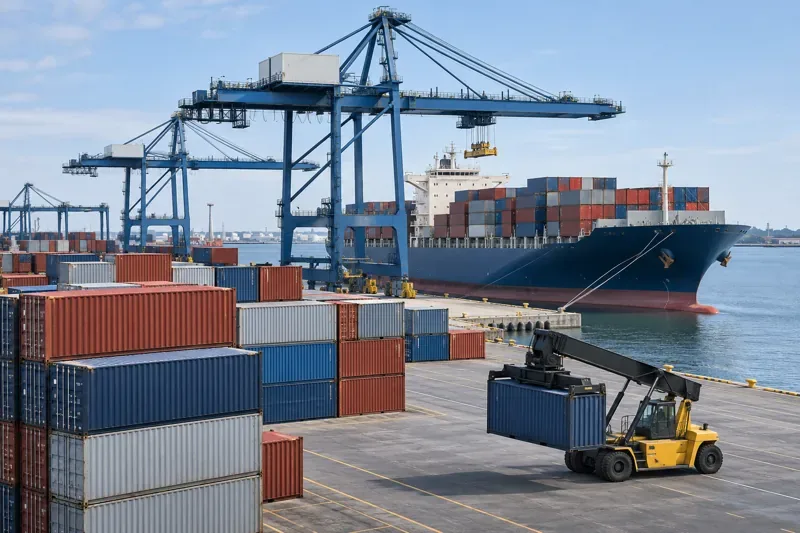
Containers and freight equipment illustrate the international supply chain that tariff rules can affect.
What the midterms changed—and what they did not
Election Day was Tuesday, November 3, 2026, across the United States. Polling hours are set by state and local election officials, so there is no single nationwide polling window. AP reported on November 4 that Democrats had won control of the House and Senate, while its live coverage still noted unresolved individual races, including Alaska’s Senate contest. AP calls indicate who is projected to control a chamber; state and local officials certify results under their own procedures. Read AP’s November 4 election report and how AP calls control of Congress.
The incoming lawmakers do not take over the regular terms on election night. The 119th Congress continues through the transition, including any remaining “lame-duck” work. Under the constitutional default, the 120th Congress begins at noon Eastern Standard Time (EST, UTC−5) on Sunday, January 3, 2027—5:00 p.m. UTC—unless a law sets another date. That start date does not mean every tariff question is automatically scheduled for a vote. The Senate’s new-Congress guidance also explains that legislation from the prior Congress expires when the next Congress convenes and generally must be introduced again.
Which Trump-era tariffs are still in force?
There is no single, uniform “Trump tariff” rate that applies to every imported item. The legal basis and product schedule matter. On February 20, 2026, the Supreme Court held in Learning Resources, Inc. v. Trump that the International Emergency Economic Powers Act (IEEPA) does not authorize the president to impose tariffs. The ruling addressed the emergency duties imposed under IEEPA; it did not erase duties imposed under other statutes. Read the Supreme Court opinion.
A Congressional Research Service fact sheet dated October 8, 2026, said the temporary 10% global surcharge imposed under Section 122 of the Trade Act of 1974 expired on July 24 after the statute’s 150-day limit. The report also described separate Section 301 and Section 232 actions that remained in effect or under investigation as of September 30. Section 301 actions generally follow a U.S. Trade Representative (USTR) investigation into foreign trade practices; Section 232 actions follow a Commerce Department investigation into national-security effects. Their scope, rates, exemptions, and effective dates can differ by product and country. See CRS’s October 2026 tariff fact sheet and USTR’s current presidential tariff-action page.
A recent example shows why dates and exclusions matter. A presidential proclamation signed October 23 and published in the Federal Register on October 30 modified the scope of additional duties on certain Canadian products under Section 338 of the Tariff Act of 1930. It removed some listed products from the additional 50% duty and kept other specified products covered; the proclamation says the covered duties apply in addition to Section 232 duties. The changes apply to covered goods entered for consumption from 12:01 a.m. Eastern Time on October 30. Because daylight saving time was still in effect in New York on that date, this was 12:01 a.m. EDT (UTC−4), or 4:01 a.m. UTC. The notice is product-specific; it does not impose a 50% duty on every Canadian import. Check Proclamation 11076 and its product annexes.
There are also proposals that may change a schedule without yet changing it. For example, an October 26 USTR notice invited comments on a proposal to extend the suspension of a particular Section 301 action involving China’s maritime, logistics, and shipbuilding sectors through January 9, 2027. The notice described a proposal and a comment period, not a new blanket tariff or a law enacted by Congress. Readers should check USTR and the Federal Register for any later final action. Read the October 26 notice.
How Congress could change tariff policy
The Constitution gives Congress the power to lay duties and regulate foreign commerce. Congress has delegated parts of that authority to the executive branch through statutes that set different triggers and limits. A Supreme Court ruling that one law does not authorize tariffs does not cancel every other delegation. Congress can amend or repeal a statute, limit the duration or scope of delegated authority, create product exclusions, or specify how refunds should be handled. The Constitution Annotated explains Congress’s taxing and commerce powers.
One live example in the outgoing Congress is S. 5390, the End Trump’s Tariff Tax Act. Introduced on September 14, 2026, it was referred to the Senate Finance Committee. The introduced bill would terminate duties arising from specified forced-labor import-prohibition investigations, repeal Section 338 authority, address Section 122 duties, and provide refunds for duties within its defined scope. It is a proposal, not enacted law, and it would not repeal every tariff: its text does not amount to a blanket cancellation of Section 232 duties or unrelated Section 301 actions. The Section 122 portion also concerns a temporary surcharge that CRS said had already expired. Check S. 5390’s official status and text.
Even with a majority in both chambers, passage is not automatic. A bill must clear the House and Senate and go to the president. Under Senate rules, many bills face a 60-vote cloture hurdle to end debate; the president can veto a bill, and overriding a veto requires two-thirds of each chamber. A new majority can also hold hearings, conduct oversight, and press agencies for information, but those actions alone do not repeal a tariff. See the Senate’s explanation of cloture and the constitutional veto process.
If S. 5390 or another bill does not become law before the 119th Congress ends, the next Congress would need to introduce the measure again. That means the November result creates a path to debate and legislation starting in 2027, not an immediate change to the duties importers owe today. The current Congress could still act during its remaining session, but whether it will do so is not yet known.
What this could mean for importers and consumer electronics
For an importer, the relevant question is not simply “What is the tariff on electronics?” The answer depends on the item’s Harmonized Tariff Schedule of the United States (HTSUS) classification, customs country of origin, entry date, applicable Chapter 99 provisions, trade agreements, and any product-specific exclusion. A finished laptop, charger, battery, or component may be classified differently. A product’s brand or the country it shipped from does not by itself establish its customs origin or duty rate. The USITC HTS search, CBP’s importer guidance, and CBP’s trade-remedies resources are starting points; importers can work with a licensed customs broker or request a CBP ruling on classification.
Tariffs are generally paid at import by the importer of record. A higher landed cost may be absorbed by a company, passed to a wholesaler or customer, or partly offset by sourcing, contract, inventory, or currency changes. If a tariff is removed, a lower shelf price is not guaranteed to appear immediately: goods already in inventory, existing contracts, and retailers’ pricing decisions can delay or limit any change. The outcome depends on the product and supply chain, so a broad election result is not a reliable price forecast.
Refunds are a separate issue from retail prices. In an October 5 notice, CBP described a process for importers or their designated customs brokers to submit IEEPA refund declarations through the ACE Portal. The notice also described court-ordered refunds and a suspension of immediate compliance while CBP handled the volume of affected entries. Any refund is tied to an importer’s customs entries and the applicable court or statutory process; it is not an automatic refund to every shopper at checkout. Read CBP’s October 5 refund notice.
What to watch next
State certification and remaining race calls, separate from AP’s projected control of Congress.
Any tariff or refund legislation considered by the 119th Congress before January 3, 2027, and whether a proposal is reintroduced in the 120th Congress.
Final USTR, Commerce, CBP, and Federal Register notices that change a tariff’s product list, country coverage, rate, effective date, or exclusion.
For a shipment, the exact HTSUS code, country of origin, entry date, and any exclusion or Chapter 99 rule before estimating duties.
Bottom line: The midterms give Democrats the opportunity to shape the next Congress, but they do not themselves switch off tariffs. Congress can rewrite the statutes behind them; whether that becomes law depends on timing, the bill’s scope, Senate procedure, the president’s response, and the particular tariff schedule. This is general information, not individualized legal, tax, or investment advice.
Policy and election status checked November 4, 2026. The November 3 election date is nationwide, but polling hours vary by state and locality. Tariff coverage can change by product and entry date; verify the current official schedule before importing goods.