Insert shapes - Shapes are a great way to make presentations more interesting. PowerPoint offers users several shapes to choose from. You can customize them to your personal needs, use color palettes, individual settings and much more. While Shapes may not be necessary in every presentation, they add visual appeal to the content.
- Microsoft PowerPoint Online
- Microsoft PowerPoint
- Microsoft PowerPoint for iOS
- Microsoft PowerPoint for Android
How to Add Shapes to Shapes in PowerPoint
Insert a shape into PowerPoint
1. Select the Insert tab , and then click the Shapes command in the Illustrations group . A shape menu will appear.
2. Select the desired Shape .
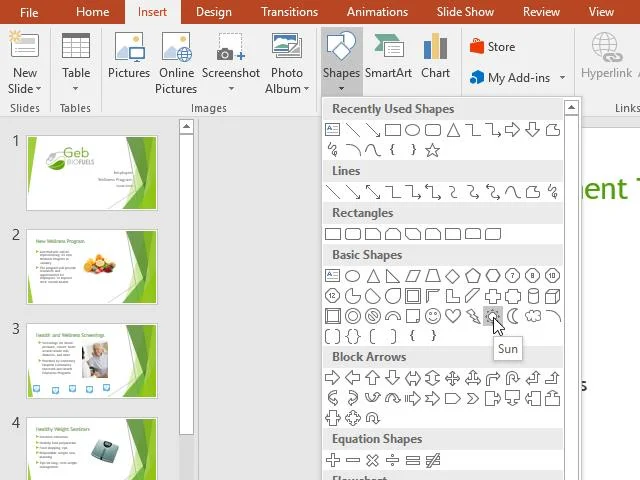
3. Click & drag it to your favorite position to add the shape you want to the slide.
![Learn PowerPoint - Lesson 15: How to insert and edit shapes into Shapes in PowerPoint]()
Edit shapes or text boxes in PowerPoint
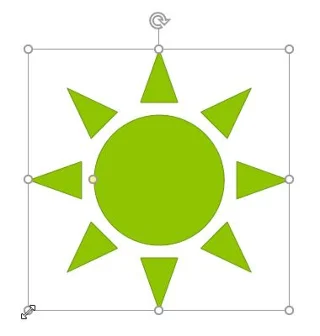
When you click on a shape or text box, handles will appear, allowing you to edit it. There are several types of handles, including:
Handle Sizing : Click & drag them until the shape or text box reaches the desired size. You can use the resizing handles to change the height and width at the same time.
![Learn PowerPoint - Lesson 15: How to insert and edit shapes into Shapes in PowerPoint]()
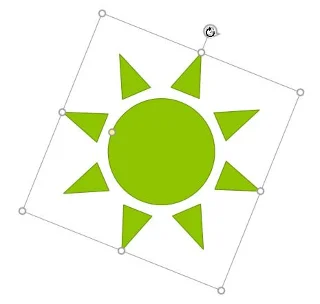
Handle Rotation : Click & drag this handle to rotate the shape.
![Learn PowerPoint - Lesson 15: How to insert and edit shapes into Shapes in PowerPoint]()
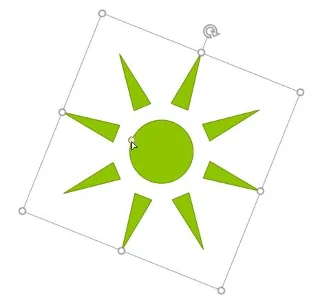
Handle Yellow : Some shapes have more than one yellow handle that can be used to customize the shape. For example, with the sun, you can change its scale.
![Learn PowerPoint - Lesson 15: How to insert and edit shapes into Shapes in PowerPoint]()
Format shapes and text boxes
PowerPoint allows you to edit shapes and text boxes in a variety of ways to fit the needs of your project. You can change the shape, text box to different shapes, format style & color, add effects.
To change shape style
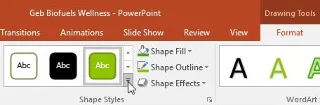
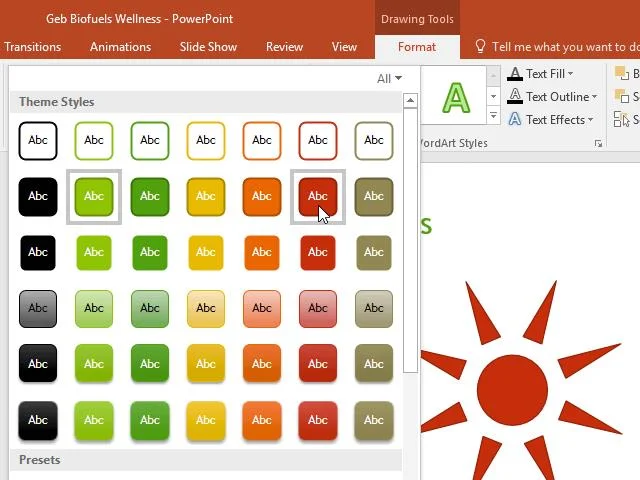
1. Select a shape style that allows you to apply preset colors & effects to quickly change the desired shape or textbox.
2. On the Format tab , click the More drop-down arrow in the Shape Styles group .
![Learn PowerPoint - Lesson 15: How to insert and edit shapes into Shapes in PowerPoint]()
3. The menu of styles will appear. Select the style you want to use.
![Learn PowerPoint - Lesson 15: How to insert and edit shapes into Shapes in PowerPoint]()
4. The shape or text box will appear as the style you want.
To change shape fill color
Select the shape or text box you want.
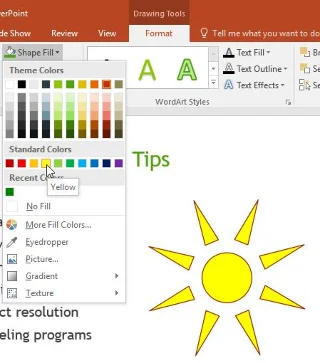
On the Format tab , click the Shape Fill drop-down arrow . The Shape Fill menu will appear
Move the mouse pointer over different colors. Select the color you want to use. To see additional options, select More Fill Colors .
The shape or text box will be filled with the color you want.
![Learn PowerPoint - Lesson 15: How to insert and edit shapes into Shapes in PowerPoint]()
If you want to use a different fill style, choose Gradient or Texture from the drop-down menu. You can also choose No Fill to make it transparent.
To change shape layout
Select the shape or text box you want to change.
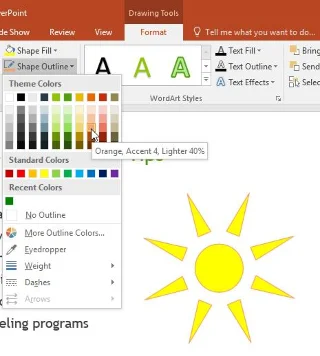
On the Format tab , click the drop-down arrow next to Shape Outline to open its menu.
Select the color you want to use. If you want to make the border transparent, select No Outline .
The shape or text box will have the border color you want.
![Learn PowerPoint - Lesson 15: How to insert and edit shapes into Shapes in PowerPoint]()
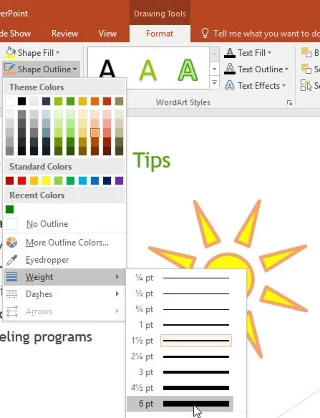
From the drop-down menu, you can change the color and thickness of the border, even if it is a dashed line.
![Learn PowerPoint - Lesson 15: How to insert and edit shapes into Shapes in PowerPoint]()
To add a shape effect
Select the shape or text box you want to change.
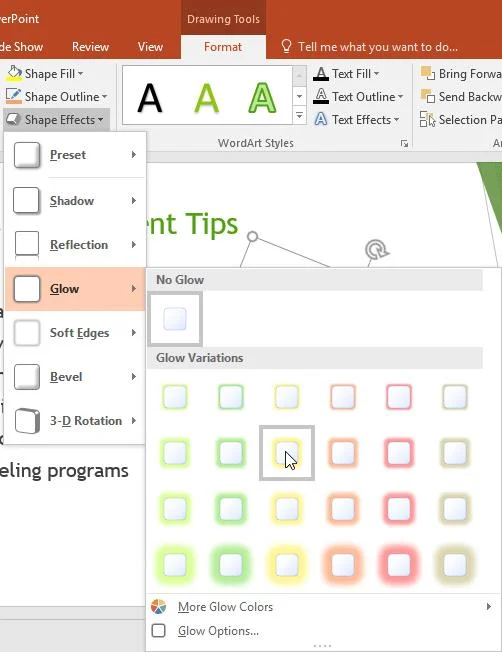
On the Format tab , click the Shape Effects drop-down arrow . In the menu that appears, point over the type of effect you want to add, and then select the desired preset effect.
![Learn PowerPoint - Lesson 15: How to insert and edit shapes into Shapes in PowerPoint]()
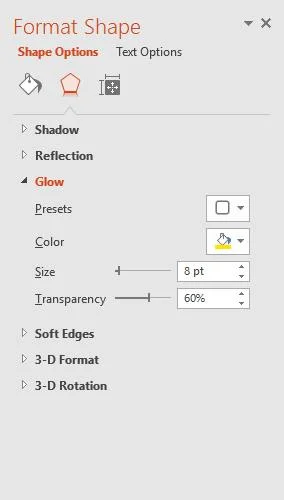
If you want to tweak the effect more deeply, select Options at the bottom of each menu. The Format Shape panel will appear, allowing you to customize the effects.
![Learn PowerPoint - Lesson 15: How to insert and edit shapes into Shapes in PowerPoint]()
To change to another phenotype
1. Select the shape or text box you want to change. The Format tab will appear.
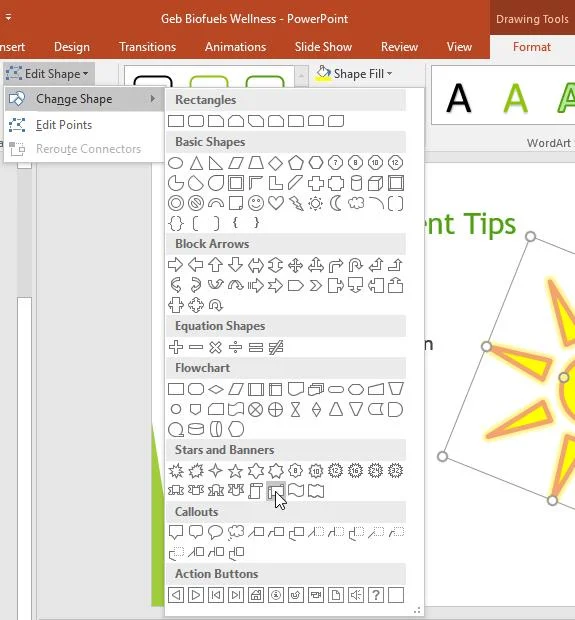
2. On the Format tab, click the Edit Shape command . In the menu that appears, point to Change Shape and select the desired shape.
![Learn PowerPoint - Lesson 15: How to insert and edit shapes into Shapes in PowerPoint]()
3. This new shape will appear.
![Learn PowerPoint - Lesson 15: How to insert and edit shapes into Shapes in PowerPoint]()
Video tutorial to insert shapes into Shapes in PowerPoint
Above are instructions for inserting and editing Shapes in PowerPoint . Hope this PowerPoint lesson is useful to you.