US and Israel Nuclear Authority: What Public Sources Actually Explain

Understand nuclear decision authority in six steps, including US civilian control and the limits of public information about Israel.
Do you know how to draw charts in PowerPoint ? Let's learn everything about drawing charts and graphs in Microsoft PowerPoint with WebTech360 !
Charts are tools you can use to convey data in the form of visual graphs. Including a chart in the presentation allows your audience to see the meaning behind the numbers. From there, they easily compare and grasp the trend.
see more
PowerPoint offers several types of charts available, helping you choose the most suitable data presentation. To use this feature effectively, you need to understand the differences between the chart types in PowerPoint.
Each type of chart in PowerPoint has its own advantages, including:
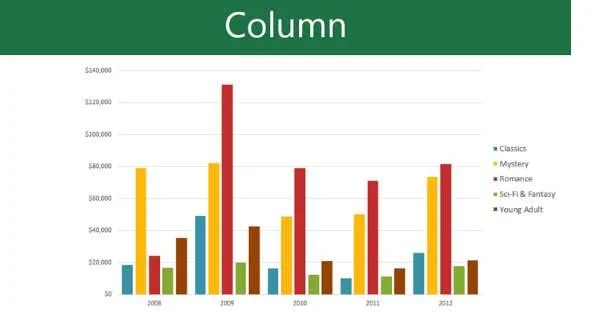
Column: Column chart uses vertical bars to represent data. They can handle many different data types, but are mostly used to compare information.
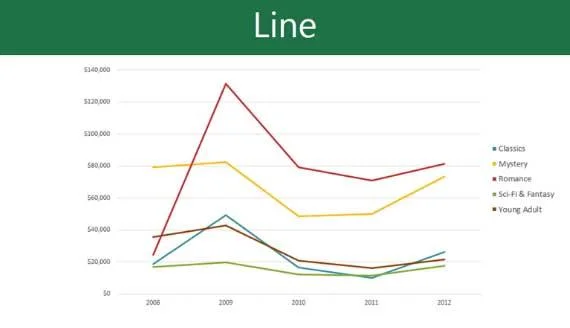
Line : Line charts are ideal for showing trends. The data points are connected by straight lines, making it easy to show increases or decreases in values over time.
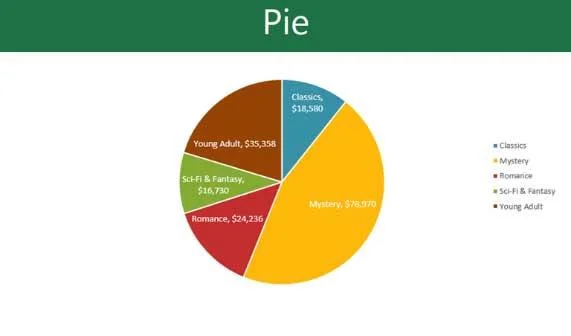
Pie : Pie chart makes it easy to compare ratios. Each value is shown as a part in a circle. Therefore, it is easy to see what percentage of the total data each value represents.
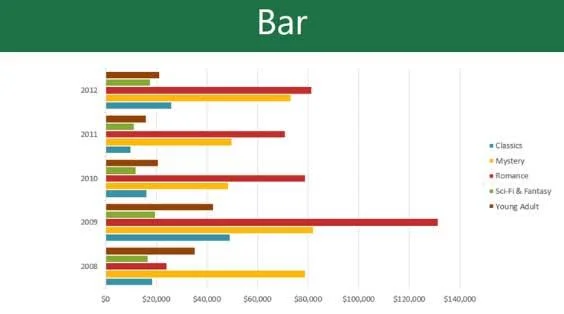
Bar : Bar chart similar to a column chart. However, instead of vertical columns, you must use horizontal bars to illustrate the data.
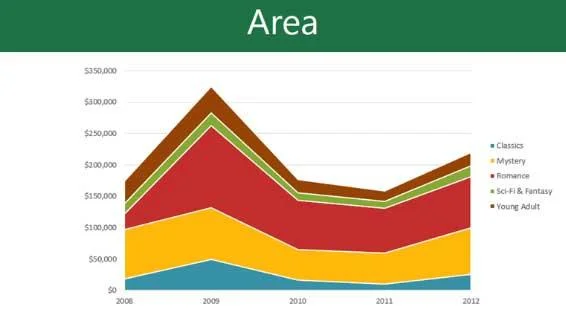
Area : An area chart is similar to a line chart, except that the areas below the line are colored.
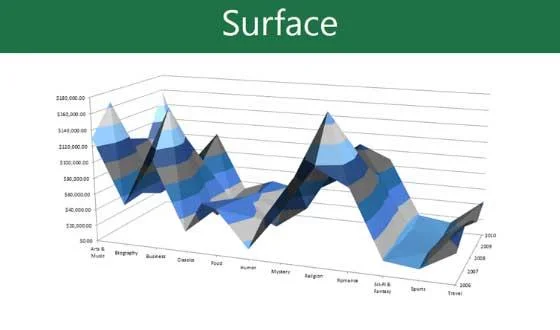
Surface : Surface charts allow you to present data as a 3D scene. This is the best illustration choice for big data, helping viewers see many types of information at the same time.
Besides chart types, you need to understand how to read them. A chart contains a number of different pieces of information or sections that help you interpret the data clearly.
PowerPoint uses a spreadsheet as a placeholder to import chart data, much like Excel. The data entry process is relatively simple.
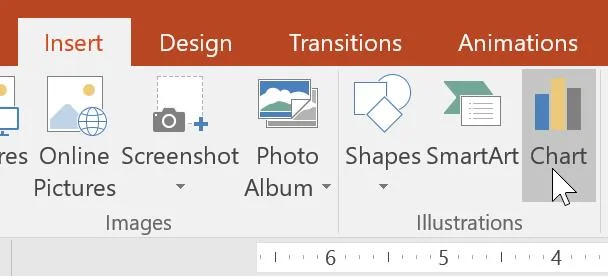
1. Select the Insert tab > click Chart in the Illustrations group .
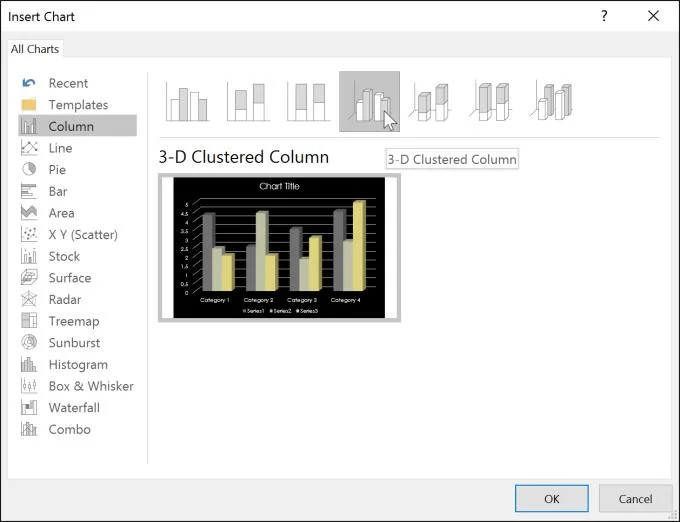
2. A dialog box will appear. Select a category from the left panel and review the chart that appears in the right panel.
3. Select the desired chart, and then click OK .
4. A chart and spreadsheet will appear. The data in that table is placeholder source data that you'll replace with your own information. This source data is used to generate graphs.
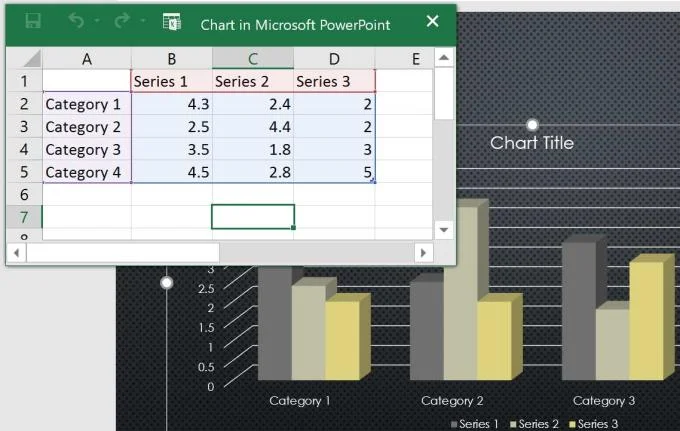
5. Enter data inside the spreadsheet.
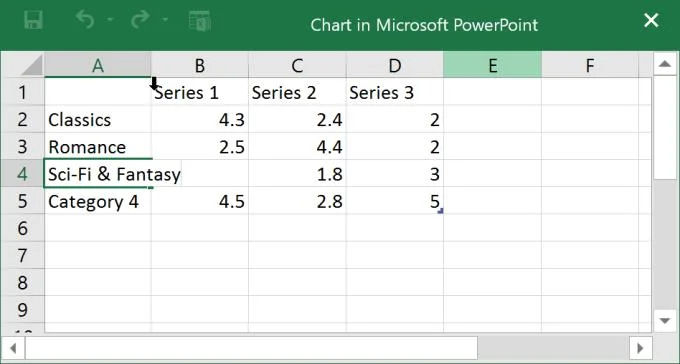
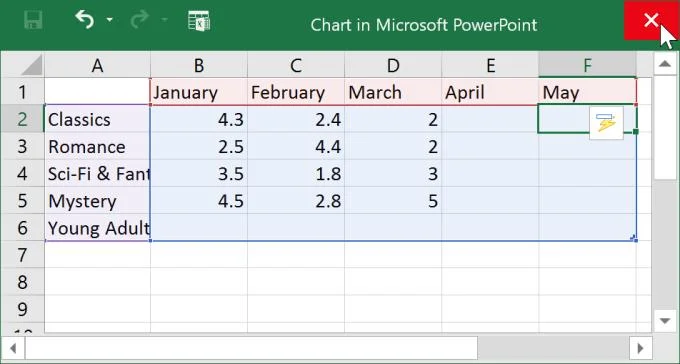
6. Only data enclosed in blue lines appears in the chart, but this area will automatically expand as you continue typing.
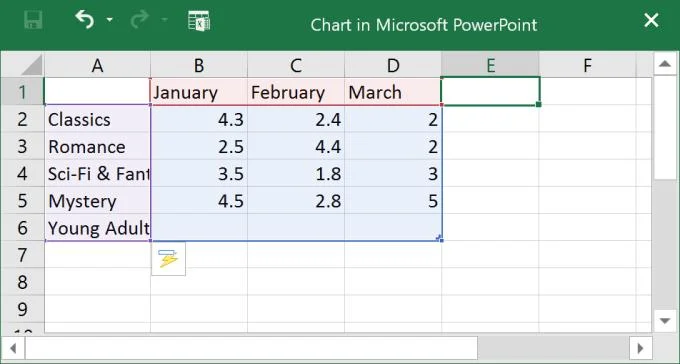
7. After data entry is complete, click X to close the workbook.
8. The chart has been drawn by PowerPoint. The following results:
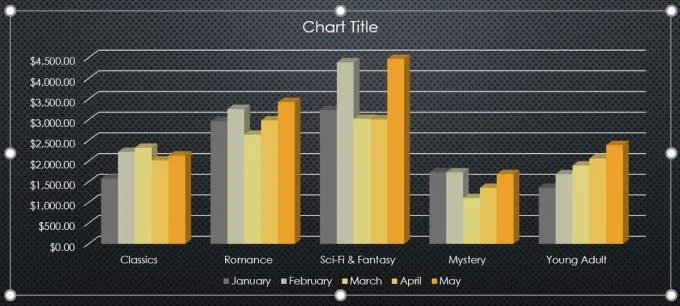
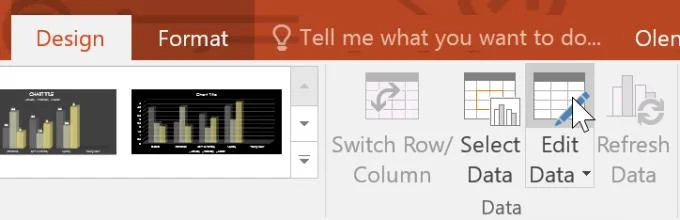
You can edit the data in the chart at any time by selecting the chart and clicking Edit Data on the Design tab .
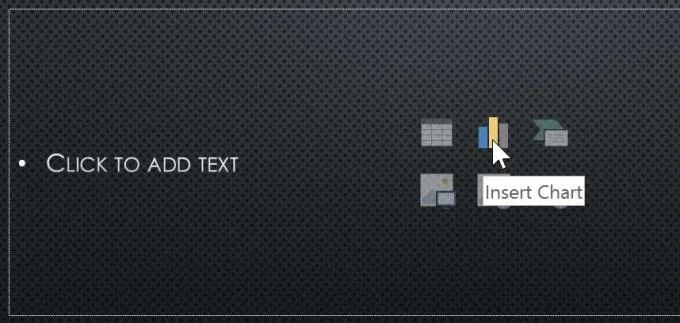
You can also click Insert Chart in a placeholder to insert a new chart.
If you already have data in an Excel file that you want to use to chart or graph, you can transfer the data by copying & pasting it. Just open that spreadsheet in Excel, select & copy the desired data, and then paste it in the source data area of the chart.
You can also embed an existing Excel chart into a PowerPoint presentation. This is useful when you know you need to update the data in the Excel file and want the chart to automatically update whenever the data in the Excel file is changed.
Microsoft PowerPoint offers many ways to customize and organize charts. For example, PowerPoint allows you to change the chart type, rearrange the data, and even change its layout and style.
If you find the data doesn't fit a certain chart, you can easily change it to a new style. The example in the article will change the chart from column type to line type.
1. Select the chart you want to change. The Design tab will appear to the right of the Ribbon .
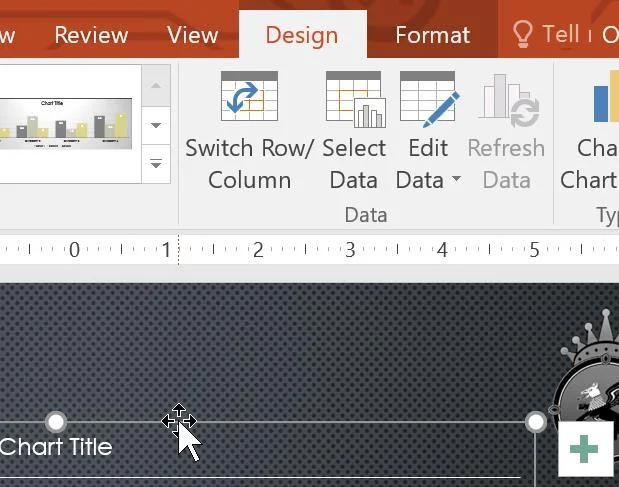
2. From the Design tab , click Change Chart Type .
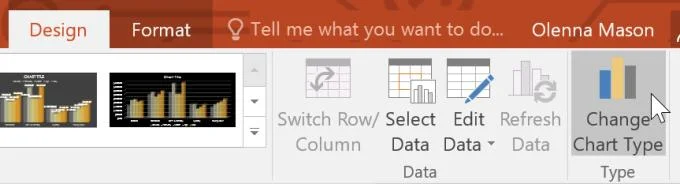
3. A dialog box will appear. Select the desired style, and then click OK .
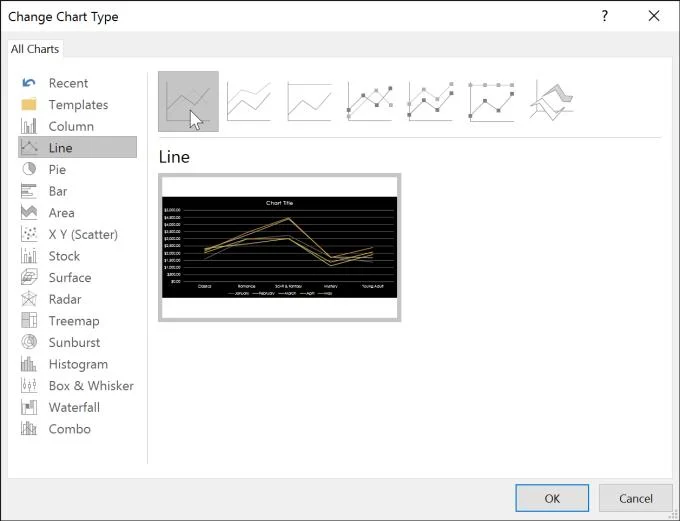
4. A new chart will appear.
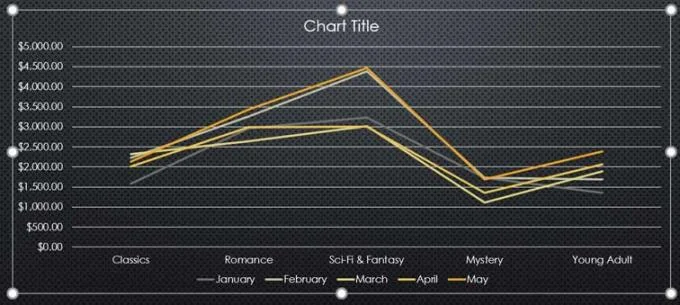
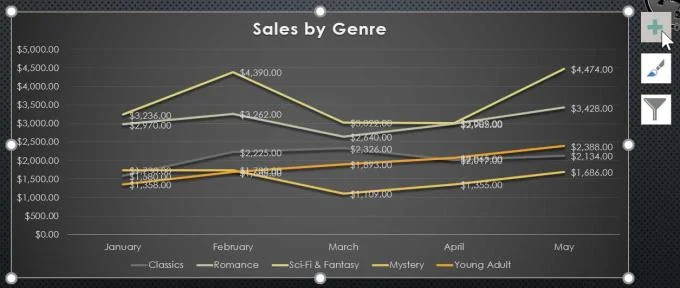
In case you want to change the way the data group graph. For example, in the chart below, book sales are grouped by genre with straight lines for each month. However, you can convert rows and columns to chart groups of data by month, with lines corresponding to each category. In both cases, the chart still shows the same data, just different arrangement.
1. Select the chart you want to edit. The Design tab will appear.
2. From the Design tab , select Edit Data in the Data group .
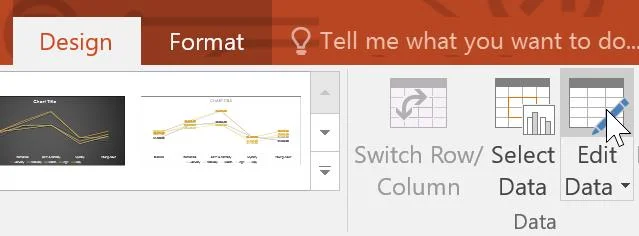
3. Click the chart again, then select Switch Row/Column in the Data group.
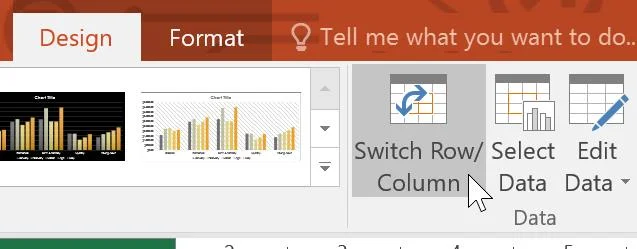
4. The rows and columns will be converted. This example groups data by month with lines for each category.
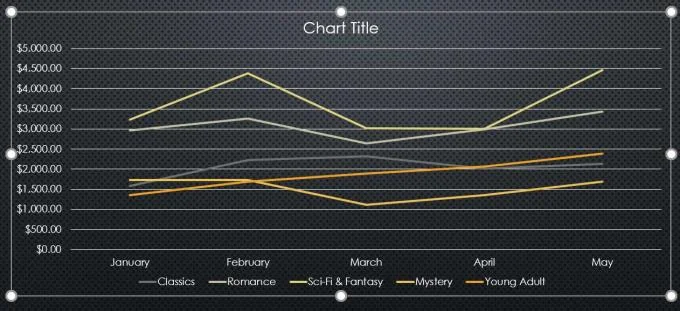
Note : When numeric data is entered in the first column of a spreadsheet, switching rows and columns can lead to incorrect results. At this point, you should type a ' in front of each number so that the spreadsheet formats it as text instead of a numeric value. For example, enter 2016 as follows: '2016 .
The available chart layouts allow you to edit many elements, including titles, captions, and data labels to make them easier to read.
1. Select the chart you want to edit. The Design tab will appear.
2. From the Design tab , click Quick Layout .

3. Select the desired layout from the menu that appears.
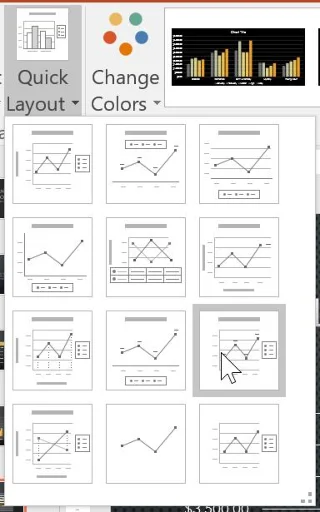
4. The chart will be updated, switch to the new layout.
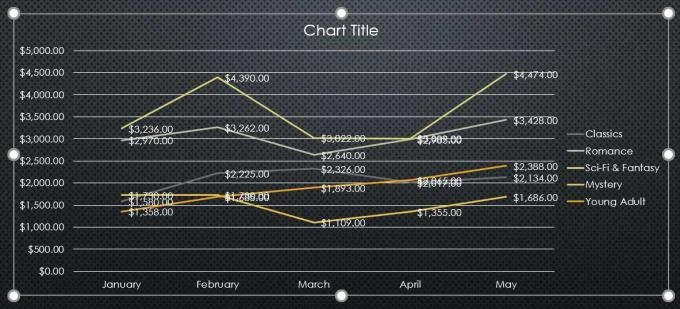
To change an element in the chart, click on it and type what you want.
Chart styles allow you to quickly edit their design.
1. Select the chart you want to edit. The Design tab will appear.
2. From the Design tab , click More in Chart Styles .
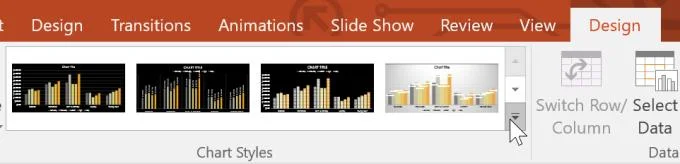
3. Select the desired style from the menu that appears.
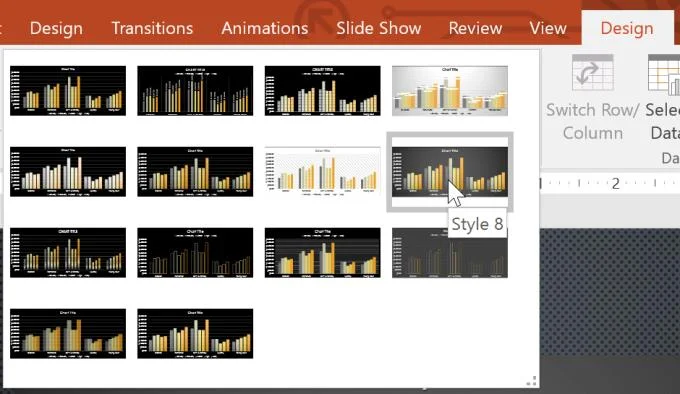
4. The chart will appear in the style you selected.
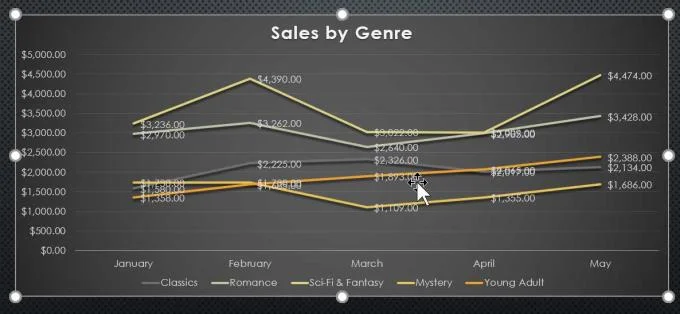
You can also use chart formatting shortcuts to quickly add elements, change styles, and filter chart data.
Understand nuclear decision authority in six steps, including US civilian control and the limits of public information about Israel.
A guide to official 2026 evidence on Hormuz shipping disruption, Iran-related claims, confirmed incidents, and what remains uncertain.
A source-based guide to nuclear escalation risks, UN Charter rules and NATO Article 5 in a strictly hypothetical Iran scenario.
Use five steps to prepare for an outage; nuclear and EMP scenarios are hypothetical, and official shelter instructions come first.
Use 5 defensive steps to verify a cyber disruption, protect household accounts, and avoid mistaking an outage for war.
Use these 5 steps to assess climate effects from a hypothetical Iran strike, compare model assumptions, and avoid unsupported predictions.
Explore six steps for reading research on climate, food and ecosystem recovery after a hypothetical nuclear conflict.
Build a practical fallout preparedness kit in six steps, with sealed food and water, a radio, medical supplies and shelter guidance.
Use six steps to assess Middle East power shifts, test evidence, compare scenarios, and avoid mistaking short-term crisis moves for lasting alliances.
Use five steps to check claims about a hypothetical strike on Iran’s nuclear program, civilian risks, nuclear safety, and diplomacy.