Home
» Today
»
London Tube Strikes: What Travellers Need to Know Before 26 November
London Tube Strikes: What Travellers Need to Know Before 26 November
Verified and updated: 23 November 2026, 9:46 a.m. London time (GMT, UTC+00:00).
The Piccadilly line service-control strike scheduled for 20–21 November has passed. The next planned London Underground action is a separate RMT Tube-driver strike, due to begin at noon on Thursday, 26 November, and last 24 hours. RMT has announced further strike dates through February 2027, but TfL’s detailed operating plan for the upcoming driver action should be checked closer to travel. That distinction matters: the dates are announced, while the exact service impact is not yet established in the official material reviewed.
Destaques
The Piccadilly line strike on 20–21 November is over; it was a separate dispute involving TSSA service-control staff.
RMT’s next planned Tube-driver strike starts at noon on 26 November and is scheduled for 24 hours.
RMT has listed seven further strike dates between 17 December and 25 February.
Check TfL’s live status before setting out; a strike date alone does not confirm which services will run.
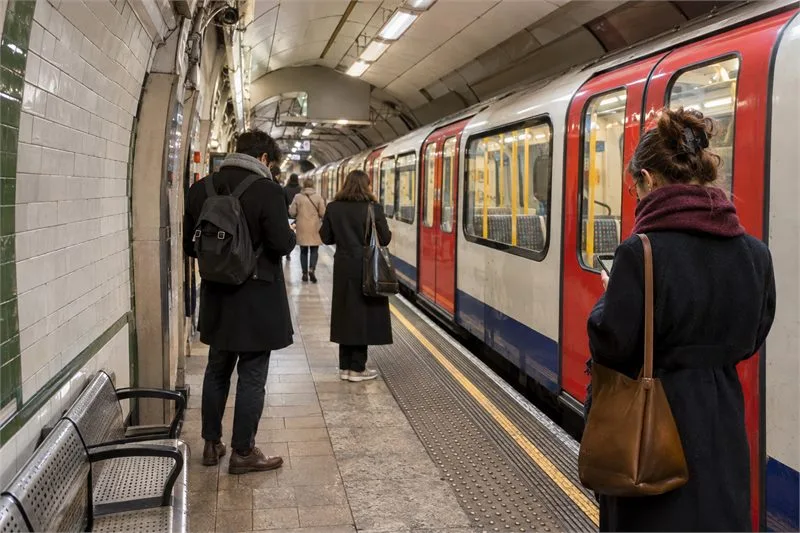
Illustrative image: commuters on a London Underground platform. It does not show a specific strike or actual event.
What is the latest London Tube strike update?
The most recent completed disruption notice concerned TSSA members working in Piccadilly line service control. In its 17 November notice, Transport for London (TfL) said severe disruption was expected on the Piccadilly line on 20 and 21 November, with some District line disruption around shared infrastructure. That action has now passed, so those forecasts should not be treated as a current closure notice.
The next announced action is part of a different dispute. On 6 November, the Rail, Maritime and Transport union (RMT) said London Underground train drivers would take rolling 24-hour strike action, starting at noon on 26 November. RMT’s announcement gives the dates, but travellers should use TfL’s current status and service notices for operational details as the day approaches.
The 26 November start is noon in London. On that date London is on Greenwich Mean Time (GMT, UTC+00:00), so the scheduled start is 12:00 p.m. GMT, or 12:00 p.m. UTC. The announced 24-hour period would run to noon on Friday, 27 November, subject to any change or withdrawal of the action.
Which strike dates have been announced?
RMT’s published list gives the following planned start dates, each at noon:
Thursday, 26 November 2026
Thursday, 17 December 2026
Saturday, 19 December 2026
Monday, 4 January 2027
Wednesday, 6 January 2027
Wednesday, 17 February 2027
Tuesday, 23 February 2027
Thursday, 25 February 2027
These are union-announced dates, not a guarantee that every planned action will go ahead unchanged. Negotiations, cancellations or updated arrangements can alter travel plans. TfL’s official strike updates and its live status information are the best places to confirm what is happening before a particular journey.
Why are Tube drivers planning to strike?
RMT says the dispute concerns London Underground proposals for a four-day working week and a new Trains Modernisation Framework. The union argues that the proposed arrangements could affect existing agreements, shift patterns, transfer rights and annual leave, and says it wants assurances for drivers who remain on current terms.
Those are the union’s stated reasons and claims. The TfL notice published about the earlier Piccadilly line action described a different dispute, involving TSSA service-control staff and the dismissal of a former employee. TfL said that action was unrelated to RMT’s dispute over working arrangements. Keeping the two matters separate helps explain why the earlier Piccadilly-specific disruption should not be used to predict which routes will be affected on 26 November.
How could the next strike affect travel?
RMT says its action involves Tube drivers and has announced a series of strikes. However, the sources reviewed for this update do not provide a final TfL route-by-route operating plan for 26 November. The practical impact could depend on staffing, service decisions and any changes before the date. Do not assume either that all Underground lines will stop or that a particular line will run normally until TfL publishes current guidance.
For now, passengers can make a flexible plan: check the TfL Go app or the TfL line status page before leaving, allow extra time if travelling across London, and look at alternative public transport only after checking its live status. If your journey depends on a connection, airport transfer or time-sensitive appointment, consider a backup route and confirm it again on the day. Buses, the Elizabeth line, DLR, trams and London Overground may provide alternatives, but availability and crowding must be verified rather than assumed.
For later dates, use the same approach. RMT’s calendar is useful for planning ahead, while TfL’s notices provide the travel guidance that can change as each strike date gets closer. This update reflects the official announcements available at the timestamp above; check again before travelling.
Frequently asked questions
Is the London Underground on strike today?
The announced Piccadilly line action on 20–21 November has passed. The next RMT driver strike listed by the union is scheduled to start on 26 November. Check TfL’s live status for today’s service.
When does the next Tube strike start?
RMT has announced a 24-hour strike starting at noon on Thursday, 26 November 2026, London time (GMT, UTC+00:00).
Will the Elizabeth line run during the strike?
The reviewed RMT announcement does not confirm Elizabeth line arrangements for 26 November. Check TfL’s current service updates before travelling.