Home
» Today
»
OceanX Sixgill Shark Video Resurfaces: What the 2019 Bahamas Encounter Shows | Nov. 23, 2026
OceanX Sixgill Shark Video Resurfaces: What the 2019 Bahamas Encounter Shows | Nov. 23, 2026
Updated November 23, 2026, at 10:45 a.m. CET (09:45 UTC).
A striking OceanX video of a bluntnose sixgill shark approaching a submersible is circulating again, but the encounter was not a new discovery. OceanX published the footage in 2019 after a research mission in the Bahamas. The expedition’s lasting scientific milestone was a successful satellite tag deployment on a sixgill shark from a submersible, allowing researchers to tag the animal in its deep-water habitat.
The distinction matters: the close pass by a large female is compelling footage, while the tag was placed on a male during a separate moment in the same research effort. The video offers a rare view of the shark near the sub, but it does not establish new population findings or a fresh expedition. OceanX’s mission announcement and the Florida Museum’s account of the research document the 2019 work.
Destaques
The widely shared encounter dates to OceanX’s 2019 Bahamas mission, not a new 2026 dive.
Researchers tagged a male bluntnose sixgill more than 1,700 feet below the surface using OceanX’s Nadir submersible.
A large female also investigated the submersible, providing unusually close footage but no new scientific survey.
The breakthrough was a method for studying deep-sea sharks in their habitat, where their movements and behavior remain poorly understood.
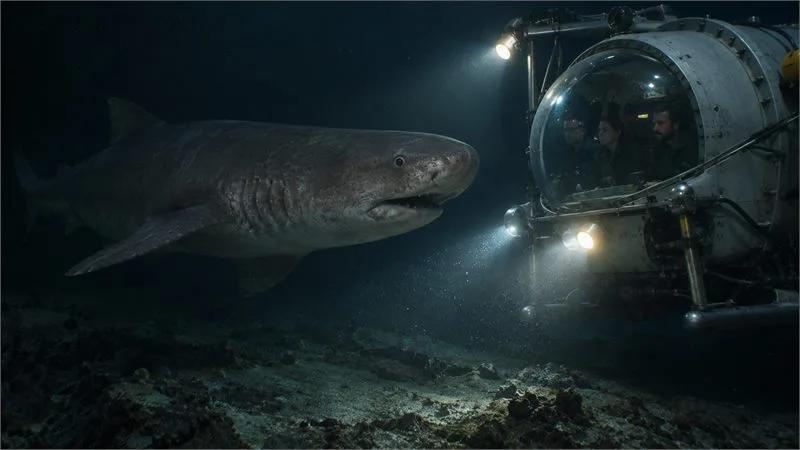
Illustrative image: a sixgill shark approaches a research submersible in deep water. It is not a photograph of the OceanX encounter.
When and where did OceanX encounter the sixgill shark?
The mission took place off Eleuthera in the Bahamas during the summer of 2019. OceanX’s research vessel Alucia supported the work, while the three-person submersible Nadir carried researchers into the deep. The Florida Museum reports that on the night of June 29, a male sixgill approached at more than 1,700 feet (about 520 meters), and researcher Gavin Naylor fired a satellite tag into its side.
The female seen in the best-known close-up footage was another memorable part of the expedition. The Florida Museum describes her as roughly 16 feet long and says she examined the sub, including nosing its window. That encounter is the visual centerpiece, but the tag on the male was the central research achievement. OceanX’s original 2019 video also identifies the mission as a bluntnose sixgill tagging effort.
Why was tagging a shark from a submersible important?
Bluntnose sixgills spend much of their time at depths that make direct observation difficult. Researchers had tagged sixgills before, but bringing a deep-water animal to the surface can create stress and may affect its behavior. Deploying a satellite tag from a submersible gave scientists a way to attach a tracker while the shark remained in its natural environment.
The approach required a custom system and substantial trial and error. According to the Florida Museum, the project involved three expeditions, more than 2,000 pounds of bait and over a dozen attempts. The tag was designed to record depth, light and temperature at intervals for about three months, then detach and transmit stored data after reaching the surface. Those measurements can help researchers understand vertical movements and the conditions the shark encounters.
The video should not be mistaken for a comprehensive behavioral study. A close approach by one animal cannot establish how often sixgills investigate submersibles, how representative the encounter was, or whether the species’ population is increasing or declining. The documented contribution is narrower and still valuable: the team demonstrated a way to tag a large shark at depth.
What can the resurfaced footage tell us now?
It can make a rarely seen deep-sea animal visible to a broad audience and direct attention to the challenges of studying life in the ocean’s twilight zone. The Florida Museum says bluntnose sixgills commonly occupy depths of about 650 to 3,300 feet, though they have been recorded deeper. The species can reach around 20 feet in length and belongs to an ancient shark lineage.
What has changed this week is public attention to old footage, rather than the underlying science. In the sources checked for this update, there was no confirmation of a new Bahamas encounter or new tracking results tied to the resurfaced clip. Any claims about a current expedition, fresh tag data or a newly observed shark should be treated as unverified unless researchers or OceanX publish supporting information.
For marine research, the next useful step is follow-up data: published analyses that explain what the tags recorded and how those observations add to what scientists know about sixgill movements. The 2019 mission showed that researchers could reach and tag the animal at depth. Continued tracking and repeated observations would be needed to turn that technical success into a fuller picture of the species’ ecology.
Frequently asked questions
Is the OceanX sixgill shark video new?
No. OceanX released the footage in 2019 from a Bahamas research mission.
Was the shark in the close-up video tagged?
The Florida Museum describes the large female in the footage as investigating the sub. The satellite tag was successfully placed on a male sixgill during the mission.
How deep was the tagging dive?
The tagged male approached at more than 1,700 feet (about 520 meters) below the surface, according to the Florida Museum.