
Build a PipeWire Output Toggle Script That Moves Active Audio

Switch Debian audio between named PipeWire outputs with a pactl script that updates the default sink and reroutes streams already playing.
Windows BitLocker offers an easy-to-use solution for encrypting your hard drive. However, it also has its drawbacks, so it may not be a great choice for everyone.
Advantages of using BitLocker to encrypt data
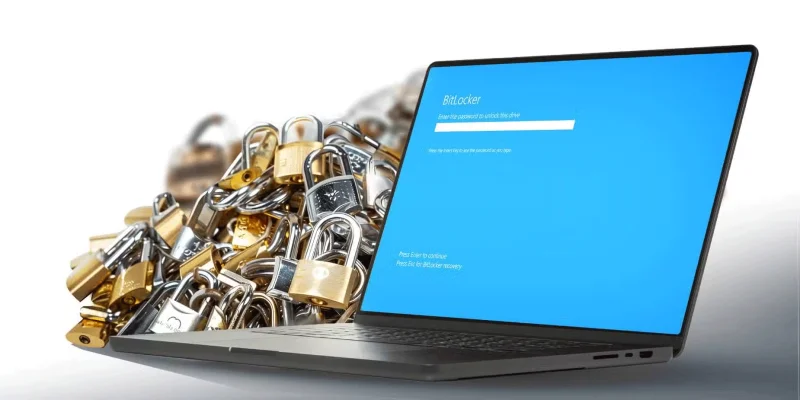
BitLocker is a powerful tool for securing your data with a wide range of built-in features. From strong encryption to hardware-level key storage, it provides comprehensive file protection.
Here's a closer look at the key advantages of BitLocker:
BitLocker's features make it ideal for businesses and individuals looking for a reliable encryption method without the need to install additional software. However, you should consider how its drawbacks might affect you.
Disadvantages of hard drive encryption
While BitLocker provides powerful protection, it is not without its limitations. Encrypting and decrypting data adds additional processing steps, making file handling more complex and more likely to be corrupted.
This additional complexity often manifests itself as disadvantages in the following areas:
Despite these drawbacks, you may find that the added security of BitLocker outweighs the challenges, especially if you take the necessary precautions outlined above.
Should I use BitLocker to encrypt my data?
Deciding whether to use BitLocker depends on a number of factors, including your data security needs, the devices you use, and your technical skills. If your computer contains sensitive information that you can't afford to lose or disclose, using BitLocker is a smart choice. Its full-disk encryption capabilities ensure that your files remain safe, even if the physical device is lost or stolen.
However, BitLocker isn't ideal for everyone. If you're using an older machine, the performance hit from encryption may outweigh the benefits. Likewise, if you're a regular user who doesn't store extremely sensitive data on your machine, other measures like strong passwords and regular updates should be sufficient.
Additionally, if you frequently switch between operating systems or share files across different platforms, BitLocker's lack of native cross-platform support can become a hassle.
Another important consideration is whether you are willing to responsibly manage your recovery key. Losing access to this key could result in you losing access to your data, so it is important to store the key in a safe place where you don’t lose it. You can save the key to a trusted cloud service or USB drive, or even print it out and keep it.
Another thing to remember is that BitLocker is not a replacement for other security measures. Regular backups, strong passwords, and system updates are still necessary, even with encryption. Encryption protects your data from unauthorized access, but it does not prevent it from being accidentally deleted or corrupted.
Ultimately, BitLocker is a powerful tool for securing your hard drive, but it has its limitations. For most people looking for free, built-in encryption on Windows, BitLocker provides a reliable and effective solution. Just keep the nuances in mind and be prepared to deal with any potential challenges before you enable it.
Switch Debian audio between named PipeWire outputs with a pactl script that updates the default sink and reroutes streams already playing.
Get your Bluetooth headset mic working by selecting the right input, using a hands-free audio profile, and checking Ubuntu’s PipeWire route.
Learn why Flatpak apps may ignore Ubuntu 24.04 GTK themes and follow safe steps to check theme extensions, refresh Flatpak apps, and diagnose portal issues.
Install Ubuntu 24.04 alongside Windows 11 with BitLocker safely. Compare separate-drive and shared-drive paths, recovery keys, partitioning, and boot checks.
Diagnose NVIDIA driver failures after an Ubuntu kernel update. Check DKMS and Secure Boot, rebuild the matching module, enroll a MOK, and verify the fix.
Fix Ubuntu 24.04 Wi-Fi drops after suspend with checks for NetworkManager, radio blocks, updates, power saving, and drivers—then verify each resume.
Learn why tracker-miner-fs-3 uses high CPU in Ubuntu GNOME and how to check indexing, exclude folders, update Ubuntu, or safely rebuild the search index.
Fix Debian’s UEFI boot error by checking boot mode, the EFI System Partition, GRUB files, and firmware boot order—without reinstalling Debian first.
The Outlook Inbox Repair Tool fixes corrupted PST files quickly so you can recover emails and restore normal Outlook function. Follow these exact steps to run scanpst.exe without data loss.
Get the Adobe PDF Installer Offline to install Acrobat Reader on any PC without needing internet during setup. Follow these exact steps for the full standalone package.








