Creator Likeness Protection: Practical Steps and UK Changes | 22 November 2026
Learn how creators can protect their face, voice and work from unauthorised AI replicas, document misuse and use platform tools and UK protections.
Information checked: November 22, 2026, 1:10 p.m. UTC (London, GMT, UTC+00:00).
Creators whose faces, voices and online identities are copied into synthetic social media personas are facing an increasingly visible gap between what AI can reproduce and what existing laws can stop. In a response published on October 23, 2026, the UK government addressed the misuse of creative professionals’ work and likeness by AI-generated personas on social and subscription platforms. It said copyright and passing-off claims may apply in some cases, but also pointed to further work on digital replicas and AI labeling rather than announcing a new blanket right to control one’s likeness.
The issue, sometimes described online as “AI reskinning,” goes beyond copying a video. An account may imitate a creator’s appearance, delivery, visual identity or perceived endorsement while producing new synthetic clips. YouTube has taken a practical step by expanding AI-likeness detection to entertainers in April 2026, but detection and takedown systems do not guarantee removal, and their reach varies by platform.
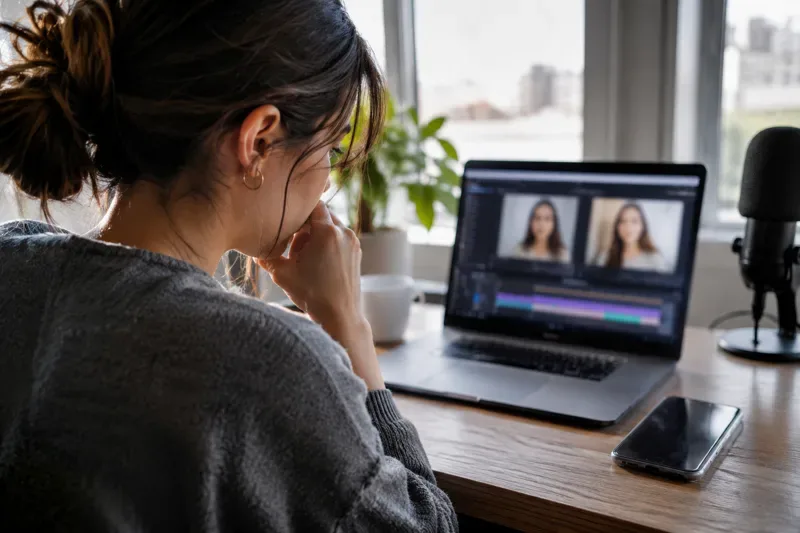
A written parliamentary question asked whether ministers would propose legislation, including a criminal offense, to address AI personas misappropriating creators’ likenesses and work. The government’s October 23 answer did not announce such an offense. Instead, it noted that existing copyright and passing-off rules may offer remedies depending on the facts. It also cited Online Safety Act duties aimed at user-generated fraud and said the government was considering further action through a digital-replicas consultation and an AI-content-labeling taskforce. See the official parliamentary answer.
This distinction matters: a proposal to consult is not the same as an enforceable new right, and a platform’s obligation to address certain illegal content does not imply that every unconsented imitation is automatically illegal. The October answer is the latest clearly dated UK government position verified for this article; it does not independently confirm that the promised consultation or taskforce has subsequently launched.
On April 21, 2026, YouTube announced that its detection program was expanding to the entertainment industry, including talent agencies, managers and performers who do not necessarily operate their own YouTube channels. According to YouTube’s official announcement, the system identifies videos that appear to use a participant’s AI-generated facial likeness and lets eligible participants review matches and request removal.
YouTube’s support documentation describes likeness detection as experimental and unavailable in some countries. Enrolment for qualifying creators includes identity verification. The documentation also describes work on audio detection, which should not be confused with universal voice-cloning coverage already in place. A match is a lead for review, not an automatic infringement finding or a guarantee that a video will be taken down.
The UK government’s March 2026 report on copyright and artificial intelligence explains the core legal mismatch. Copyright protects qualifying photographs, sound recordings, films and other works, but generally does not grant the person in them ownership of their facial features or vocal characteristics. An AI-generated video may closely resemble a creator without reproducing a substantial part of an existing protected work. In that situation, a copyright claim may be difficult even where the imitation feels unmistakable.
Passing off can potentially help when a false association damages established business goodwill. However, it depends on specific legal elements and may be harder for emerging creators without a demonstrable commercial reputation. Other legal routes, including privacy, data protection, defamation and fraud-related rules, may be relevant to particular conduct; none should be treated as an automatic remedy for all synthetic lookalikes.
No. Authorized dubbing, clearly labeled parody, creative transformation and a performer’s licensed digital double are distinct from an account falsely pretending to be a real creator. Consent, disclosure, commercial context and whether audiences are likely to be misled are all important. “AI reskinning” is an informal description, not a settled statutory category, so different cases can raise different questions.
The immediate commercial concern is mistaken endorsement. A synthetic creator can appear to recommend a product, promote a link or deliver a message that the real person never approved. That can confuse followers and put legitimate sponsorship relationships at risk. For viewers, the danger is not simply believing a realistic image: it is believing that a trusted individual actually authored or endorsed the message.
For platforms, the challenge is operational. Moderation teams must distinguish impersonation and scams from lawful commentary, satire and licensed uses, often across accounts that repost edited versions of the same clip. Detection can help find likely matches, but proof of identity, complaint processing and cross-platform consistency remain essential. The available primary sources do not provide a reliable count of creators affected by the specifically named “reskinning” trend, so any claim of a measured surge would be premature.
The most consequential UK question is whether policymakers move beyond the existing patchwork toward a new digital-replica or personality right. The March government report explicitly considered that possibility but did not settle its design. The October parliamentary answer reiterated further consultation and work on labeling. Whether these steps lead to legislation, and what conduct any future rules would cover, remains uncertain.
In the nearer term, creators encountering suspected impersonation should document the account, links, upload dates and misleading claims before submitting the appropriate platform report. They should separate copied original footage from newly generated likeness content when describing the complaint, because the legal and platform grounds may differ. Brands can reduce confusion by verifying promotional partnerships through creators’ established channels rather than relying on a plausible face or voice alone.
Not automatically. Depending on the circumstances, copyright, passing off, fraud, privacy or other rules may apply. There is no general UK image right that makes every unauthorized digital lookalike unlawful.
Eligible users can use YouTube’s likeness-detection and privacy complaint routes to request review and potential removal. The tool is experimental, availability varies, and removal is not guaranteed.
No new general digital-replica right was established in the official developments verified here. The government has discussed potential reforms and further consultation, not announced an enacted standalone right.
Learn how creators can protect their face, voice and work from unauthorised AI replicas, document misuse and use platform tools and UK protections.
AI reskinning puts synthetic characters into creators’ existing performances. Here’s how it works, why it matters and what UK creators can do.
UK ministers address AI creator impersonation as YouTube expands likeness detection. What changed in 2026, where rights fall short and what comes next.
Bell says a Nov. 17 cyber incident exposed some enterprise customer data, with no service impact reported. Learn how Bell customers can protect accounts and spot impersonation scams.
Bell Canada says a November 17 cyberattack exposed enterprise contacts, ticket details and some IP addresses. Here is what is known—and what remains unclear.
Bell says a Nov. 17 intrusion exposed some enterprise customer data, with no service disruption reported. Here is what is confirmed and what remains unknown.
Australia edged Wales 29–26 in Cardiff, withstanding a late comeback after four tries from each side. See the score, key moments, and what comes next.
Why Australia beat Wales 29–26 in the 2026 Nations Championship: the tactical turning points, match statistics, late penalty, and what comes next.
After Verstappen’s Las Vegas win, see the verified 2026 F1 drivers’ and constructors’ standings, title status, and the nine-point Red Bull–McLaren battle.
Max Verstappen won the 2026 Las Vegas Grand Prix by 0.639 seconds. See the FIA final classification, points, penalties, fastest lap and race highlights.