A cottagecore witch costume combines the soft, handmade feel of a country wardrobe with a few recognizable witch details. The result can be romantic, earthy, and unmistakably Halloween without requiring a complicated robe, expensive accessories, or uncomfortable shoes. If this is your first time building the look, start with clothes you can move in, add one or two witch-coded details, and test the outfit in the conditions where you will wear it.
Cottagecore is a contemporary style inspired by an idealized rural life: natural textures, florals, useful objects, and relaxed silhouettes. For Halloween, the “witch” part can come from a pointed or wide-brim hat, a dark color palette, a herb bundle, or a small symbolic accessory. You do not need every element at once. A cohesive outfit usually works better than a costume covered in unrelated props.
What should a beginner prepare?
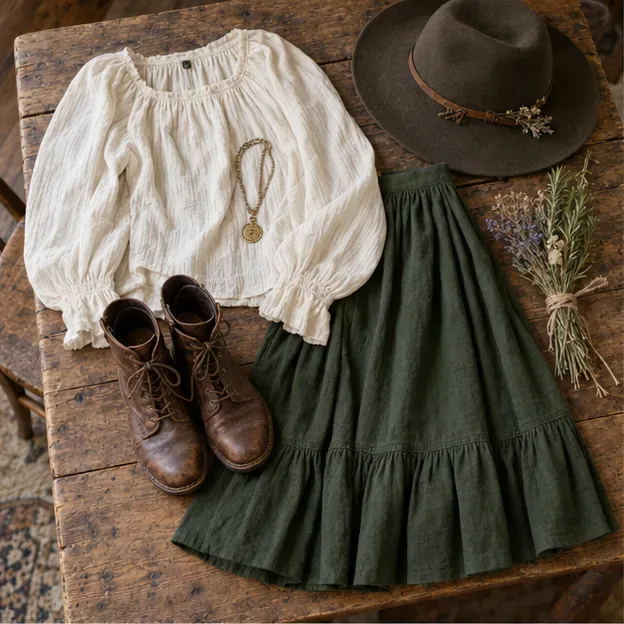
Choose a base outfit first, then add details. A practical starter kit might include:
- A cream, ivory, or muted floral blouse, preferably with sleeves that can be secured.
- A dark green, brown, rust, plum, or black skirt, dress, or trousers.
- Comfortable boots or closed-toe shoes with a stable sole.
- One witch detail, such as a felt hat, a simple capelet, a vintage-looking pendant, or a small basket.
- Optional finishing pieces: a belt, a ribbon, a shawl, dried flowers, or a reusable tote.
Check your closet, thrift shops, and costume pieces before buying anything. An old button-up shirt can stand in for a blouse; a plain dark dress can become the base layer. Pick a palette of two or three main colors—such as cream, forest green, and rust—so thrifted pieces look intentional together. If you are attending an outdoor event, plan for temperature and rain before choosing a thin dress or delicate shoes.
Caption: A cream blouse, dark green skirt, sturdy boots, felt hat, and small botanical accents laid out on a wooden table.
How do you build the outfit step by step?
1. Choose a comfortable base
Start with one piece you already like wearing: a midi dress, a skirt with a blouse, or dark trousers with a loose shirt. “Midi” means a hem that falls between the knee and ankle. It gives a flowing shape while leaving room to walk. If you prefer trousers, a long cardigan or apron-style overskirt can add the same layered, handmade impression.
Try sitting, reaching, and walking in the base layer before styling it. The sleeves should not block your hands, the waist should not pinch, and the hem should clear the ground. If you will be outside after dark, make sure the outfit does not hide your shoes or make it hard to move safely.
2. Add one structured layer
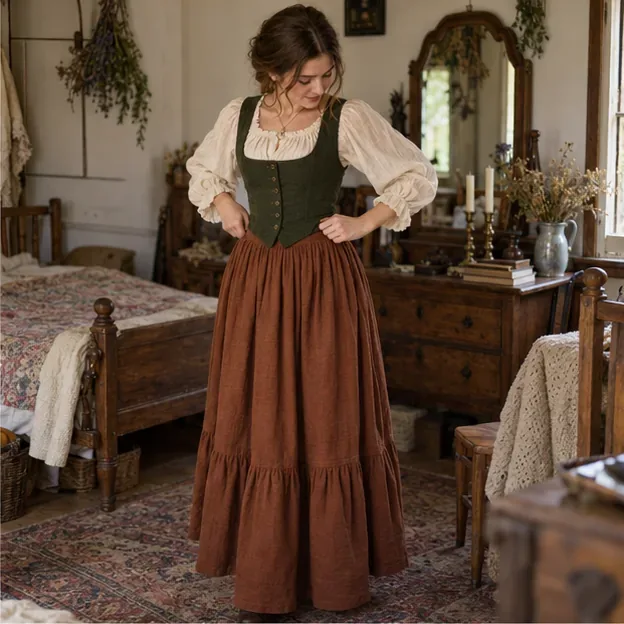
A fitted vest, corset-style top, cardigan, or short jacket gives shape to a loose blouse and skirt. A corset-style top here means a costume or fashion vest with a fitted, laced look; it does not need to be tightly laced or restrictive. Keep the layer comfortable enough for a full evening. A brown belt can create definition if you do not have a vest.
Mix textures rather than adding more colors: linen or cotton with knitwear, corduroy, denim, or a soft wool-like layer. If the weather is warm, use a lightweight vest and leave the shawl at home. In cool weather, add a fitted coat or tights that do not interfere with walking.
Caption: A wearer checks the fit of a cream blouse, fitted green vest, and rust-colored skirt before adding accessories.
3. Make the witch reference clear
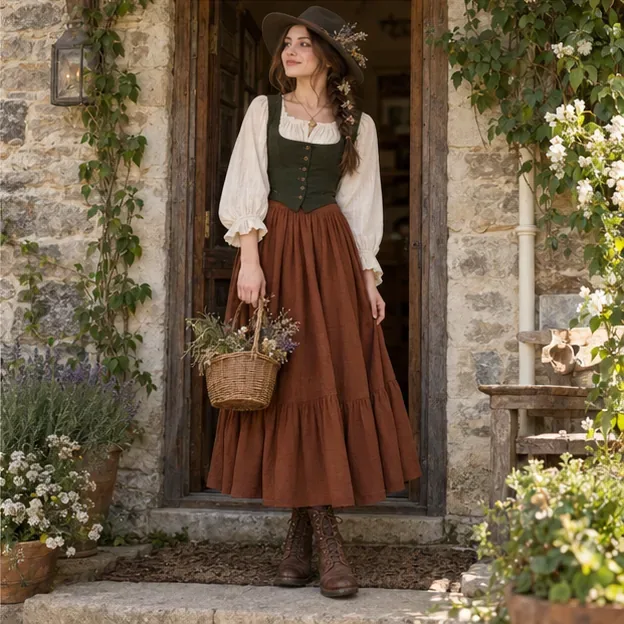
Choose one focal detail: a felt witch hat, a small broom, a crescent-shaped pendant, a dark shawl, or a compact basket with decorative botanicals. One clear signal is often enough. If you choose a hat, test whether it stays in place when you turn your head. If you choose a basket, keep it light and leave one hand free when walking.
For a more subtle costume, use a pointed hat with everyday clothes. For a storybook look, pair a flowing skirt with a vest and a basket. For a modern version, wear dark jeans, a long cardigan, boots, and a single botanical accessory. The same base can shift from sweet to mysterious through color, shape, and accessories rather than a full costume change.
4. Finish hair and makeup simply
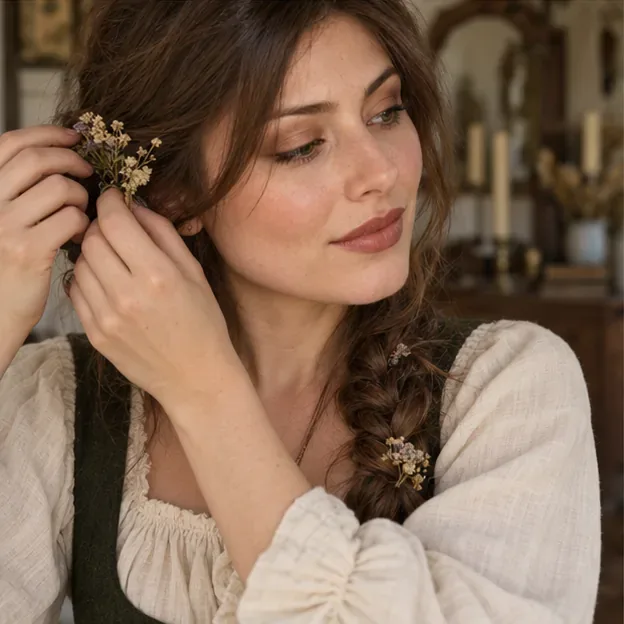
A loose braid, low bun, ribbon, or a few hair pins can suggest a handmade, outdoorsy style. For makeup, try soft brown or plum tones and a muted lip; ordinary makeup is easier to remove than heavy face paint. Patch-test new cosmetics if you have sensitive skin, and keep glitter away from the eyes. Decorative dried flowers can be pinned to hair or clothing, but avoid placing brittle stems where they can scratch skin or snag fabric.
Caption: A close view of a loose braid and understated earthy makeup, finished with a small cluster of dried flowers.
How can you check that the costume is ready?
Do a quick “real evening” test before Halloween: wear every layer, walk for several minutes, climb a few steps, sit down, and check the hem and sleeves again. Confirm that you can see clearly, use your phone, and carry what you need. Add a light-colored or reflective detail if you will be near traffic after dusk. The U.S. Consumer Product Safety Commission advises choosing a costume that fits, does not drag, and avoids overly loose sleeves or billowing fabric that could brush against flames. Its Halloween costume and decoration guidance also recommends visibility and safe footwear.
For a homemade costume, do not assume a natural-looking fabric is flame-resistant. Keep the outfit away from open flames, including candles, fireplaces, and outdoor fire pits. Use battery-operated tea lights or a small flashlight for a lantern effect. The National Fire Protection Association’s candle safety guidance notes that combustible décor and clothing can contribute to candle fires; a safe costume should not depend on flame for atmosphere.
Caption: The finished outfit pairs a felt hat, fitted vest, full skirt, sturdy boots, and a small basket at a cottage doorway.
What mistakes should you avoid?
- Adding every witch symbol at once. Too many props can make the outfit feel cluttered and become awkward to carry. Choose a focal point and one supporting detail.
- Choosing a skirt that drags. A long hem may look dramatic in a mirror but can catch on stairs or uneven pavement. Shorten it, pin it temporarily, or choose a midi length.
- Wearing loose sleeves near candles. Puffy sleeves and trailing capes can brush against flames. Secure sleeves and skip open flames; use battery lighting instead.
- Using real plants or mushrooms as props without knowing what they are. Use purchased dried botanicals, fabric flowers, or craft-store stems. Never eat a wild plant or mushroom because it looks familiar. The National Park Service warns that poisonous mushrooms occur in parks and recommends leaving interesting specimens in place; see its Mount Rainier mushroom guidance.
- Assuming flowers are dry because they feel crisp. Damp plant material can spoil in storage. If you dry your own herbs or flowers, follow a reliable drying method and store them only when fully dry. The University of Minnesota Extension explains the moisture-control principle in its guide to drying foods and herbs; flower craft methods can vary by species and humidity.
- Prioritizing the picture over comfort. A costume that pinches, slips, or blocks vision is hard to enjoy. Swap unstable shoes, loosen restrictive layers, and remove anything that snags when you walk.
Make the look your own
The strongest cottagecore witch costume has a clear base, a small number of coordinated details, and enough comfort for the event. Start with what you own, choose a palette that feels seasonal, and make the witch reference visible through one accessory. Then judge the result by practical signs: you can move freely, the hem stays clear of the ground, sleeves are controlled, and the outfit still reads as a costume from a few steps away. If one of those checks fails, adjust the fit or remove an accessory before adding more.
For a final visual check, take a full-length photo in the lighting you expect to encounter. If the outfit looks too much like everyday wear, add a hat or distinctive necklace. If it feels overloaded, remove one prop. A little restraint lets the textures, layers, and handmade details carry the story.