Create Fillable PDFs from Forms in LibreOffice Writer
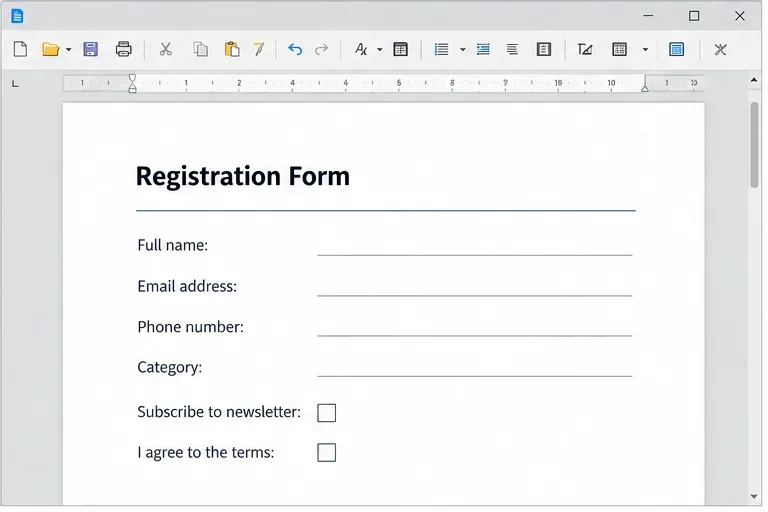
Add usable text fields, check boxes, and drop-downs in Writer, then export a PDF recipients can complete and save.
Ever booted up your computer only to face a frustrating "non-system disk" error or endless partitioning woes on your shiny new SSD? 😩 You're not alone. Choosing between GPT disk and MBR disk setups can make or break your SSD's performance and compatibility. In this focused guide, we'll demystify GPT vs MBR for SSD, walk you through common SSD troubleshooting pitfalls, and arm you with practical steps to get your drive humming smoothly. Stick around – by the end, you'll feel empowered to tackle these issues like a tech wizard. Let's dive in!
At the heart of SSD troubleshooting lies the partition style: GPT (GUID Partition Table) or MBR (Master Boot Record). These aren't just technical jargon – they dictate how your SSD organizes data, supports boot modes, and handles large capacities.
MBR Disk is the old-school standard, dating back to the floppy disk era. It supports up to four primary partitions and caps out at 2TB total size. Fine for basic setups, but it struggles with modern SSDs exceeding that limit or UEFI boot systems. If you're on legacy BIOS, MBR might work, but it's like driving a vintage car on a highway – functional, yet limiting.
Enter GPT Disk, the modern powerhouse. It supports up to 128 partitions, handles drives way beyond 2TB (perfect for those massive SSDs), and is optimized for UEFI firmware. For SSDs, GPT shines in speed and reliability, reducing boot times and enabling features like secure boot. According to Microsoft's latest documentation, GPT is the recommended choice for all new installations on Windows systems with UEFI.
Why does this matter for GPT vs MBR for SSD? SSDs thrive on efficiency, and mismatched partition styles can cause boot failures, data inaccessibility, or suboptimal performance. Imagine installing Windows on an MBR-formatted SSD with UEFI – chaos ensues! 🚫 But don't worry; troubleshooting is straightforward once you know the signs.
Let's pinpoint the red flags. If your SSD isn't behaving, it could be a GPT disk vs MBR disk mismatch. Here's what to watch for:
Pro tip: Open Disk Management in Windows (right-click Start > Disk Management) to check your SSD's status. Look for "MBR" or "GPT" under the disk details. If it's wrong, time to troubleshoot!
Ready to fix it? We'll keep this concise, focusing on safe, effective methods. Always back up your data first – better safe than sorry! 💾
UEFI or BIOS? Restart your PC and enter the firmware settings (usually F2, Del, or F10). If it's UEFI, GPT is your best bet for SSDs. Legacy BIOS? MBR might suffice, but upgrading to UEFI (via BIOS update) unlocks GPT's full potential.
In Windows, use Disk Management or Command Prompt (run as admin):
diskpart
list disk
An asterisk (*) under "Gpt" column means it's GPT. No asterisk? It's MBR. For deeper insights, tools like MiniTool Partition Wizard (free version) visualize this clearly.
Good news: You can switch safely. For non-system disks:
diskpart
select disk 0  (your SSD number)
convert gpt
For bootable SSDs, create a Windows recovery USB and run MBR2GPT tool from Microsoft. It's non-destructive and ideal for SSD troubleshooting. Download the latest ISO from Microsoft's site.
Stuck? If conversion fails due to partition errors, use third-party tools like EaseUS Partition Master – but verify compatibility with your SSD model for optimal results.
For fresh SSDs, format as GPT during Windows setup (Shift+F10 in installer > diskpart > clean > convert gpt). This erases data, so backups are key. Post-conversion, resize partitions for that extra SSD space – GPT makes it effortless!
Beyond fixes, let's ensure your SSD lasts. Use GPT for all new SSD installs – it's future-proof. Enable TRIM (via Command Prompt: fsutil behavior set DisableDeleteNotify 0) to maintain speed. For multi-OS setups, GPT's flexibility prevents disk partitioning errors.
| Feature | MBR Disk | GPT Disk |
|---|---|---|
| Max Size | 2TB | 9.4 ZB (practically unlimited) |
| Partitions | 4 primary | 128+ |
| Boot Mode | BIOS/Legacy | UEFI (preferred for SSDs) |
| SSD Compatibility | Basic | Optimal speed & features |
This table highlights why GPT wins for GPT vs MBR for SSD. As SSD tech evolves, sticking with GPT avoids obsolescence.
For encrypted SSDs (BitLocker), GPT ensures secure boot without hitches. If you're on macOS or Linux, tools like gdisk handle conversions effortlessly. Still facing issues? Check SSD firmware updates from manufacturers like Samsung or Crucial – they often resolve disk partitioning errors.
If all else fails, professional recovery services can salvage data from botched conversions. But with these steps, you'll likely fix it yourself. Feeling confident? Test your SSD's health with CrystalDiskInfo – a free tool that flags potential hardware faults early.
Wrapping up, mastering GPT disk vs MBR disk troubleshooting turns SSD frustrations into smooth sailing. Your drive is now optimized, faster, and ready for anything. Got a success story or lingering question? Drop it in the comments – let's keep the conversation going! 👏
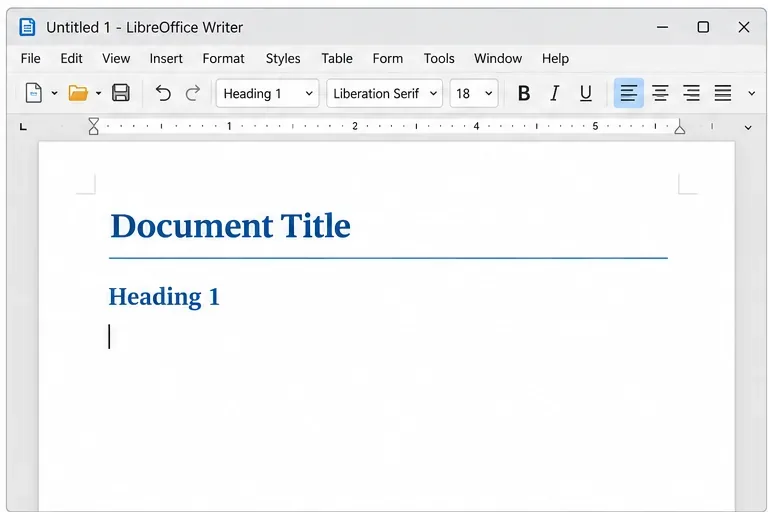
Add usable text fields, check boxes, and drop-downs in Writer, then export a PDF recipients can complete and save.
Fix missing or substituted fonts in LibreOffice Writer PDFs, choose the right export profile, and verify which fonts are embedded before sharing.
Convert a folder of Word documents to PDF with LibreOffice commands, handle nested folders safely, and verify the output before sharing.
Set a custom LibreOffice Writer template as the default so new documents open with your preferred styles and page layout.
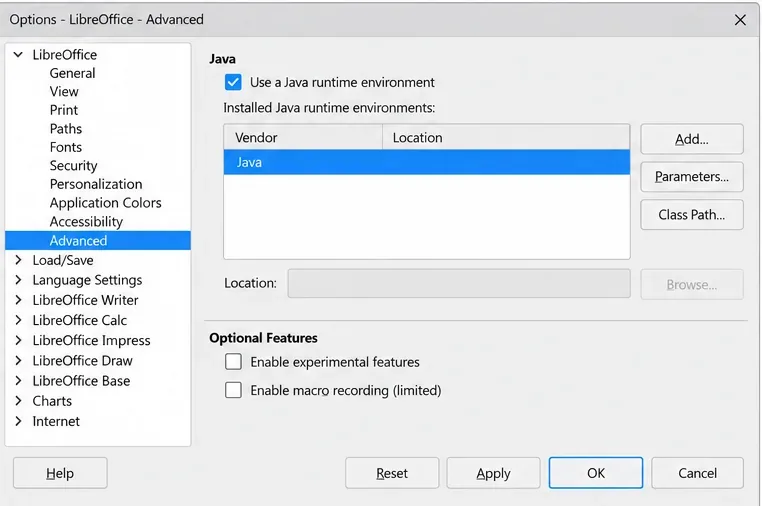
Install a compatible Java runtime, enable it in LibreOffice, and troubleshoot an empty JRE list without changing unrelated settings.
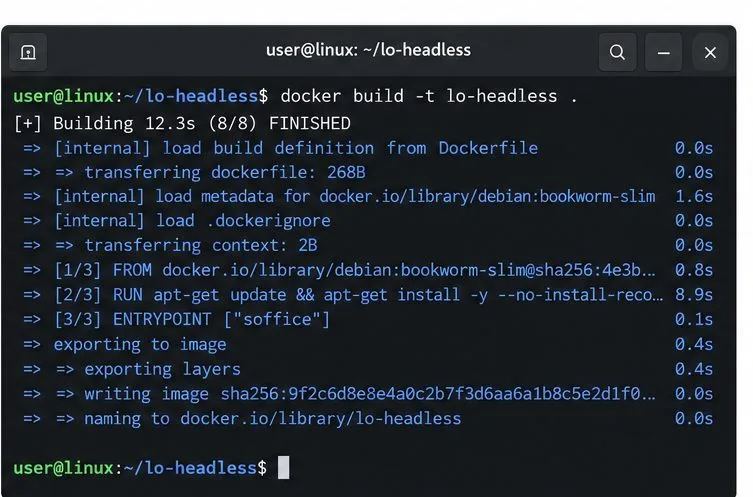
Build a small LibreOffice container, convert office documents without a GUI, and verify PDF output while limiting host-file access.
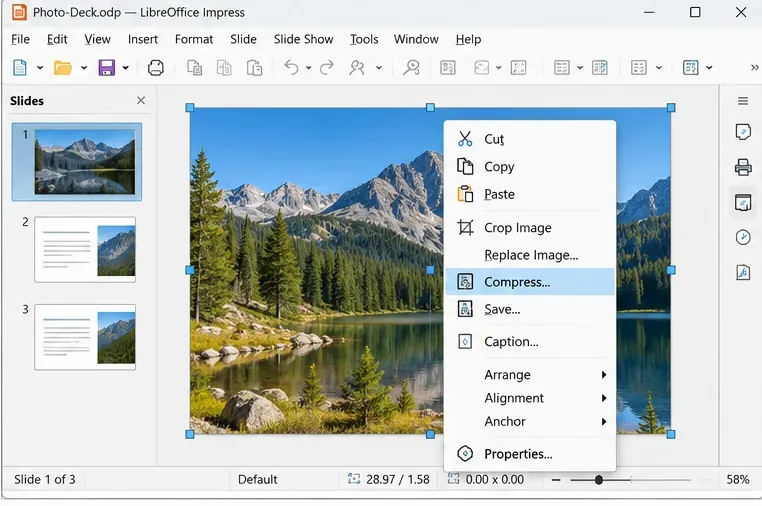
Reduce oversized LibreOffice presentation files by compressing embedded photos, choosing sensible image settings, and checking slide quality before sharing.
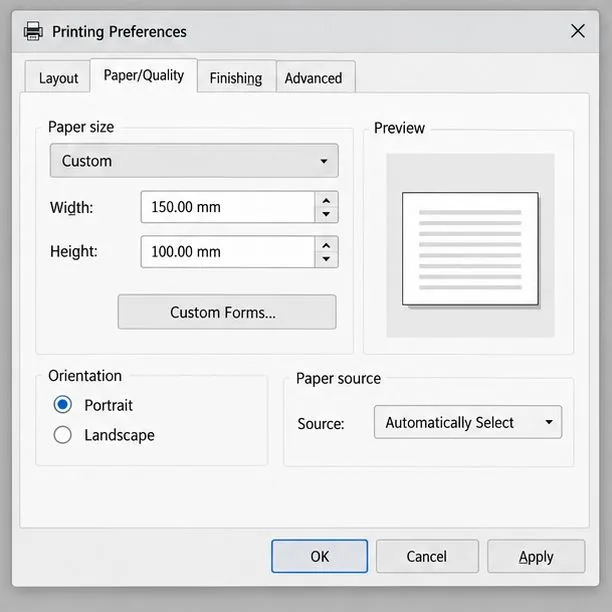
Match LibreOffice’s page dimensions to your printer, check printable margins, and correct scaling before printing a custom-size document.
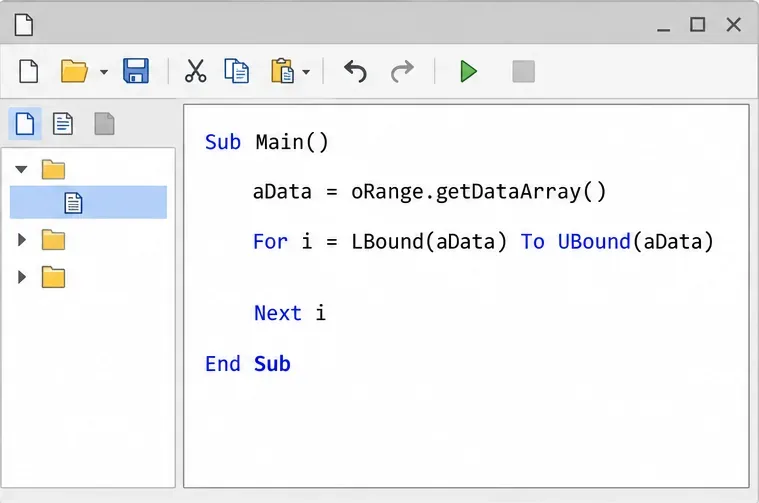
Replace repeated cell access with bulk range reads and writes, then benchmark the result and protect formulas in large Calc workbooks.
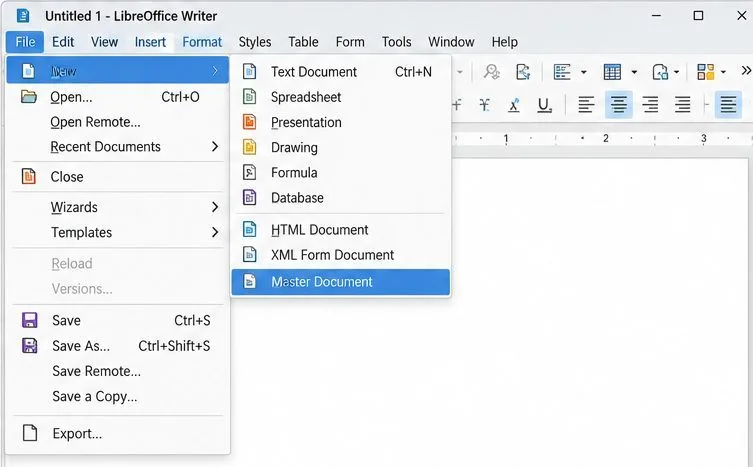
Split a long manuscript into chapters, assemble them in Writer, and keep styles, contents, and export checks consistent.