How to Use the BoM Melbourne Radar Before You Travel
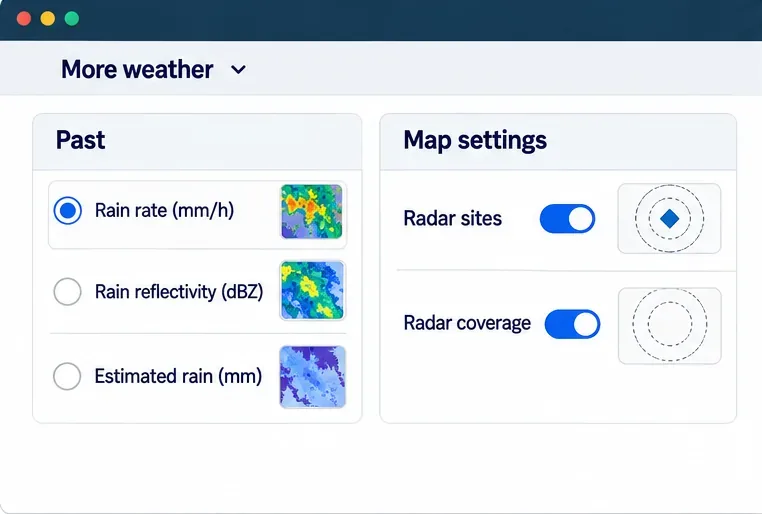
Use the Bureau of Meteorology’s Melbourne radar to locate your route, read rain layers, track approaching echoes, and check warnings before departure.
Earthquake information can change within minutes. If you are in Vanuatu or planning a trip from Australia, use local authorities for instructions, then cross-check the latest seismic and tsunami updates. The Vanuatu earthquake alerts most useful to travelers come from the Vanuatu Meteorology and Geohazards Department (VMGD), the National Disaster Management Office (NDMO), and the Pacific Tsunami Warning Center (PTWC), whose messages are available through the U.S. Tsunami Warning Centers site.

For a dated example, PTWC’s final message for the Vanuatu Islands earthquake on Saturday, October 24, 2026, listed a preliminary magnitude of 6.9 and an origin time of 02:31 UTC. That is 1:31 p.m. Vanuatu Time (VUT, UTC+11) on the same date. PTWC issued its final message at 03:28 UTC, or 2:28 p.m. VUT, and said the tsunami threat from that earthquake had passed. It advised people to remain observant and use normal caution near the sea; minor sea-level fluctuations could still occur in some nearby coastal areas over the next few hours. The live tsunami.gov page showed no active warning, advisory, watch, or threat when checked. Read the PTWC final bulletin for the wording and issue time, and the Government of Vanuatu’s time-zone page for Vanuatu’s UTC+11 offset.
This is a timestamped snapshot for one earthquake and one warning service, not a guarantee about every island, aftershock, building, road, or harbor. VMGD can post later local earthquake records, and local authorities can issue instructions that are more specific than an international bulletin. Refresh the live pages before making a safety or travel decision.
| Source | What to check | Best use |
|---|---|---|
| VMGD Geohazards | Recent earthquakes, tsunami information, and geohazard notices | Local seismic records and Vanuatu hazard information |
| Vanuatu NDMO | Public safety notices and response guidance | Evacuation or all-clear instructions coordinated in Vanuatu |
| U.S. Tsunami Warning Centers / PTWC | Pacific tsunami bulletins and active warning status | A rapid cross-check on tsunami threats from Pacific earthquakes |
| Australian Smartraveller: Vanuatu | Australian travel advice and safety information | Trip planning and updates relevant to Australians overseas |
Each source answers a different question. VMGD’s earthquake list reports seismic events; it does not, by itself, tell you whether to evacuate. PTWC says its messages support the Pacific warning system and are intended for national authorities, which determine the appropriate alert for each country. A tsunami bulletin describes the threat assessed by the warning center, while NDMO and local officials communicate what residents and visitors in Vanuatu should do. Smartraveller summarizes Australian travel advice, but it does not replace instructions from officials on the island where you are staying.
Check the issue time, location, status, and whether a message is preliminary, updated, final, or canceled. Magnitudes and epicenters can be revised as more data arrive. Do not decide that a tsunami is imminent from an earthquake’s magnitude alone, and do not treat a message for another island or ocean basin as a local evacuation order. The Smartraveller Vanuatu advice directs travelers to VMGD, NDMO, and the Pacific/U.S. Tsunami Warning System for updates.
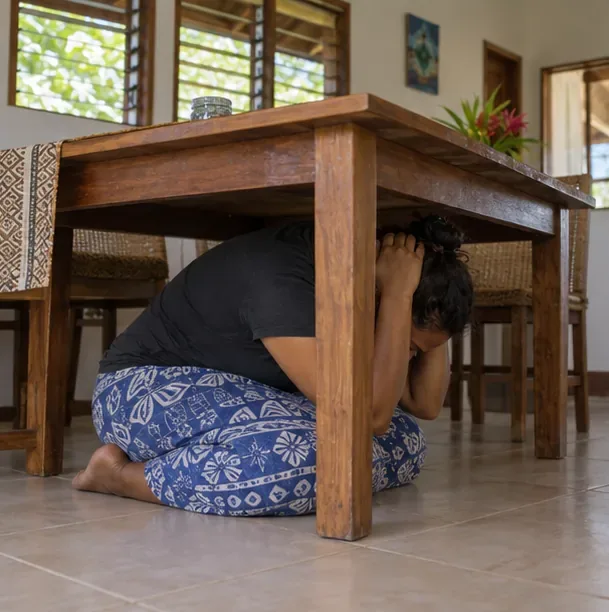
Follow NDMO’s basic earthquake instruction: stop, drop, hold, and cover. Get low, protect your head and neck, and hold on to sturdy shelter until the shaking stops. If you are indoors, stay away from windows and objects that could fall; do not rush outside while the building is moving. If you are outside, move away from buildings, power lines, trees, cliffs, and slopes where it is safe to do so. Use stairs rather than an elevator if you need to leave a damaged building after the shaking ends.
A tsunami can follow an undersea earthquake and may arrive before a phone alert. Smartraveller advises people in tsunami-prone areas not to wait for official warnings after a major earthquake. If shaking is long or strong—more than a minute or hard to stand through—or you notice an unusual retreat or rise in sea level or a loud ocean roar, leave the coast for higher ground or move inland on foot if the route is safe. Smartraveller’s general guidance is to reach at least 10 meters (about 33 feet) above sea level or 1 kilometer (about 0.6 mile) inland when safe to do so. Follow local evacuation signs and the instructions of NDMO, VMGD, police, or your accommodation staff.
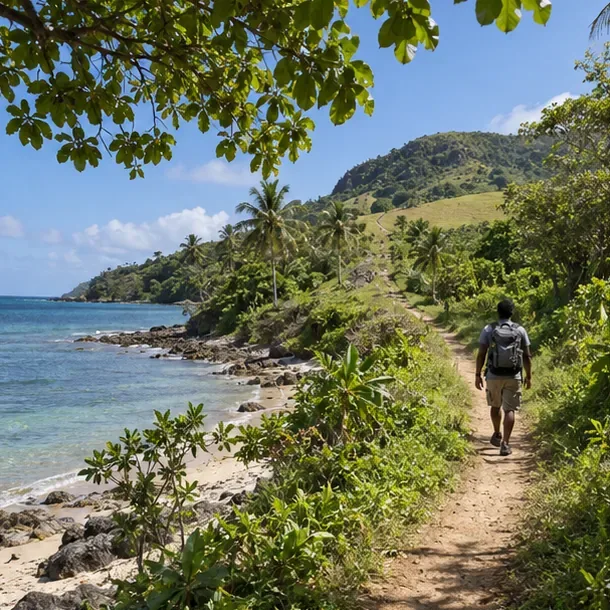
Do not go to the shore to watch the water or return after the first wave. A tsunami is a series of waves, and the first may not be the largest. Stay in the safe area until the NDMO’s all-clear or another local authority’s instruction. If you cannot reach high ground, Smartraveller advises getting to the highest floor of a sturdy multi-story brick or concrete building and sheltering on its landward side.
Expect aftershocks. Avoid visibly damaged buildings, broken utilities, fallen power lines, unstable slopes, and coastal areas subject to an alert. Do not light a flame if you suspect a gas leak. Keep your phone available for official information and direct calls for urgent help. If you are separated from travel companions, agree on a meeting point away from the shoreline and share your location when communications are working.
Before arriving at a hotel, guesthouse, or cruise port, ask where the evacuation route leads and whether the property has a tsunami assembly point. Identify the nearest higher ground from your room, beach, restaurant, and any tour location. On outer islands, routes and communications can differ from Port Vila, so ask local hosts and operators rather than assuming an online map shows a safe path.
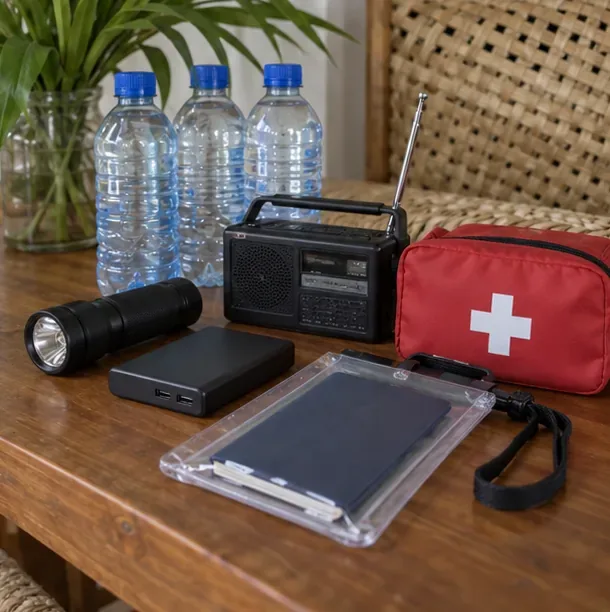
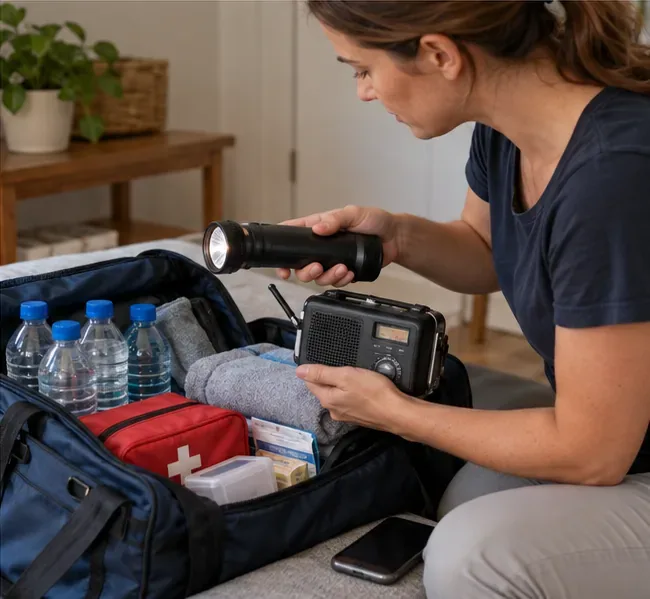
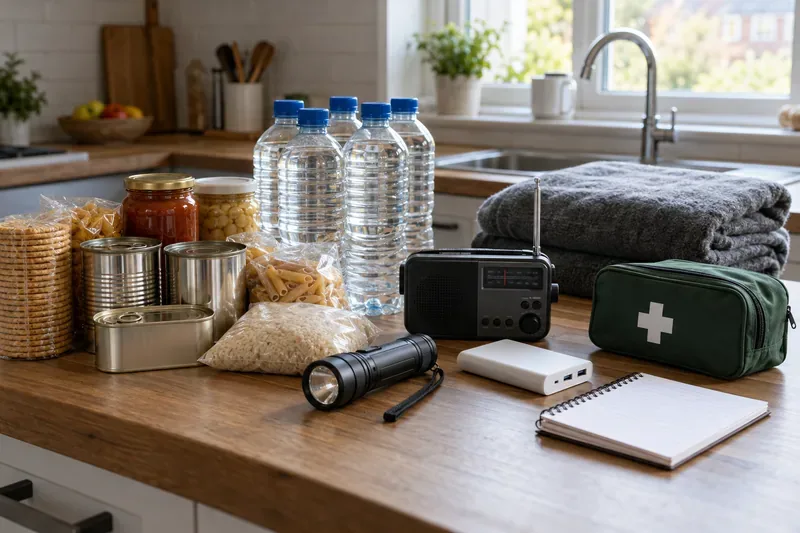
Keep essential medicines, water, a flashlight, a charged power bank, closed-toe shoes, and copies of important travel documents accessible. Save the VMGD, NDMO, and Smartraveller pages before you need them, and keep a battery radio or another way to receive local broadcasts if mobile service fails. For boat trips, ask the operator how it will contact passengers and where to assemble if service is interrupted.
For immediate emergencies, Smartraveller lists Vanuatu police numbers as 111 or 22222. NDMO’s information page lists +678 22699 and +678 33366 for the office and +678 22222 for police, with police service marked 24/7. Confirm current contact details on the NDMO contact page, and follow local officials’ direction about whether to shelter, evacuate, or travel. If an earthquake affects flights, ports, roads, or utilities, check with your airline, accommodation, and tour operator before setting out; conditions can vary between islands.
During a fast-moving event, the safest source is the newest official message that applies to your exact location. A past bulletin can explain what happened, but only refreshed local updates can tell you what to do next.
Use the Bureau of Meteorology’s Melbourne radar to locate your route, read rain layers, track approaching echoes, and check warnings before departure.
A practical Queensland flood guide: check BoM radar, read warnings, verify local roads and council updates, and know what to do if conditions worsen.
Two poultry cases have been confirmed in Great Britain this season. Here is what UK residents, bird keepers, and consumers need to know about health risks, reporting, and food safety.
The UK’s Be Ready campaign recommends three days of emergency essentials. Learn why it launched, what to keep at home, and how to prepare without panic buying.
DVLA’s October warning does not mean new tests have started. Learn the current age-70 renewal rules, eyesight and medical checks, and what remains a proposal.
Get the Iowa vs. Minnesota game guide: Oct. 24 kickoff in Minneapolis, CDT and UTC times, Huntington Bank Stadium, FS1, FOX One, radio, and Floyd of Rosedale storylines.
Tennessee visits South Carolina on Oct. 24 at Williams-Brice Stadium. Check the 3:30 p.m. EDT kickoff, ESPN coverage, key players and game-day basics.
Texas A&M vs. Alabama is set for Saturday, October 24, at 2:30 p.m. CDT (UTC−05:00). Find the ABC broadcast, ESPN app, official live stats, and radio options.
Learn about Daniel Stewart’s Port Adelaide career, path to the AFL, key statistics, and what the club has confirmed in its latest announcement.
Queensland Police say four people were injured in a Loganholme shooting on October 24, 2026. Review confirmed details and official update channels.