Couples Costume Ideas for 2026: Iconic Pairs and Clever Tropes

Find a couples costume that fits your style, budget, and comfort level, from Addams Family classics to original inside-joke duos.
Several times a year, the deep night sky above us puts on a spectacular show of streaks of light that streak through the darkness. These aren’t actually shooting stars, but rather meteor showers, one of the most spectacular astronomical phenomena visible to the naked eye.
But what really creates this cosmic spectacle?
Meteor shower is an astronomical phenomenon.
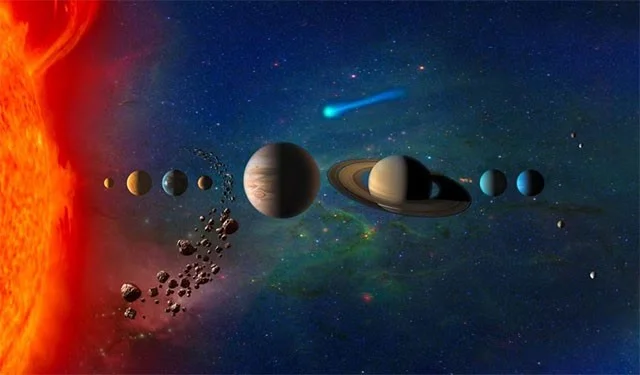
In our solar system, there is a huge collection of small particles—called meteoroids—floating in space, ranging from microscopic dust grains to asteroid-sized fragments. These fragments are cosmic remnants, broken off from comets, asteroids, other planets, and even moons as they orbit the sun.
As the Earth orbits the Sun, our planet regularly passes through these streams of meteors, creating what we call meteor showers. When these tiny particles hit the Earth’s atmosphere, they create bright streaks of light as they evaporate in the upper atmosphere. Most never reach the ground because they burn up completely. A few survive and become “meteorites.” But those that are completely evaporated are called “shooting stars.”
Because the Earth passes through these meteor streams at the same time each year, meteor showers occur on a predictable schedule, allowing astronomers to predict when they will appear.
Another interesting aspect is the concept of the Radiant—the point in the sky where meteors appear to originate. This is actually an optical illusion. The meteors don't actually originate from a single point; they travel in parallel paths. But from Earth's perspective, they appear to originate from one location.
This is why meteor showers are often named after the constellation they appear in. For example, the Perseid meteor shower appears to emanate from the constellation Perseus.
The Life Cycle of a Meteor: From Space to Earth
Meteors streak by at breakneck speeds, sometimes reaching 160,000 miles per hour. Meanwhile, Earth moves through space at 67,000 miles per hour. When these two paths intersect, the result is a violent but beautiful dance with our atmosphere.
The meteorite collides with air molecules, creating a pressure wave that compresses the air ahead of it. This compression creates extremely high temperatures that not only vaporize the space rock but also ionize the surrounding air, creating the characteristic streak visible from the ground.
Faster meteors burn brighter faster, releasing their energy in a brief but brilliant display. Slower meteors can last longer, giving us more time to admire their journey. Metal fragments are the most durable performers. They are more likely to survive the descent and sometimes even reach the ground as meteorites. Meanwhile, cometary meteorites, which are more fragile, rarely make it through the upper atmosphere.
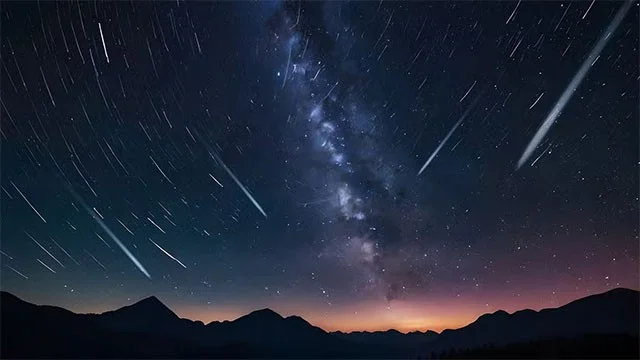
The colors we see aren’t random—they’re a sign of the meteor’s composition and how it interacts with the atmosphere. Green streaks are often associated with magnesium, violets with potassium, and brilliant white streaks with iron and nickel. While the composition of the meteor plays a major role in this light show, atmospheric conditions can change the effect, making each meteor a unique sight in the night sky.
Meteor showers also occur outside Earth.
Meteor showers are not limited to Earth’s atmosphere, but occur uniquely on other bodies in the solar system. Each planetary environment provides a unique stage for these cosmic spectacles, shaped by local atmospheric conditions and gravitational fields.
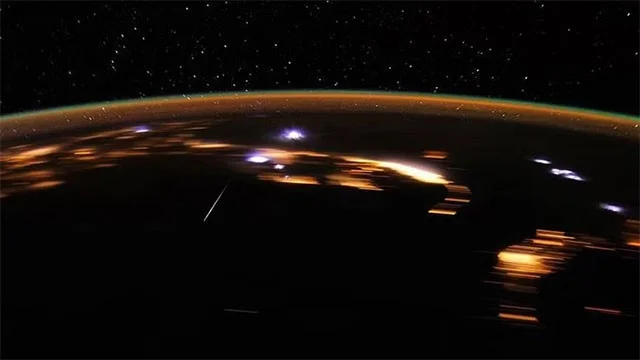
Back on Earth, meteor shower viewing faces modern challenges. The proliferation of satellites and light pollution threaten to dim our windows to this cosmic spectacle. Fortunately, meteor shower viewing requires only a little preparation and the right weather conditions to experience their full beauty.
Meteor showers remain one of the most accessible astronomical events around. You don’t need a telescope, just clear skies and a little patience. And who knows, you might even make a wish when you see a shooting star!
Find a couples costume that fits your style, budget, and comfort level, from Addams Family classics to original inside-joke duos.
Need a last-minute high school Halloween costume? Compare 10 easy closet-based ideas by prep time, comfort, school-day practicality, and simple safety checks.
Use a simple 2026 Halloween decorating timeline for indoor décor, outdoor displays, and fresh pumpkins, with practical adjustments for weather and events.
Mix five vivid, approachable Halloween cocktails with measured recipes, simple prep tips, and an alcohol-free option for your party guests.
Find 15 office-friendly Halloween costume ideas for 2026, with practical checks for dress codes, respectful themes, comfort, and workplace safety.
Plan a fun elementary school Halloween party with easy crafts, games, inclusive treats, costume tips, and a sample 75-minute classroom schedule.
Compare realistic side hustles for 2026 by startup cost, fees, flexibility, and income control, with current tax and scam guidance from official sources.
Upgrade your home office ergonomics with current OSHA and NIOSH guidance on chair fit, monitor height, laptop setup, lighting, and movement.
Learn why emotional intelligence matters in leadership, where it helps most, how to strengthen it, and how to tell whether your approach is working.
A practical roadmap for moving into tech without a degree: choose an accessible role, build job-ready skills, prove them with projects, and use hiring feedback to improve.