Desk Decorating Ideas for a Spooky Office Cubicle
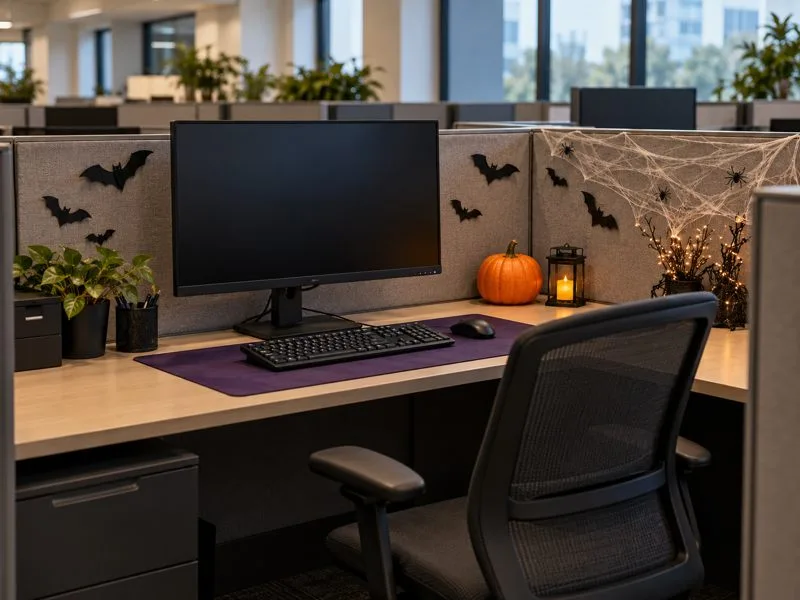
Create a spooky office cubicle with Halloween desk decor ideas that keep your workspace usable, tidy, and mindful of workplace safety.
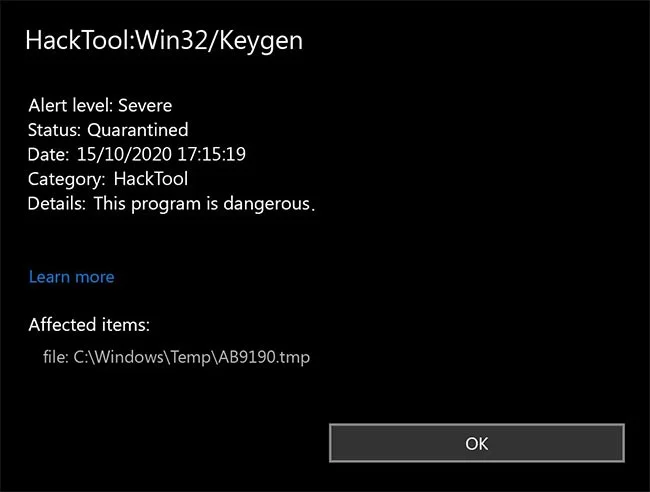
Have you scanned your device and found it infected with HackTool:Win32/Keygen? Windows Defender may have automatically warned you about the presence of this malware after you used a crack or key generator to activate premium software. Is this a serious threat and can you remove it easily?
In this article, Quantrimang.com will explain in more detail about this malware, how it infects your device, and what you can do to remove it.
How does HackTool:Win32/Keygen infect devices?
Recent years have seen a rapid rise in software cracks and fake key generators. Using these tools, users can unethically activate licenses for third-party software that often cost them a pretty penny.
Since these tools are available for free on third-party websites and many Internet users are constantly looking for ways to get premium software for free, hackers use them to spread malware .
Thus, the scammers combine the malware with a key generator. When the user downloads and installs such programs on their device, the victim unwittingly allows the virus to enter the system. Sadly, the whole thing happens with the victim’s consent. The HackTool:Win32/Keygen virus also gets inside the victim’s device with the help of similar fake key generators.
What makes HackTool:Win32/Keygen a serious threat?
HackTool:Win32/Keygen is classified as a dangerous program with a critical threat level by Microsoft Defender.
This malware poses a serious threat due to its ability to automatically create executable files in key generators or software you have activated. Files of this type are difficult to locate and the infection will remain on your device until these files are deleted.
While Microsoft Defender usually quarantines this threat, limiting its ability to spread further, it cannot automatically remove it. Therefore, it may be found on your device every time you scan. The only way to completely remove the malware from your device is to do it manually.
How to remove HackTool:Win32/Keygen virus from your device
If you want to remove HackTool:Win32/Keygen virus from your device effectively, you should perform the following steps in the correct order:
1. First, delete the infected files
In most cases, malware infects some files that Windows Defender detects and alerts the user. In the Protection History , where the detected threat appears, we can see the name and location of the infected files. Therefore, you should first delete the infected files. Follow these steps to do that:
1. Search for Windows Security in Windows Search and open the Windows Security app .
2. Next, click Protection history on the left sidebar.
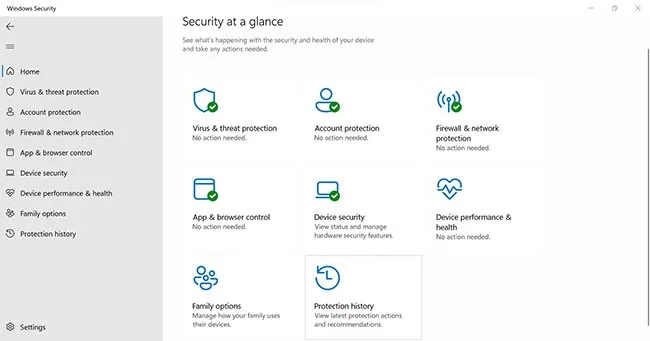
3. See the HackTool:Win32/Keygen threat dialog.
4. Record the location where the threat was detected.
5. Paste it into File Explorer.
6. Delete infected files.
Most of the HackTool:Win32/Keygen infected files are located in the Windows temporary folder. Therefore, it is recommended to delete all temporary files in Windows , even the ones that are not infected.
2. Remove the culprit software
Next, you should remove any key generator or crack software that you used to activate the premium features of the software. Follow these steps to do that:
1. In the Windows search box, type "Control Panel".
2. Open the Control Panel application .
3. Navigate to Programs and Features .
4. Find the key generator software you just installed.
5. Once found, right-click on it and select Uninstall.
3. Delete suspicious files from the main software
Cracked software activation or fake key generators will modify the software files to make them appear as if the software has been activated. Depending on the crack you are using, it may add some malicious files to the software folder to make the premium features work. So simply deleting the key generator will not help much.
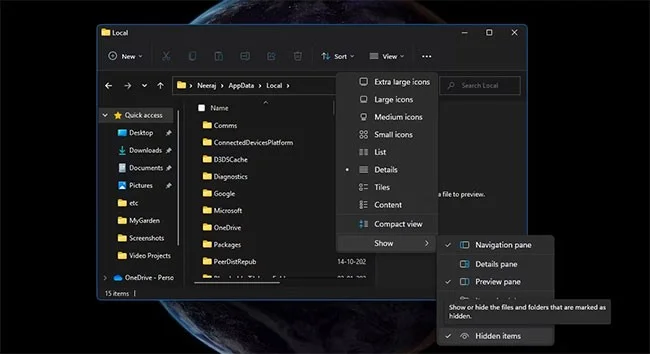
To remove the malware, you must remove these additional malicious files from the main software folder. Since most of the malicious files are hidden in the folder, you must first unhide them. To do this, click the View tab , expand the Show menu , and click Hidden items .
Then, follow these steps to remove malicious files from recently activated software:
1. Open File Explorer .
2. Open the installation folder for the crack software or key generator you used.
3. Look through its files and folders to see if you find anything suspicious.
4. If you notice an additional or suspicious file, search the web for the file name to see if it is part of the legitimate software or a suspicious file that should be removed.
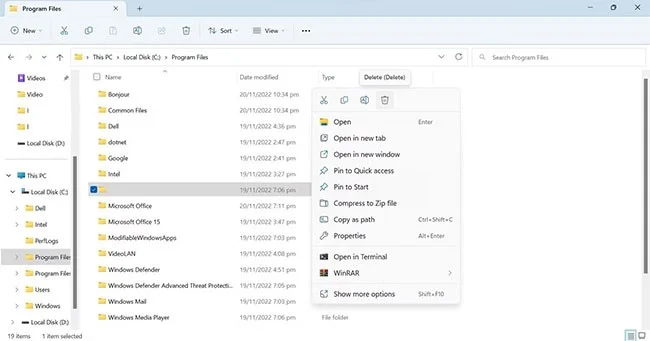
5. Delete the file from your device if it is not part of the main software.
Delete these files and run the Microsoft Defender scan again. Then, check your Protection History to see if the threat is still present. If so, you should use a third-party malware removal tool to remove the malware.
4. Take advantage of third-party antivirus tools
When manually deleting the key generator and suspicious files from the main software does not remove the virus, you should scan for viruses with a third-party antivirus tool. If you do not have one, download one from the list of best antivirus software that Quantrimang.com has suggested.
Then, install the software and allow it to complete a scan of your device and delete any suspicious files it finds. Once the scan is complete with a dedicated malware removal tool, your device should be malware-free.
What if the antivirus program cannot detect and remove the malware and the malicious files are still hidden on your device? If so, you should remove the software you activated using the key generator.
5. Uninstall the software yourself
Antivirus software will probably delete suspicious files and you will not need to delete the main software that you activated with a crack or malicious key generator. It should only be considered as a last resort if the problem persists.
The main software can be removed from Control Panel > Programs and Features . Right-click the software and select Uninstall. Next, navigate to its installation folder on your device and delete any remaining files and folders.
Create a spooky office cubicle with Halloween desk decor ideas that keep your workspace usable, tidy, and mindful of workplace safety.
Plan a recognizable Halloween 2026 look with pop culture costumes inspired by Spider-Man, Supergirl, Toy Story 5, Moana, Mario, and Wednesday.
Sort leftover Halloween candy safely, share or repurpose sealed treats, and choose food use or compost for pumpkins based on their condition.
Compare workplace Halloween costume choices by respect, dress code, mobility, and safety—and learn when a subtle accessory or a policy check is the better option.
Find a couples costume that fits your style, budget, and comfort level, from Addams Family classics to original inside-joke duos.
Need a last-minute high school Halloween costume? Compare 10 easy closet-based ideas by prep time, comfort, school-day practicality, and simple safety checks.
Use a simple 2026 Halloween decorating timeline for indoor décor, outdoor displays, and fresh pumpkins, with practical adjustments for weather and events.
Mix five vivid, approachable Halloween cocktails with measured recipes, simple prep tips, and an alcohol-free option for your party guests.
Find 15 office-friendly Halloween costume ideas for 2026, with practical checks for dress codes, respectful themes, comfort, and workplace safety.
Plan a fun elementary school Halloween party with easy crafts, games, inclusive treats, costume tips, and a sample 75-minute classroom schedule.