How to Turn Off Auto-Upload on Xbox to Protect Your Account (Nov. 21, 2026)

Worried about GTA VI capture reports? Turn off Xbox Network and OneDrive auto-uploads, review existing clips, and learn how to check an enforcement.
Verified and updated: Nov. 21, 2026, at 4:05 a.m. UTC.
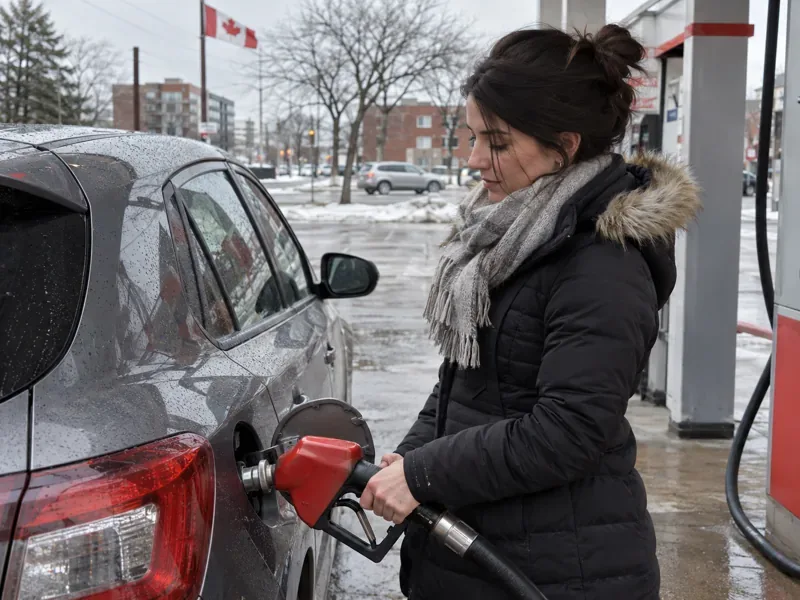
Gasoline is getting cheaper at Canadian pumps after a sharp autumn run-up. The national average was about $1.51 per litre on Nov. 19, roughly 29¢ below a month earlier, according to a recent price-tracker figure reported by CBC. The drop is substantial, but it is not uniform: provincial averages, city prices and individual stations can differ by many cents per litre.
The main explanation is that wholesale fuel costs have eased from their recent surge. Crude oil is only part of the pump price: refinery margins, transportation, retail competition and taxes also matter. Statistics Canada’s latest monthly data, which covers October rather than this week’s daily changes, showed gasoline prices down 2.5% from September but still up 30.9% year over year. That gap is a reminder that a recent retreat does not mean fuel has returned to last year’s price level.
Retail gasoline usually follows wholesale prices, which reflect the cost of finished fuel available to retailers. When those wholesale costs fall, stations can lower their posted prices as they replenish fuel and compete for customers. That pass-through takes time, and the timing varies between regions and businesses.
This year’s earlier price jump was linked to a major disruption in global energy markets. In its October Monetary Policy Report, the Bank of Canada said damage to refineries, export disruptions and limited spare refining capacity had reduced global supplies of refined fuels. It also reported that crude oil had risen above US$100 a barrel and that refinery margins amplified the increase; gasoline refinery margins represented close to 40% of Canada’s pre-tax pump price at the time. If wholesale benchmarks and margins subsequently retreat, pump prices can fall even while the broader supply picture remains sensitive to geopolitical events.
A national average is not a guarantee of a particular price in your neighbourhood. Canada’s fuel markets are regional, with different supply routes, refinery access, provincial rules and competitive conditions. The federal energy department explains that taxes and local market factors help account for differences across the country. A station may also adjust its retail margin to match nearby competitors.
Crude oil is the raw material, but drivers buy refined gasoline. Refineries turn crude into usable fuel, and the cost of that conversion can rise when facilities are disrupted or operating capacity is tight. That is why pump prices do not always move in step with a headline crude-oil quote.
The Canadian dollar is another factor because petroleum is traded internationally, largely in U.S. dollars. A weaker loonie can make imported crude or refined gasoline more expensive in Canadian dollars, cushioning or offsetting a fall in the world benchmark. Meanwhile, shipping and distribution costs influence how quickly fuel reaches different markets.
Taxes are a fixed or policy-driven part of the price, and their levels differ by jurisdiction. Federal and provincial fuel taxes, sales taxes and other charges can make two regions’ pump prices diverge even when wholesale costs are similar. The federal excise tax on gasoline was temporarily suspended in April 2026, according to the Canadian Fuels Association; the timing of its return could raise the tax component when the suspension ends.
Local competition matters too. A station in a busy urban corridor may respond quickly to a nearby price cut, while a remote community with fewer suppliers may see slower or smaller changes. Seasonal fuel specifications and demand can also influence wholesale pricing. Statistics Canada’s monthly series is useful for tracking broad movements, but daily trackers better reflect the latest station-level changes.
There is no reliable way to promise that the decline will continue. CBC’s Nov. 19 report cited a GasBuddy analyst who said another five to 10 cents per litre was possible over the following weeks if there were no new geopolitical shocks. That is a conditional forecast, not a guarantee. Renewed supply disruption, stronger crude prices, refinery outages, a weaker Canadian dollar or a seasonal shift in demand could halt or reverse the drop.
For households, lower prices can reduce the cost of commuting and errands, and can ease some transport costs for businesses. But the effect on other prices is gradual, and the latest official inflation figures still show gasoline well above its level a year ago. Drivers comparing local prices should check current station listings and remember that a national average is a snapshot, not a price promise.
Sources: CBC News reporting on the recent national price decline; Statistics Canada, Consumer Price Index, October 2026; Bank of Canada analysis of refinery margins; Natural Resources Canada on regional gasoline-price differences.
The national average was reported near $1.51/L on Nov. 19, about 29¢ below a month earlier. Your local price may differ.
No. Refining, distribution, currency movements and station pricing affect how quickly wholesale savings reach drivers.
Yes. Supply disruptions, higher oil prices, refinery problems or a weaker Canadian dollar could reverse the recent decline.
Worried about GTA VI capture reports? Turn off Xbox Network and OneDrive auto-uploads, review existing clips, and learn how to check an enforcement.
An Xbox player reports a two-day suspension after an auto-uploaded GTA 6 clip. Here is what Xbox’s rules confirm, what remains unverified, and how to check an enforcement.
A Dutch court has barred BYD's Ti7 from EU trade over a Defender design right, but excluded BYD UK. Here's what the interim ruling means for UK buyers and EV markets.
Xbox players report suspensions after GTA 6 captures were auto-uploaded. Here’s what Xbox’s rules say, what remains unconfirmed and how to review your settings.
A Hague court ruled the BYD Ti7 infringes a JLR EU design and barred EU sales. Here is what the decision means for UK buyers and the case’s next steps.
A Dutch court has barred EU sales of BYD’s Ti7 over its resemblance to the Land Rover Defender. Here’s why JLR sued and what the ruling means for UK buyers.
SpaceX says Starshield has more than $6 billion in multiyear U.S. contracts. Recent Ukraine service disputes put reliability, control and oversight in focus.
Starshield is SpaceX’s government-focused satellite system for secure communications, Earth observation, and hosted payloads. Compare its mission, security, users, and public limits with Starlink.
Canada’s gas average reached 144.4¢/L on Nov. 20, about 27¢ lower than a month earlier. See what the drop may mean for commuters and household budgets.
SpaceX’s Starshield combines secure communications, sensing and hosted payloads. Here’s what recent U.S. space-network plans could mean for Canada and allied defence.