Most washing machines today have a display time and actual washing time difference of 10 to 20 minutes.
For example, a washing machine on daily mode has a time of about 40 minutes. But in reality, depending on the amount of clothes and the material of the clothes to be washed, the actual time can be 50 minutes or more.
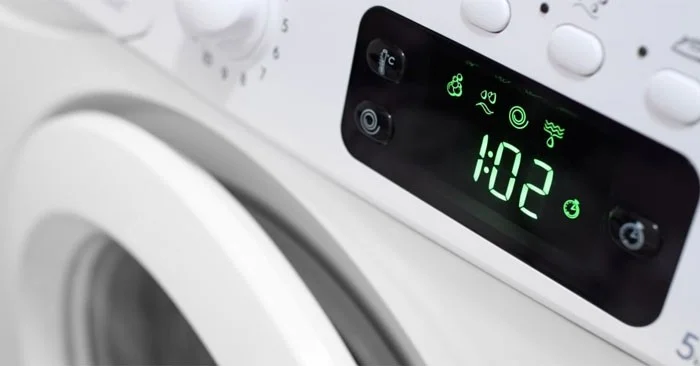
The reason for this difference is that the timer on the washing machine is usually displayed in optimal mode.
In reality, your washing machine’s timer can sometimes conflict with its internal measurement systems. One of these is the load sensor, which measures the amount of laundry and the amount of water needed to complete a wash cycle. This can affect the amount of time the cycle takes, causing the timer to display incorrectly.
In addition, to balance the load on the washing drum (to avoid strong vibrations during operation), the washing machine may use more water, so the time to complete a washing cycle is also longer than the displayed time.
Squeezing water from laundry can also increase the machine's running time. During the final stages of the spin cycle, the drum will spin to push water out of the clothes, but because each fabric has a different ability to retain water, if the sensor determines that there is still wet clothing, the drum will turn on again. Therefore, the more fabric in a load, the longer the spin time will be.
Therefore, many experts recommend not to wash many types of clothes together, instead, choose items with similar fabric materials for each wash to optimize washing time. At the same time, do not try to put as many clothes in the machine as possible because it will overload the device, and the washing time will also be longer.