When to Start Decorating for Halloween in 2026

Use a simple 2026 Halloween decorating timeline for indoor décor, outdoor displays, and fresh pumpkins, with practical adjustments for weather and events.
ChatGPT's new Canvas mode adds a new dimension to writing and editing in the world's leading Generative AI tool. Here are a few different ways to use this new AI tool!
1. Edit text
ChatGPT Canvas is great if you want to edit text. You can use sliders to adjust the reading level based on your audience. For example, you might want to make blog posts more understandable to the general public and have research papers with industry jargon.
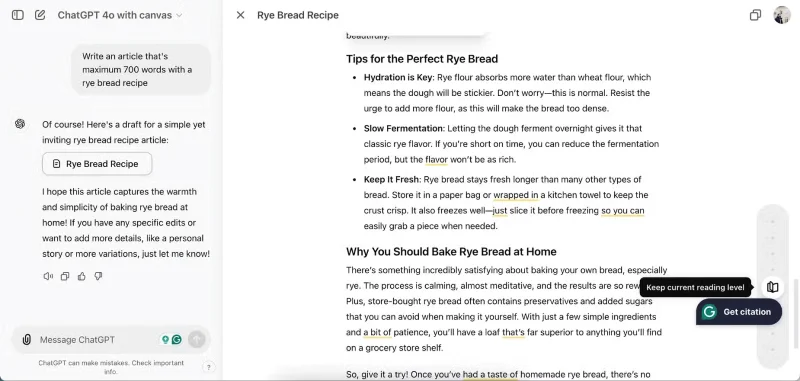
You can also use Canvas mode in ChatGPT to add “final touches” by selecting some text and having the software make adjustments. Another advantage is that you can adjust the length of the text; this is especially useful if you are trying to stick to a specific word count. You should compare ChatGPT Canvas and Claude Artifact before choosing one over the other, as they are quite different; Claude can also edit text.
2. Summarize and write documents
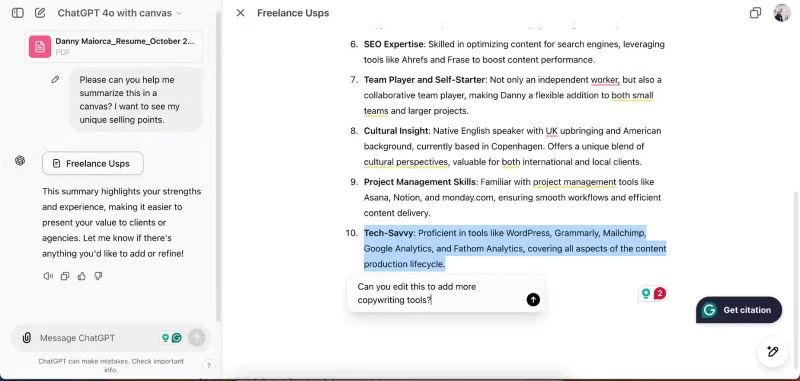
In addition to editing text, you can also use ChatGPT Canvas to summarize your document and rewrite it if needed. For example, the author of this article wanted to see how ChatGPT could summarize his resume. After uploading the PDF, the author received a comprehensive analysis of his top skills and unique selling points.
You can use ChatGPT Canvas for other types of documents, such as essays and cover letters. Here, the author suggests asking ChatGPT to make corrections by highlighting text and typing prompt. You can also use the Add final polish tool here.
3. Plan for long-form content
Don't rely on ChatGPT to write long articles that you'll publish online, but it can be useful if you need inspiration and ideas.
You can choose between Shortest and Longest lengths , depending on your preference. There’s a lot of room for experimentation, so try different lengths to see what works best for you. It’s worth trying if you need ideas for stories or other creative projects before you commit to your own content.
If you are using ChatGPT as a writer, you should carefully consider checking out the dos and don'ts of using ChatGPT as a freelance writer.
4. Create basic code
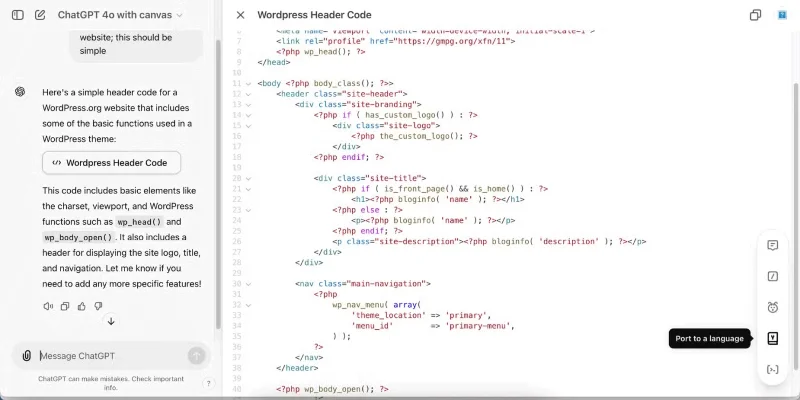
You will need to edit the resulting code after it is created, but ChatGPT Canvas is a great tool for creating basic code that can be tweaked later. It does allow for debugging, but that’s not its most impressive feature. The ability to choose from different programming languages is where ChatGPT Canvas really stands out.
Using ChatGPT Canvas, you can also review specific areas of your code and add logs/comments. You should try both ChatGPT and Gemini for programming to see which one works best for you.
Although still in its early stages, ChatGPT Canvas is a great tool for editing text, creating code, and similar tasks. It offers a lot of handy customization features, and if the presets don’t produce the results you want, you can always highlight your text and ask ChatGPT to make specific adjustments.
Use a simple 2026 Halloween decorating timeline for indoor décor, outdoor displays, and fresh pumpkins, with practical adjustments for weather and events.
Mix five vivid, approachable Halloween cocktails with measured recipes, simple prep tips, and an alcohol-free option for your party guests.
Find 15 office-friendly Halloween costume ideas for 2026, with practical checks for dress codes, respectful themes, comfort, and workplace safety.
Plan a fun elementary school Halloween party with easy crafts, games, inclusive treats, costume tips, and a sample 75-minute classroom schedule.
Compare realistic side hustles for 2026 by startup cost, fees, flexibility, and income control, with current tax and scam guidance from official sources.
Upgrade your home office ergonomics with current OSHA and NIOSH guidance on chair fit, monitor height, laptop setup, lighting, and movement.
Learn why emotional intelligence matters in leadership, where it helps most, how to strengthen it, and how to tell whether your approach is working.
A practical roadmap for moving into tech without a degree: choose an accessible role, build job-ready skills, prove them with projects, and use hiring feedback to improve.
Build a credible LinkedIn personal brand in 2026 with current profile, content, newsletter, analytics, verification, and visibility guidance from LinkedIn.
Quiet quitting and quiet firing are catchy labels, not diagnoses. Learn what is verified, what depends on context, and what employees and managers can do next.








