Home
» Today
»
Air Canada Flight Cancellations Continue After FAA Ground Stop Ends | Nov. 14, 2026
Air Canada Flight Cancellations Continue After FAA Ground Stop Ends | Nov. 14, 2026
Verified information check: November 14, 2026, 11:02 p.m. Toronto, Eastern Standard Time (UTC−05:00); November 15, 2026, 04:02 UTC.
Air Canada passengers are still facing cancellations after the U.S. Federal Aviation Administration lifted its nationwide ground stop on Friday, November 13. Air Canada said it cancelled approximately 250 flights affecting about 27,000 passengers on Friday, and that further cancellations continued Saturday as displaced planes and crews complicated the restart. The FAA says U.S. airspace has reopened, but reopening does not mean every Air Canada itinerary is operating normally.
The most important development for Canadian travellers is the shift from an active U.S. grounding order to a prolonged airline recovery. Air Canada is adding flights where possible, contacting affected customers and urging everyone to check individual flight status before travelling to the airport. A complete, independently verified total of Air Canada cancellations for Sunday, November 15, was not available at this information check.
Destaques
The FAA's November 13 U.S. nationwide ground stop has ended; Air Canada warns that residual cancellations and delays can continue.
Air Canada reported roughly 250 flights cancelled and about 27,000 passengers affected on Friday, with more cancellations Saturday.
U.S. transport officials linked the precautionary stop to telecommunications problems involving air-traffic-control communications and radar systems; technical findings remain subject to investigation.
Passengers should check their booking, watch for rebooking messages and assess refund rights under Canada's Air Passenger Protection Regulations.
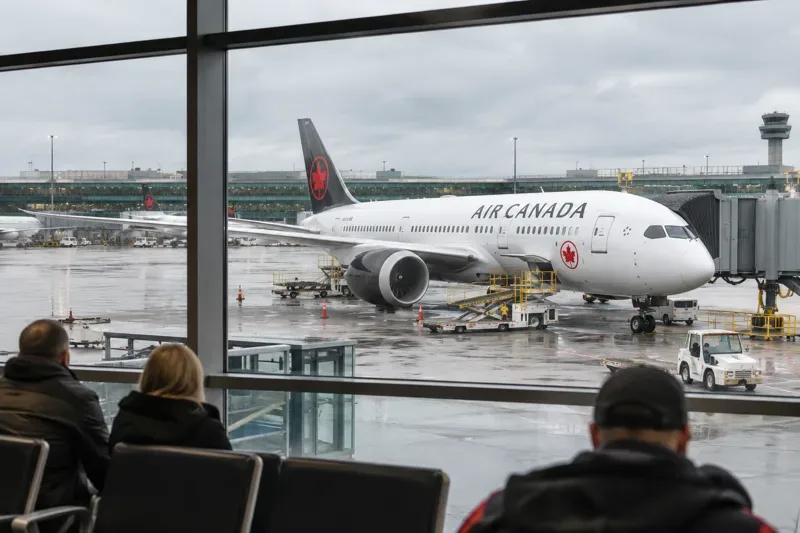
Illustrative image of an Air Canada aircraft at an airport gate. This is not a photograph of the November 13 ground stop or a documented cancellation.
Are Air Canada flights still cancelled after the FAA lifted its ground stop?
Yes, some flights can still be cancelled or delayed, according to Air Canada's November 13 travel advisory. The airline explicitly confirms that the ground stop has ended and warns that operational recovery takes time. It encourages passengers to use booking-management tools and the Air Canada app rather than relying on airport departure boards alone.
In a statement provided to Canadian media on Saturday, November 14, Air Canada spokesperson Yasmine Mehdi put Friday's disruption at approximately 250 cancellations affecting roughly 27,000 customers. The airline said it was scheduling additional flights where practical to carry stranded travellers. Those figures are for Friday, not a verified cumulative total for the entire weekend, and they should not be confused with U.S.-wide cancellation figures covering multiple airlines.
Individual routes may recover at different speeds. A flight that is shown as scheduled today can still change if its aircraft arrives late, a crew is unavailable, or a previous leg has been cancelled. Conversely, a route affected Friday is not automatically cancelled Sunday. A passenger's specific flight number and reservation remain the authoritative check for their trip.
What happened during the FAA ground stop on November 13?
On Friday, November 13, the FAA issued a nationwide ground stop covering U.S. airports after communications problems affected multiple air-route traffic control centres. The agency described its initial findings as preliminary. The FAA's official statement identified communications issues, and a November 14 U.S. Department of Transportation update said telecommunications problems affected the stability of air-traffic-control communications and radar systems.
The U.S. transportation department said controllers and pilots safely grounded more than 3,500 flights during the response and that more than 8,000 flight operations resumed on Friday night after the restriction was lifted. Those operational counts describe the wider U.S. response, not Air Canada's cancellations or passenger numbers. Officials said the airspace was open Saturday, while warning of continuing delays and cancellations.
Times for the initial order and its removal were not consistently specified in the primary advisories reviewed, so this article does not assign an unverified minute-by-minute timeline. The verified event dates are November 13 for the order and its lifting and November 14 for the official recovery update, in Washington, D.C., Eastern Standard Time (UTC−05:00).
Why are Canadian flights affected when the problem was in the United States?
A network airline relies on aircraft, crews and connecting passengers moving between airports on a tightly coordinated schedule. When U.S. departures stop, an Air Canada plane may not arrive at its next scheduled Canadian departure airport, or a crew may run out of allowable duty time before another leg. Connections can also be missed when travellers are held at an intermediate airport. These knock-on effects can reach some flights that do not themselves depart from a U.S. airport.
That is the practical reason Air Canada's warning remains relevant after the FAA lifted the restriction. It does not establish that every subsequent cancellation was directly caused by the FAA event: weather, maintenance or other operational factors may affect individual flights. Travellers who need the precise reason should request the airline's explanation for their own booking.
What should Canadian passengers do now?
Check the actual flight, not just the route. Confirm the current departure time and cancellation status in Air Canada's flight-status service and keep checking before leaving for the airport.
Open the booking. Review any alternative itinerary and whether a connection still works. Keep screenshots or copies of original and revised schedules.
Choose carefully before buying replacement travel. Ask Air Canada about available alternatives and refund choices. Buying a separate ticket without checking the carrier's arrangements can create expenses that are not automatically reimbursed.
Keep a record. Save the airline's stated disruption reason, cancellation notification, receipts and written responses. These may matter if a refund or passenger-rights dispute arises.
Will Air Canada passengers get refunds or compensation?
Canadian rules distinguish disruptions within an airline's control from those outside its control. Orders from aviation authorities are among the situations that can fall outside an airline's control, according to the Canadian Transportation Agency's flight delays and cancellations guide. An FAA ground stop would generally point toward that category for a cancellation caused by the order, but a traveller's eligibility depends on the established cause of the particular flight disruption.
For disruptions outside airline control, the Canadian Transportation Agency explains that airlines still have rebooking obligations. If a carrier cannot provide a confirmed qualifying reservation within 48 hours of the original departure time, additional rebooking or refund choices apply. The agency's passenger-protection overview describes the refund framework for flights to, from and within Canada, including connections. Cash compensation for inconvenience and minimum hotel or meal assistance are generally not mandated for an event genuinely outside the airline's control; insurance coverage and any voluntary airline concessions are separate questions.
Passengers should therefore avoid treating a reported network-wide cancellation figure as proof that their individual compensation claim qualifies. Ask for a written disruption reason and review the conditions attached to any offered refund, rebooking or travel credit. If the airline's response does not resolve the matter, the Canadian Transportation Agency provides an official complaint pathway.
When will Air Canada's schedule return to normal?
U.S. officials expected flight operations to recover through the weekend, but that is an expectation, not a guarantee for a particular Air Canada route. Recovery depends on where aircraft and crew members are, how many passengers need seats and whether further interruptions occur. Additional flights could reduce the backlog, while crowded schedules could mean continued missed connections or cancellations. Neither a firm airline-wide recovery deadline nor a final Sunday cancellation count was confirmed at the stated check time.
For the latest information, consult Air Canada's ground-stop notice and the FAA website. These primary sources are more useful for current operational status than extrapolating from Friday's cancellations.
FAQ: Air Canada cancellations and the FAA ground stop
Is the FAA ground stop still in effect?
No. The FAA and Air Canada confirm that the nationwide U.S. ground stop imposed November 13 has ended. Some flights may still be affected during recovery.
How many Air Canada flights were cancelled?
Air Canada reported approximately 250 cancellations affecting about 27,000 passengers on Friday, November 13. Additional cancellations occurred Saturday; a verified full-weekend Air Canada count was not established at this check.
Can I get my money back if my Air Canada flight is cancelled?
Depending on the itinerary, disruption category and rebooking options, a refund may be available. Review the airline's offer and the Canadian Transportation Agency's Air Passenger Protection Regulations before accepting travel credit instead of a refund.