Verified and updated: November 15, 2026, 20:00 UTC.
A bag-tag switch can make a suitcase containing drugs appear to belong to an unsuspecting traveller, according to W5’s investigation into alleged baggage switching at Canadian airports. In its latest coverage, CTV’s Avery Haines discussed the investigation and the risks for travellers detained overseas; the Government of Canada now advises passengers to document their luggage and check tag numbers before leaving the baggage area.
The practical point is simple: a baggage receipt or tracking device can help document your trip, but neither guarantees protection from an investigation or resolves what happens under another country’s laws. Photograph your own suitcase and its tag at check-in, keep the receipt, and report a mismatch to airline staff before you leave baggage claim. CTV’s W5 coverage and the Government of Canada’s current guidance describe the scheme and protective steps.
Destaques
- W5 reports that alleged tag switching has linked innocent passengers to suitcases containing drugs.
- Canada’s travel guidance says a genuine tag may be placed on another bag, or luggage may be switched before collection.
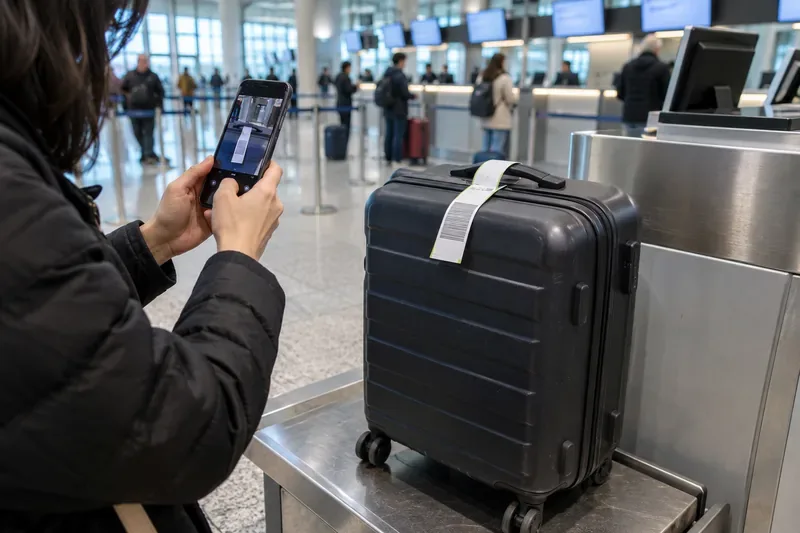
- Photograph the bag, tag and scale reading at check-in; keep the baggage receipt and remove old tags.
- If the collected bag or tag does not match, stay in the baggage area and contact the airline immediately.
How does the airport bag-tag scam work?
In the alleged scheme described by W5, a person with access to baggage handling removes the tag from a passenger’s legitimate suitcase and attaches it to a different bag containing drugs. The passenger’s own bag may be diverted or left behind, while the tagged suitcase travels under the passenger’s name. If authorities find contraband, the passenger may be treated as connected to it.
The tag is a routing label, not proof of who packed or owns every item in a suitcase. That gap is what makes the alleged tactic dangerous: at a destination, investigators may initially see the passenger’s identifying information on a bag that is not theirs. W5’s earlier investigation reported at least 17 cases involving passengers flying from Canada in the year it examined, and reported arrests of six baggage and ramp workers at Toronto Pearson in connection with cases. These are reported allegations and case counts, not a measure of the risk to an average traveller.
Who is targeted, and why can the consequences be severe?
The scheme can target ordinary passengers whose checked-bag tags are accessible during handling. W5’s reporting has described people travelling internationally who were detained after drugs were found in luggage bearing their baggage identifiers. A traveller may not know a switch occurred until a bag is inspected or authorities intervene.
Being unaware may not prevent detention or prosecution. The Canadian government warns that travellers caught with illegal drugs abroad face local laws and penalties that can be much harsher than in Canada, including lengthy imprisonment. Canadian consular officials can provide some assistance, but cannot interfere in a foreign legal matter or secure someone’s release. The reported cases do not establish how often tag switching happens across all airports; the true scale remains uncertain.
What should you do before checking a bag?
Make your own record at the point where the airline accepts the suitcase. Canada’s official advice recommends taking clear photos or video of the bag and attached tag, ensuring the tag number is readable, and recording the scale weight if possible. Keep your baggage receipt and boarding pass, and photograph the suitcase itself so its colour, shape and distinctive marks are visible.
- Pack and close your own luggage. Do not carry a suitcase or package for another person, even a friend, if you cannot verify its contents.
- Remove old airline tags and barcode labels so they cannot confuse baggage systems.
- Watch as your bag is tagged and placed on the conveyor belt.
- Consider a tracking device inside the suitcase. It may provide location information, but it is not a guarantee or substitute for official documentation.
- Keep essential medication, travel documents and valuables in your carry-on where permitted.
Photos and trackers are documentation, not a shield against tampering or legal proceedings. If authorities question you, follow lawful instructions and contact a lawyer. If detained abroad, specifically ask local authorities to notify Canadian consular officials.
What should you check at baggage claim?
Before leaving the baggage area, compare the tag attached to the suitcase with the number on your physical baggage receipt. Check that the bag is yours and look for unusual damage, a broken lock, cuts or a tag that appears crumpled or disturbed. A matching number alone does not prove the contents belong to you, so also check the suitcase’s distinctive features.
If the tag number differs, the bag is unfamiliar, or you see signs of tampering, do not take it through the customs exit. The Government of Canada advises travellers to report the problem immediately to the airline’s baggage service office, preserve the receipt, boarding pass and photos, and follow local procedures. If you find something that is not yours, alert airline staff and local authorities rather than handling or carrying it onward.
Frequently asked questions
Can a bag tag prove a suitcase is yours?
A tag helps identify a checked bag in the airline system, but it is not conclusive proof of ownership or contents. Keep your receipt and photos as supporting records.
Should I photograph my luggage at check-in?
Yes. Photograph the suitcase, its attached tag with the number visible, and the scale reading if possible. Keep the original receipt too.
What if my tag does not match at baggage claim?
Stay in the baggage area, contact the airline’s baggage service office immediately, and retain your travel documents and photos. Follow local authority instructions.
Sources: Government of Canada: Drug smuggling—scams, set-ups and consequences; CTV News / W5 coverage; Government of Canada: Pre-boarding checklist.