Home
» Today
»
Australia Severe Thunderstorms: Safety Advice and Power Outage Steps (November 12, 2026)
Australia Severe Thunderstorms: Safety Advice and Power Outage Steps (November 12, 2026)
Checked: November 12, 2026, 3:46 a.m. Brisbane time, AEST (UTC+10:00); November 11, 2026, 5:46 p.m. UTC.
Severe thunderstorm risk is not the same across Australia today. At the time checked, the Bureau of Meteorology’s warning list showed a severe thunderstorm warning for heavy rainfall and damaging winds in parts of Western Australia’s Goldfields, Gascoyne, and South Interior districts. Its forecast for Thursday, November 12, also flags possible severe storms in southeast Queensland, while storms are expected across northeast and eastern New South Wales. Warnings can change quickly, so check the Bureau’s live map and your state or territory emergency service before you travel or make decisions.
If a storm is approaching, shelter indoors in a room away from windows and skylights, secure or bring in loose outdoor items, and stay off flooded roads. If power fails, use a flashlight, conserve phone battery, and stay well away from fallen wires. Call Triple Zero (000) for a life-threatening emergency; contact your local State Emergency Service for storm damage assistance.
Destaques
The active warning listed at the check time covers parts of Western Australia; it is not a national warning.
Forecast storm risk also includes southeast Queensland and eastern New South Wales on November 12.
During a storm, shelter inside, away from glass, and never drive or walk through floodwater.
For outages, preserve phone power, avoid damaged electrical equipment, and never run a generator indoors or connect it to home wiring.
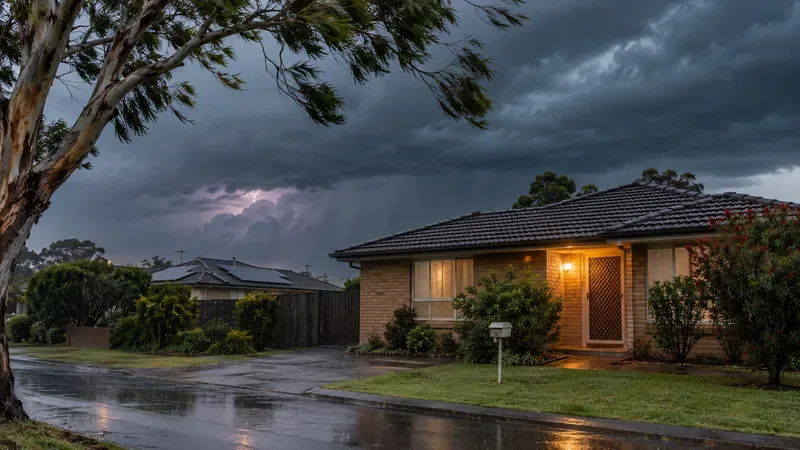
Illustrative storm-safety scene, not a photograph of a current Australian storm or a specific affected location.
Where are severe thunderstorms being warned or forecast?
The Bureau’s live warning list currently names parts of Western Australia’s Goldfields, Gascoyne, and South Interior for heavy rainfall and damaging winds. Its national forecast says showers and storms are expected across much of Queensland from the afternoon, with the risk of severe thunderstorms in southeast Queensland, including the corridor from Wide Bay toward the Gold Coast and inland toward Toowoomba. Northeast and eastern New South Wales may also see storms, although the Bureau’s forecast describes Thursday’s east-coast activity as less widespread and impactful than Wednesday’s.
Those are different kinds of information: a warning applies to a named area and hazard at a particular time, while a forecast describes what may develop. The Bureau’s warning list also showed some earlier warnings canceled, including for the Northern Rivers and Hunter in New South Wales and Wide Bay and Burnett in Queensland. A cancellation does not mean storms are impossible later; it means that warning has ended. Check the latest local map, forecast, and emergency-service instructions rather than relying on a national headline or an old alert screenshot.
The Bureau classifies a thunderstorm as severe when it produces or is expected to produce at least one of the following: hail at least 2 centimeters across, wind gusts of at least 90 kilometers per hour, a tornado, or heavy rainfall that may cause flash flooding. A “very dangerous” storm may include giant hail at least 5 centimeters across, destructive gusts of at least 125 kilometers per hour, or intense rain with life-threatening flash-flood risk. A warning can be localized and updated as the storm develops.
What should you do before a severe thunderstorm?
Use the Bureau of Meteorology website or BOM Weather app to check the warning for your exact town or suburb, then follow directions from the relevant state or territory emergency service. The Bureau’s storm warnings can cover only a few hours ahead, and the exact path can be difficult to predict. Keep local radio available in case internet or mobile service is disrupted.
Bring children and pets inside. Put away or secure patio furniture, bins, trampolines, tools, and other items that could become airborne.
Close windows, shutters, and curtains; park under solid cover if available, away from trees, powerlines, creeks, and low-lying areas.
Charge phones and battery packs, prepare a flashlight and battery-powered radio, and keep essential medicines and any backup power for medical equipment close at hand.
Unplug sensitive electronics before the storm arrives if it is safe to do so. Do not touch plugs, switches, or appliances with wet hands or while standing in water.
Where is the safest place during lightning, hail, or damaging winds?
Stay inside a sturdy building and shelter well away from windows, glass doors, and skylights. Avoid using a corded landline phone, and do not stand barefoot on concrete or tile during a thunderstorm. If you are outdoors, move to a substantial building or hard-top vehicle; do not shelter under a tree, in a fabric tent, or beside a metal fence. If you are swimming or boating, leave the water and reach shore or solid shelter as soon as it is safe.
If you are driving, do not try to outrun a storm or cross a flooded road. Stop in a safe place away from trees, powerlines, creeks, and drains, and wait for official advice. Never walk, ride, or drive through floodwater: water depth and road damage can be hard to judge, and even shallow moving water can sweep a vehicle away. If water traps you, move to the highest safe place and call 000 if rescue is needed.
What should you do if the storm causes a power outage?
Keep refrigerator and freezer doors closed. Food Standards Australia New Zealand says a closed refrigerator can keep food cold for around four hours; a closed freezer may stay frozen for about 24 hours. If refrigerated food has been warm for longer or you are unsure whether it stayed cold, follow food-safety advice and discard it rather than tasting it.
Switch off and unplug heating and cooking appliances and sensitive electronics so they do not restart unexpectedly or suffer a power surge. Leave one light on to show when power returns, use a flashlight instead of candles where possible, and put your phone in battery-saving mode. Check your electricity distributor’s outage map or phone line for restoration information; distributor names and contact numbers depend on your location.
Never approach a fallen powerline or anything touching it, including a tree, fence, vehicle, or pool of water. Treat every wire as live and stay at least 8 meters away. Report it to the local electricity network operator; call 000 if someone is in immediate danger. Do not try to clear branches or repair electrical equipment yourself. If using a portable generator, operate it outdoors in a well-ventilated area away from doors and windows, and never connect it to household wiring or a wall outlet. Carbon monoxide from a generator can be fatal indoors, including in a garage.
Who should you call for emergency help in Australia?
Call Triple Zero (000) for a life-threatening emergency, such as a person needing urgent rescue or immediate danger from fire or live electrical hazards. For non-life-threatening flood or storm damage, contact your state or territory SES. In Queensland, the SES number is 132 500; Queensland SES also accepts requests online. In New South Wales, contact the NSW SES for storm and flood assistance. If you need a power-outage update, contact your electricity distributor rather than the SES.
After the storm, wait for local authorities to say it is safe before cleaning up. Keep clear of damaged buildings, floodwater, fallen trees, and wires. Photograph damage from a safe location for your insurer, and do not touch wet electrical equipment or a damaged solar system. If power has returned but lights flicker, a switch trips, or an appliance gives an electric shock, turn away from the hazard and contact your electricity provider or a licensed electrician.
FAQ
Are severe thunderstorm warnings active across all of Australia?
No. At the time checked, the Bureau listed a warning for parts of Western Australia. Forecast storm risk and warnings vary by district and can change; check the live Bureau map for your location.
What number should I call for storm damage?
Call 000 for life-threatening emergencies. For non-life-threatening storm or flood assistance, contact your state or territory SES; in Queensland, call 132 500.
How long will food last during a power outage?
With the door kept closed, a refrigerator may keep food cold for around four hours and a freezer may stay frozen for about 24 hours. Follow Food Standards Australia New Zealand guidance if the outage lasts longer or food has warmed.