Home
» Today
»
Brazil Elections 2026: Why U.S. Search Interest Is Rising and What to Know
Brazil Elections 2026: Why U.S. Search Interest Is Rising and What to Know
Brazil’s 2026 presidential election is no longer an upcoming contest: the runoff took place on October 25, and the Superior Electoral Court (TSE) announced that President Luiz Inácio Lula da Silva had won re-election. U.S. interest is rising as people look for the result, how the close finish changed after the first round, and what the outcome could mean for Brazil’s relationship with Washington. Here is a concise guide to the verified result and the issues to watch.
Governors, senators, and federal, state, and district deputies were also on the ballot
The TSE reported that about 128.2 million of more than 158 million eligible voters took part in the runoff, with abstention around 19.2%. Its official result announcement has the vote totals and turnout details. The TSE calendar confirms the October 4 first round and October 25 runoff.
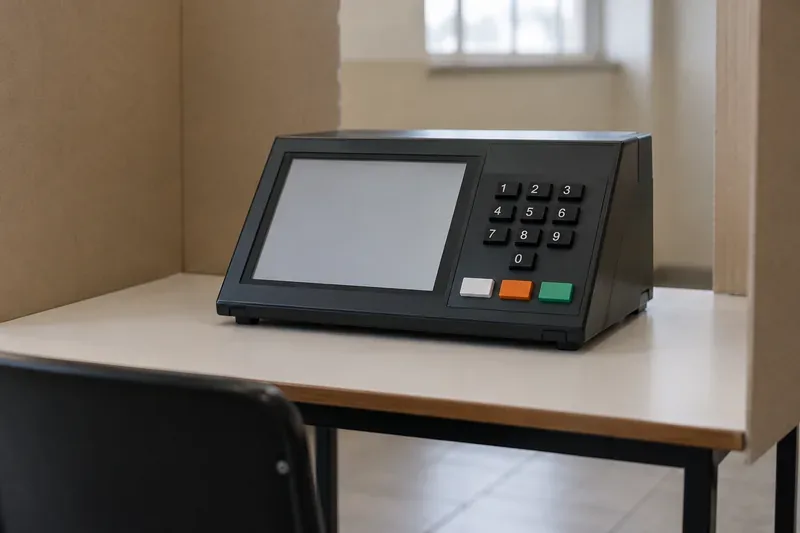
An electronic voting terminal in a neutral polling-booth setting.
Why interest is rising now
The result is fresh, and the race changed direction
The runoff ended only a day before this article’s October 26 publication date. The first round had left the contest open: with 99.99% of ballots counted, the TSE reported Flávio Bolsonaro at 47.03% of valid votes and Lula at 45.16%. The October 25 runoff reversed that order. Lula finished 3.58 percentage points ahead, a narrow enough margin to keep searches focused on the count, turnout, and what the result means.
Search activity reflects that moment. On October 26, Google’s U.S. Trending Now page showed “Lula” in a 200K+ search-volume band for the past 24 hours, with related queries including “Flávio Bolsonaro” and “Brazil elections 2026.” That is a snapshot of attention, not a poll, a measure of support, or proof of why any individual searched. Google says election-related search interest does not show voting intention or whether a search is positive or negative. Check the U.S. Trends listing and Google’s explanation of election search data for context.
Brazil’s policies have direct U.S. stakes
The election matters to U.S. businesses because the two countries have substantial trade ties. The Office of the U.S. Trade Representative estimates that U.S. goods and services trade with Brazil totaled $135.7 billion in 2025. In July 2026, USTR announced a 25% tariff on certain Brazilian goods after a Section 301 investigation. The agency’s stated concerns included digital trade, ethanol access, tariffs, intellectual property, and illegal deforestation; USTR’s fact sheet lists product exclusions. The incoming administration will inherit this dispute, so companies and policy watchers will look for signals about negotiations. See the USTR’s Brazil trade summary and July 2026 action notice.
What the result does—and does not—tell you
Lula’s victory settles the presidential contest, but it does not answer every policy question. Brazil also elected governors and lawmakers at the federal and state levels. Those offices shape legislation, budgets, and the president’s ability to advance proposals. A useful next step is to follow the composition of Congress and state governments alongside announcements from the incoming administration.
For campaign promises, use the candidates’ filed platforms rather than social-media summaries. The TSE’s 2026 presidential platform page links to the proposals submitted by Lula and Flávio Bolsonaro. Brazil’s voting system is electronic; the TSE’s overview of its electronic ballot box explains the equipment.
A practical checklist for following the story
Confirm the count: Use the TSE’s result pages for official totals, not screenshots or viral posts.
Separate votes from search interest: Google Trends shows what people searched, not how they voted or what they believe.
Watch the wider government: Track the elected Congress and governors, since the president does not govern alone.
Follow the bilateral file: Look for official updates on U.S.–Brazil trade, tariffs, digital rules, ethanol, and deforestation.
Compare claims with filed plans: Check policy statements against the candidates’ TSE-submitted platforms and later government actions.
The key update is simple: Brazil’s October 25 runoff produced a close but official result, with Lula re-elected over Flávio Bolsonaro. For U.S. readers, a live search spike and the countries’ active trade dispute help explain why attention is climbing. The useful measure now is what the elected government does—and how Brazil’s institutions and Washington respond.