Home
» Today
»
Heathrow and Gatwick Flight Cancellations During Storm Boelo: How to Check Your Flight and Rebook
Heathrow and Gatwick Flight Cancellations During Storm Boelo: How to Check Your Flight and Rebook
Searches about Heathrow and Gatwick cancellations rose as Storm Boelo brought a weekend of severe-weather warnings to the UK. The first step is to check your exact flight with both the airport and the airline. A storm warning does not confirm that a particular service is canceled, and neither airport page establishes why an individual flight changed.
As of October 26, 2026, Storm Boelo’s warnings covered October 24–25. The Met Office’s October 23 update said the strongest winds and greatest disruption risk were in Scotland, parts of Northern Ireland, and far northern England, with wider warnings farther south. That is useful context, but it is not a Heathrow or Gatwick cancellation tally. Passengers should rely on live flight information and their airline’s message for their own journey.
What should I check first?
Start with the live flight page for the airport you are using, then confirm the same flight in the operating airline’s app or “Manage booking” page. Heathrow provides live departure information and arrival information. Gatwick’s flight information page covers its departures and arrivals.
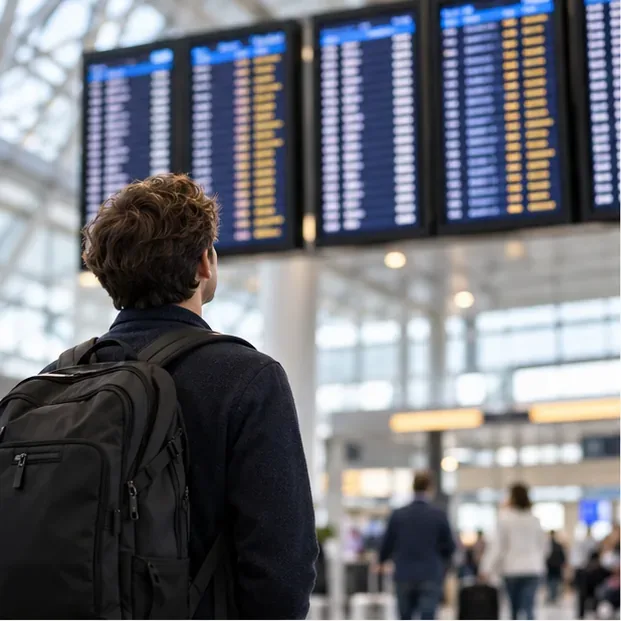
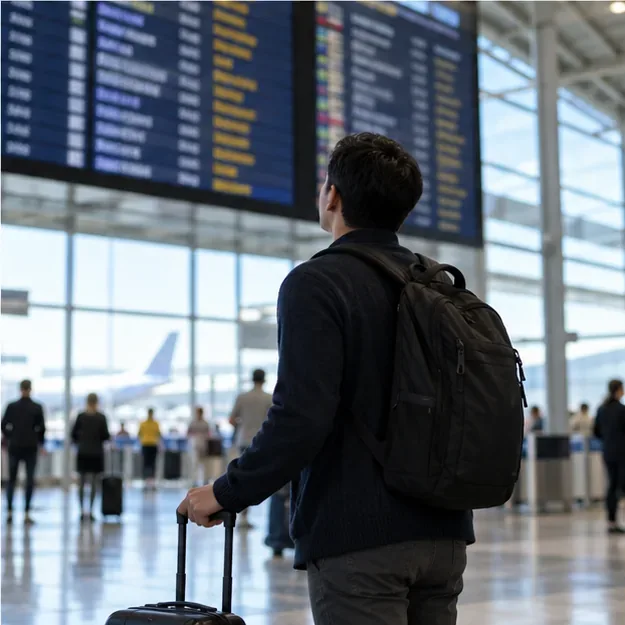
A traveler checks an airport flight information screen.
Search by flight number and travel date, not just by destination: several services can share a route, and outbound and inbound flights may have similar numbers. Airport pages can change as airlines send updates, so a status you saw earlier is not a guarantee. Heathrow says its departure information is updated minute by minute and notes that airlines provide the information; treat the airline’s own notification as essential confirmation too.
How do I confirm whether my flight is canceled?
Check the airport board. Open the correct departures or arrivals page and match the flight number, date, destination, and scheduled time. If you are meeting someone, check arrivals rather than departures.
Check the operating airline. Look in its app, booking page, text messages, and email, including junk mail. Make sure the airline has your current phone number and email address. If the trip has connections, check every leg and the final destination.
Resolve conflicting updates. If one source says “scheduled” while another shows a delay or cancellation, contact the airline using its official app, website, or airport desk. Ask whether you should travel to the airport and request the cancellation reason and next steps in writing.
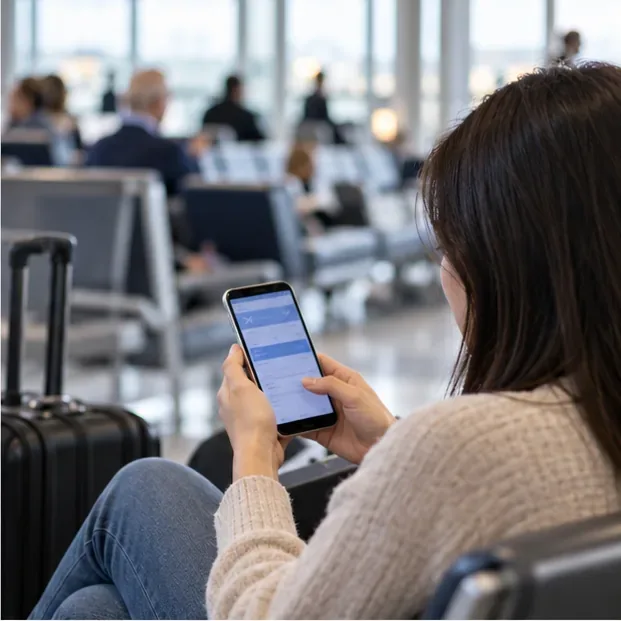
A traveler checks a flight booking on a phone while waiting at the airport.
Do not assume that a general Storm Boelo headline applies to every Heathrow or Gatwick flight. Weather can affect different routes and services in different ways; only the airline can confirm the status and stated reason for your specific flight. If the airline has canceled it, do not head to the airport just to join a line unless the airline asks you to report there.
If the airline canceled my flight, how do I rebook?
For flights covered by UK passenger-rights law, the airline must offer a choice between a refund for unused parts of the ticket and an alternative flight. You can choose to travel as soon as possible or at a later date that suits you, subject to availability. UK law generally covers flights departing a UK airport on any airline, flights arriving in the UK on a UK or EU airline, and flights arriving in the EU on a UK airline. Check the CAA cancellation guidance if your itinerary is unusual.
A traveler speaks with airline staff about a disrupted booking.
Choose whether you still want to travel. If yes, ask the airline to rebook you at the earliest opportunity or on a later date that works for you. If you no longer want to travel, request the refund option before accepting a replacement itinerary.
Ask what routes are available. The airline will usually look at its own flights. The CAA says you may have a right to an alternative airline or another suitable form of transport if it can get you there significantly sooner; discuss the options with the airline before paying for a new ticket yourself.
Review the replacement details. Confirm the full route, connection airports, departure date, baggage arrangements, and any separate booking reference. For a connection, ask whether the new itinerary protects the onward leg.
Save the confirmation. Keep the original booking, cancellation message, new itinerary or refund confirmation, and any case number. If you speak to staff, note when and how you contacted them.
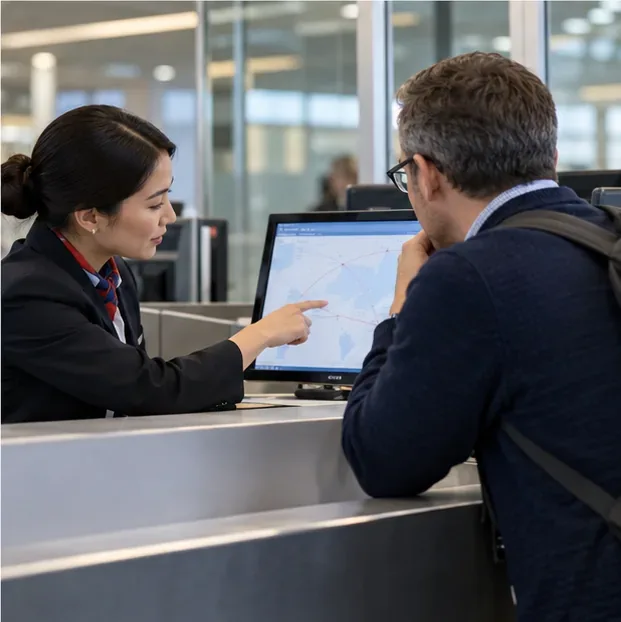
An airline agent reviews route information with a traveler.
Avoid canceling the booking yourself before the airline has formally canceled the flight. A severe-weather warning does not automatically cancel your ticket; voluntary cancellation may follow the ticket’s fare rules instead of the protections that apply after an airline cancellation.
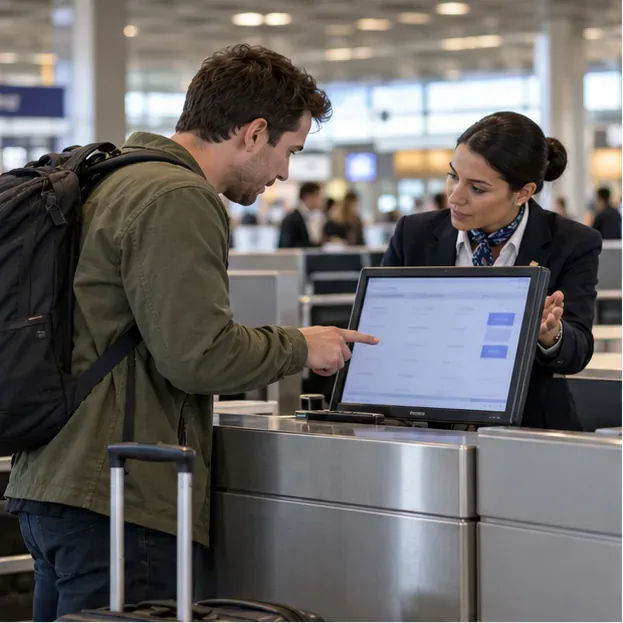
A traveler compares replacement travel options with an airline representative.
What help can I request while I wait?
Refund or rerouting and “care and assistance” are separate from compensation. Under UK rules, an airline must provide reasonable food and drink, a way to communicate, and—if an overnight stay is needed—hotel accommodation and transport between the airport and hotel while you wait for a replacement flight. The CAA says this duty applies regardless of how long the delay lasts or what caused it, when the flight is covered by UK law.
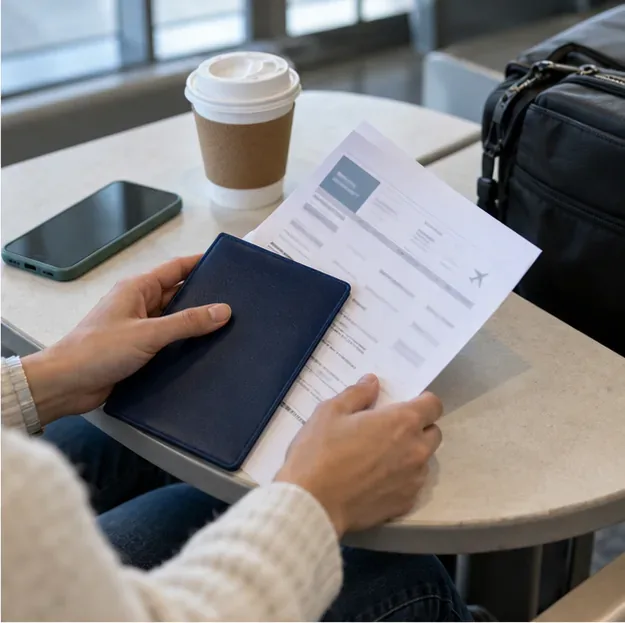
Keep booking information and travel documents together while arranging a new flight.
Ask the airline how it will provide meals, accommodation, and transport before you pay out of pocket. If staff cannot arrange reasonable care during major disruption, the CAA advises passengers to keep receipts for necessary, reasonable expenses and claim them from the airline later. Avoid luxury purchases; the CAA says those are unlikely to be reimbursed.
Passengers wait with refreshments during an airport disruption.
Compensation is a different question. Severe weather that makes safe flight operations impossible can count as an extraordinary circumstance, so a fixed payment may not be due. The cause and notice given for each cancellation matter. Even if compensation is not payable, that does not remove the airline’s separate duties to offer refund or rerouting and care when UK law applies. The GOV.UK passenger-rights summary explains the coverage and choices.
Quick checklist before leaving for Heathrow or Gatwick
Match the flight number, date, destination, and operating airline.
Check both the airport’s live page and the airline’s own status message.
For a connection, confirm every flight and the full journey.
If canceled, choose refund or rerouting with the airline and save the response.
Ask about meals, hotel, and transport if you are waiting; keep receipts for reasonable costs you must cover.
Check again before setting out, because airport and airline updates can change.
A traveler checks the airport board again before continuing through the terminal.
For any Storm Boelo disruption still affecting a booking, work from the flight notice you received rather than assuming the storm explains it. The airport page helps you spot a change; the airline confirms your options and is the main contact for rebooking, refund, and care.