Updated November 14, 2026, 5:07 a.m. UTC.
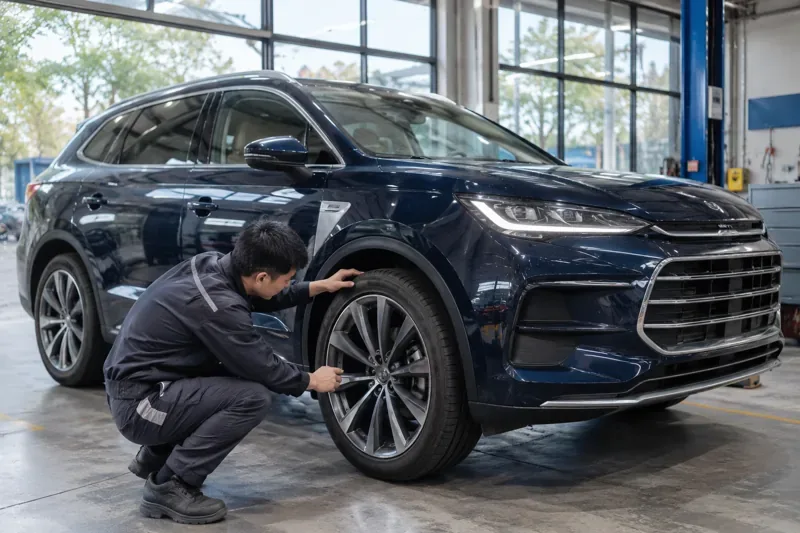
BYD says some China-market Great Tang (Da Tang) electric SUVs left the factory with front and rear wheel rims in the wrong positions. The company has offered affected owners free inspections and rim replacements, plus a loaner vehicle or transportation-cost reimbursement during repairs. BYD says its testing found no effect on handling or driving safety, but it has not disclosed how many vehicles were involved. Owners should contact BYD to confirm whether their vehicle is affected and arrange an inspection rather than treating every wheel-related dashboard warning as the same issue.
Destaques- The reported Great Tang problem is a wheel-rim assembly mix-up, not a universal BYD warning code.
- BYD says affected vehicles qualify for a free inspection and rim swap.
- Stop somewhere safe if steering becomes difficult or the vehicle feels unstable; contact BYD roadside assistance or an authorized service center.
- Photograph the warning and record the tire-pressure readings before contacting service.
What is the BYD Great Tang wheel issue?
BYD’s investigation reportedly traced the incorrect installation to a supplier code-entry error. Owners had raised concerns after noticing that some vehicles had wider rear rims at the front and narrower front rims at the rear. BYD said it corrected the process and added visual checks at the supplier’s production line. The company did not publish an affected vehicle count or identify every production batch.
That news concerns the position of the rims on certain Great Tang vehicles. It does not establish that a dashboard message such as “wheel malfunction” has the same cause, or that other BYD models share the assembly issue. Warning wording and available actions can vary by model and market, so use the exact message and your own vehicle’s owner manual when speaking with service.
What should Great Tang owners do after seeing a wheel warning?
- Assess how the car feels. If the steering suddenly becomes heavy, the car pulls, vibrates strongly, or a tire looks damaged or visibly low, ease off the accelerator and pull over to a safe place. Do not continue a trip if the vehicle feels difficult to control.
- Record the alert. Photograph the full dashboard message and warning lights while parked. Note the time, road conditions, tire-pressure readings, and any recent impact or tire service.
- Check only what is safe. From a safe location, look for a visibly flat tire, wheel damage, or an obstruction. Do not crawl under the vehicle or attempt a roadside repair beside traffic. Use the pressure values specified on the vehicle’s placard or in its manual; do not guess a target pressure.
- Call BYD service. Ask an authorized BYD service center to check the warning and confirm whether the vehicle falls within the Great Tang inspection action. Request written confirmation of the inspection, repair, warranty terms, and any transport support.
BYD’s published owner-manual guidance for a steering-system fault says to park safely and contact an authorized dealer or service provider. That guidance is separate from BYD’s statement that its testing found no safety impact from the Great Tang rim-position issue. Treat an active steering fault or unsafe handling as an immediate safety matter, regardless of the manufacturing report.
Does the wheel alert mean the car is unsafe to drive?
Not necessarily. A tire-pressure monitoring alert, a steering-system warning, and a report about rims installed on the wrong axles refer to different things. A pressure warning needs a pressure check and, if it persists, a service diagnosis. A steering fault can affect the effort needed to turn the wheel. The Great Tang assembly issue is a factory-fitment concern that BYD says it is addressing with inspections and replacement rims.
For the Great Tang vehicles BYD identified, the company has said its tests found handling unaffected. That statement should not be used to dismiss a warning on an individual car, especially if there are symptoms or damage. BYD has not released a public count of affected vehicles, so an owner should get confirmation using the VIN through the local BYD service channel.
What happens next for affected owners?
BYD says it will inspect affected vehicles and replace the rims at no charge, offer a loaner vehicle or transportation reimbursement while repairs are underway, and restart the affected vehicles’ full-vehicle warranty period. Ask the service center to confirm which support applies in writing before arranging travel or paying for transport. Those reported remedies concern affected Great Tang owners; they are not a general promise covering every wheel warning across BYD’s lineup.
For Australian readers, the currently reported case concerns vehicles in China. The reports reviewed do not establish that Great Tang vehicles with this issue have been delivered in Australia or that an Australian recall has been announced. If you own another BYD model, follow its manual and contact BYD Australia about your specific alert.
Sources: CnEVPost’s report on BYD’s statement and owner remedies; BYD Dolphin Surf owner’s manual, warning-light guidance; CarsGuide’s Australian-market coverage of the Great Tang issue.
FAQ
Is the Great Tang wheel problem a tire-pressure warning?
No. The reported issue is that some front and rear rims were installed in the wrong positions. A tire-pressure warning requires a separate pressure check and diagnosis.
Can I keep driving if a BYD steering warning stays on?
Follow the vehicle manual: park safely and contact an authorized BYD service provider. Stop sooner if steering or handling feels abnormal.
Will BYD replace affected Great Tang rims for free?
BYD has said affected owners will receive free inspections and rim replacements. Contact BYD with the vehicle identification number to confirm eligibility and local arrangements.