Information checked: November 16, 2026, 9:27 a.m. London time (GMT, UTC+00:00; 09:27 UTC).
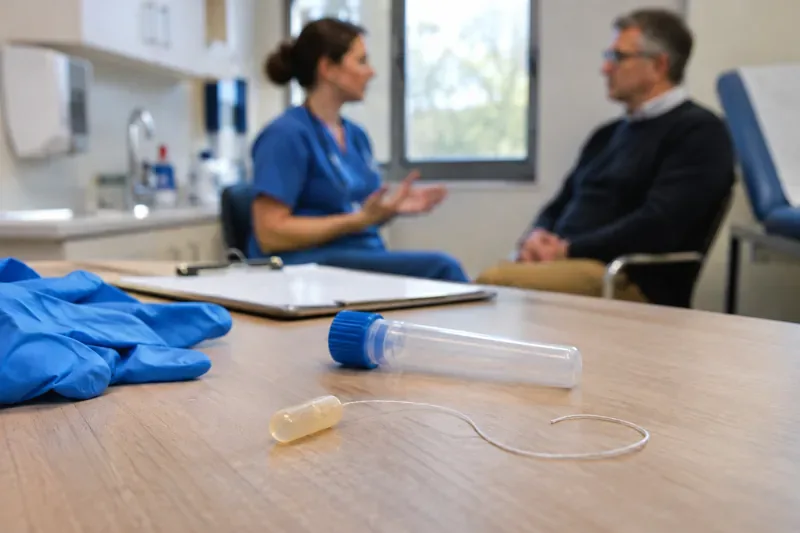
The “cancer sponge test” attracting attention in the UK is a short, nonsedated procedure known as a capsule sponge test. Cytosponge is one version, and EndoSign is another. On November 16, new reporting described draft recommendations from the National Institute for Health and Care Excellence (NICE) supporting their wider use for selected patients in England. NICE’s official register lists its assessment of capsule sponge tests for Barrett’s esophagus and early-stage esophageal cancer as still in development, with final guidance expected in February 2027. Wider routine access is therefore a proposal, not an already completed nationwide rollout.
The test is designed to collect cells from the lining of the esophagus—the tube connecting the mouth to the stomach—to look for changes associated with Barrett’s esophagus and possible cancer. It may spare some lower-risk people an immediate camera examination, but a suspicious or positive sponge result requires follow-up with a gastroscopy (upper endoscopy). It does not diagnose every cancer or replace urgent investigation of warning symptoms. The underlying method and its current uses are described in Cancer Research UK capsule sponge briefing, reviewed July 29, 2026.
Destaques
- What it is: A small swallowable capsule releases a sponge attached to a thread, which collects esophageal cells as it is withdrawn.
- Who may be offered it: Selected patients with persistent reflux or heartburn, people being assessed for Barrett’s esophagus, and some people already in Barrett’s surveillance programs; local pathway rules vary.
- What changed: A November 16 NICE draft proposal has brought wider access into focus, but the official technology assessment remains under development.
- What it cannot do: It is not a universal, definitive cancer test; concerning results still require endoscopy and sometimes biopsy.
What exactly is the Cytosponge cancer sponge test?
Cytosponge is a capsule that contains a compressed mesh-like sponge connected to a thin thread. A patient swallows it with water. Once the capsule dissolves in the stomach, the sponge expands; a trained nurse or other professional then gently retrieves it. On the way up, it brushes the esophageal lining and collects a cellular sample for a laboratory to assess. The test is sometimes called a “sponge on a string” or “pill on a thread.” Those descriptions refer to the sampling device—not a sponge left permanently in the body.
The main target is Barrett’s esophagus, a condition in which long-term acid reflux is associated with changes to cells in the lower esophagus. Barrett’s is not itself cancer, and most people with Barrett’s do not develop cancer. In some patients, however, cellular changes called dysplasia can develop and may lead to esophageal adenocarcinoma. Identifying people who need closer evaluation can help clinicians use endoscopy more selectively.
How does Cytosponge work, step by step?
- Preparation: The clinic checks suitability and provides instructions; a common NHS protocol requires no food or drink for four hours before the appointment. Medication instructions should come from the individual clinic, especially for diabetes medicines and blood thinners.
- Swallowing: A nurse places the capsule toward the back of the tongue and the patient swallows it with water. The thread remains outside the mouth.
- Expansion: The capsule dissolves after several minutes. Gloucestershire Hospitals describes a roughly seven-minute wait for its device.
- Collection: The nurse draws the expanded sponge back through the esophagus in a brief movement. It picks up cells as it passes.
- Laboratory analysis: The collected cells are tested for relevant changes. The clinical team explains whether the result is reassuring, inconclusive, or indicates a need for gastroscopy.
The sampling procedure generally takes less than ten minutes, although appointments allow extra time for consent and preparation. Sedation is ordinarily unnecessary, so most people can resume routine activities promptly afterward. The exact device and instructions depend on the provider; see Gloucestershire Hospitals NHS patient instructions.
Who is eligible for a cancer sponge test on the NHS?
There is no single rule that every UK resident with heartburn automatically qualifies. Clinical teams select patients according to local referral pathways, symptoms, previous test results, and safety considerations. In NHS services and research programs, common groups include adults with ongoing gastroesophageal reflux or indigestion being assessed for Barrett’s esophagus; selected patients waiting for a routine, nonurgent gastroscopy; and people with a prior Barrett’s diagnosis being monitored for cell changes.
Age and risk-factor requirements can differ by program. Eligibility for the ongoing BEST4 research program should not be confused with eligibility for routine NHS care: research participation has its own inclusion and exclusion rules. The Cancer Research UK BEST4 screening trial describes its screening study, while the Cancer Research UK capsule sponge briefing, reviewed July 29, 2026 discusses current clinical use and evaluation.
A swallowing problem may make a capsule sponge inappropriate. Previous upper gastrointestinal surgery, a history of significant esophageal narrowing, bleeding risks, and certain other conditions may also require alternative assessment. Tell the clinician about swallowing difficulties, past surgery, liver disease, blood thinners, pregnancy, or any relevant medical history. Never stop prescribed anticoagulants or other medicines on your own to prepare for the test.
Is Cytosponge available everywhere in the UK?
No. The test is already used in some NHS hospitals and community pathways, with regional differences across England, Scotland, Wales, and Northern Ireland. A February 10, 2026 announcement from Dorset County Hospital, for example, described a new capsule sponge service for eligible patients. England has also run pilots for routine reflux assessment, while trials have examined broader case-finding and surveillance.
NHS England reported in February 2024 that more than 8,500 people had received capsule sponge testing during its pilot program. In the evaluated cohort, almost eight in ten who completed testing were discharged without additional investigations. Those are historical pilot findings, not a claim about the sensitivity of the test or the proportion of all UK patients who would avoid endoscopy. See the original NHS England pilot results.
Does the test hurt, and what are the risks?
Most patients can swallow the capsule, and the test is typically described as tolerable rather than painful. Removing the sponge may produce a brief scratching or brushing sensation, gagging, or a sore throat afterward. Rare complications include bleeding or difficulty retrieving the sponge; the Gloucestershire NHS leaflet estimates that sponge detachment or difficult removal happens in fewer than one in 2,000 procedures at its service and may require endoscopy for retrieval.
A normal or negative result is not a guarantee that cancer is absent. A sample may be inadequate, results can be inconclusive, and no diagnostic test detects every abnormality. The appropriate response depends on symptoms and the clinician’s assessment. Persistent problems such as food sticking when swallowing, unexplained weight loss, or vomiting blood should be assessed promptly rather than waiting for a routine sponge appointment.
How is the test different from an endoscopy?
Gastroscopy passes a flexible camera into the upper digestive tract so a clinician can see the lining directly and take targeted biopsies. Capsule sponge testing collects cells without a camera; it is a less invasive way to triage or monitor selected patients, but cannot inspect a specific lesion or provide all the information available from an endoscopy. Existing NICE Barrett’s esophagus surveillance guidance continues to describe endoscopic surveillance with biopsies for many patients with Barrett’s esophagus. The developing NICE technology appraisal could change how capsule sponge testing is incorporated into selected pathways if the final recommendations are confirmed.
What happens after the NICE proposal?
As checked on November 16, the NICE assessment titled “Capsule sponge tests for detection of Barrett’s oesophagus and early-stage oesophageal cancer and surveillance of Barrett’s oesophagus” remains listed under development, with an expected publication date of February 24, 2027. The new draft recommendation points toward a possible expansion in England, but the final wording, rollout arrangements, and eligibility rules must not be treated as settled. Readers can follow the NICE guidance-in-development register for the latest official status.
For now, anyone concerned about recurring reflux should discuss symptoms and potential investigations with their GP. A clinician can assess whether a locally available capsule sponge is appropriate or whether a conventional gastroscopy, urgent suspected-cancer referral, or another assessment is needed.
FAQ: Cancer sponge test and Cytosponge
Can I request a Cytosponge test if I have heartburn?
You can ask your GP about it, but access depends on symptoms, risk assessment, local availability, and whether you meet the pathway’s criteria. Heartburn alone does not guarantee eligibility.
Does a positive sponge result mean I have cancer?
No. It means the sampled cells need further interpretation, and a gastroscopy may be recommended to confirm Barrett’s esophagus, dysplasia, or another diagnosis.
Is Cytosponge replacing endoscopy?
No. It can reduce unnecessary endoscopies for some lower-risk patients, but a camera examination and biopsy remain important for suspicious results and many monitoring or urgent diagnostic situations.