Home
» Wiki
»
Could Missile Defense Stop a Hypothetical Iranian Nuclear Counterstrike? A 5-Step Guide
Could Missile Defense Stop a Hypothetical Iranian Nuclear Counterstrike? A 5-Step Guide
Updated: November 6, 2026. A “nuclear counter-strike” in this guide is a hypothetical scenario, not a claim that Iran or any other state has used a nuclear weapon. UN reporting cited below describes military airstrikes and missile attacks during the 2026 conflict; those reports do not confirm nuclear warhead use. An attack on a nuclear facility, a conventional missile launch, and a nuclear detonation are different events.
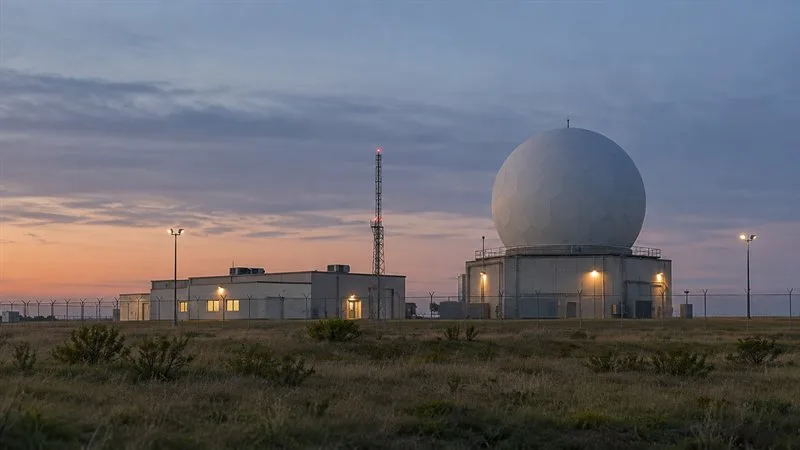
Illustrative image of a fictional radar facility. It does not depict a real base or a particular defense system.
Could missile defenses stop a hypothetical nuclear-armed missile? Public evidence cannot support a guaranteed yes or no for an unspecified scenario. Defenses can be designed to attempt intercepts against some classes of incoming missiles, but performance depends on the threat, the defensive mission, warning and tracking, command decisions, and other conditions. This five-step guide explains how to assess public claims without treating any system as an impenetrable shield or describing operational vulnerabilities.
What you need before you assess a claim
Preparation
Details
Sources
Public summaries from the Congressional Research Service (CRS), the Missile Defense Agency (MDA), the National Academies, and dated UN reporting for the 2026 conflict.
Time
About 15–20 minutes to check the claim’s source, date, mission and assumptions.
Difficulty
Intermediate. Public sources describe broad missions but cannot answer every classified or scenario-specific question.
Working notes
Record what kind of event is being discussed, what a source actually says, when it was published, and what remains unknown.
How to assess missile-defense claims in five steps
Step 1: Separate the hypothetical nuclear scenario from the 2026 conflict
Start by asking what happened or is being proposed. A conventional missile attack may use a conventional warhead. A strike on a nuclear facility is an attack on a site and does not mean a nuclear weapon was detonated. A nuclear counter-strike would mean nuclear weapon use; that is the hypothetical examined here.
The UN Secretary-General’s February 28, 2026 remarks described U.S. and Israeli military strikes on Iran and subsequent Iranian attacks in the region. OCHA’s Iran humanitarian update, covering February 28 through March 17, reported airstrikes and resulting civilian impacts. These are dated reports about the conventional conflict. They do not establish that a nuclear warhead was used. Do not turn missile activity, nuclear-program reporting, or attacks on nuclear-related facilities into evidence of nuclear detonation.
This distinction matters because the phrase “counter-strike” can obscure the actual scenario. Before evaluating defense, state whether the question is about conventional missiles, a possible radiological incident, or a hypothetical nuclear-armed missile. Do not imply that a hypothetical event has happened or is imminent.
Step 2: Match the defense mission to the threat being discussed
Missile defense is not one universal shield. Public CRS material describes U.S. defenses as having different missions, including regional defense and defense against a limited ballistic missile attack on the homeland. CRS also notes that U.S. homeland defenses are not intended to counter the full range of threats or a large-scale attack by peer competitors. MDA describes its broader mission as a layered system intended to defend against limited ballistic missile attacks. The word “limited” is important: it does not promise protection from every missile, attack size, or weapon type.
A defensive system’s stated mission is not proof that it can stop every threat from a particular country. Systems differ in what they are designed to engage, where they can be used, and how they work with other defenses. Public descriptions do not supply enough information to rate a hypothetical Iranian nuclear counter-strike as “stoppable” or “unstoppable.” Keep the assessment at the level the source supports.
Step 3: Understand why interception is uncertain
Interception is a chain of tasks: detect an object, maintain a reliable track, determine what it is, communicate that assessment, make a decision, and attempt an intercept. A failure or delay at any stage can affect the result. In some scenarios, defenders may also have difficulty distinguishing a real warhead from other objects. The National Academies’ review of missile defense explains that discrimination and physical constraints are central challenges, and that a practical defense cannot be treated as a perfect barrier.
Test results are useful evidence about the conditions tested, but a planned test against a known target does not reproduce every condition of a real attack. A test can demonstrate that an intercept occurred in that test; it cannot establish a guaranteed success rate for an unspecified future conflict. Avoid claims such as “the system always works” or “the system cannot work” unless a credible source assesses that exact scenario.
For a public explainer, broad uncertainties are enough: warning and tracking quality, the number and type of incoming objects, coordination between sensors and defensive systems, and whether the event matches the system’s tested mission. There is no need to publish deployment locations, coverage gaps, interceptor counts, engagement sequences, or other operational details to explain these limits.
Step 4: Read evidence in context, not as a guarantee
When you see “intercepted successfully,” check whether the report describes a test or a combat event, what type of target was used, and what the official source says the test was designed to demonstrate. Then check the system’s mission and the report date. Do not apply a test result from one threat class or region to an unrelated hypothetical.
CRS’s December 2024 defense primer describes the broad U.S. ballistic missile defense mission and its limits. MDA’s public materials explain the layered-system concept, while the National Academies’ 2012 assessment examines technical constraints. These sources have different dates and scopes. Together they support a cautious conclusion about limits and uncertainty—not a probability estimate for a nuclear counter-strike.
If current conditions matter, use current official statements and label their date. UN reports on the 2026 conflict provide context about conventional hostilities, not a technical evaluation of a nuclear interception scenario. If no public source analyzes the exact scenario, say that it has not been publicly assessed rather than filling the gap with a guess.
Step 5: State the conclusion conditionally
A responsible summary can say: “Missile defenses may be able to attempt interception of some incoming missiles within their assigned mission, but public sources do not support a guarantee that they could stop an unspecified hypothetical nuclear counter-strike.” Then explain which broad factors affect the answer and what the cited source does not evaluate.
Missile defense is one part of national security and risk reduction. It does not remove the consequences of a nuclear detonation, guarantee that every weapon would be intercepted, or replace diplomacy, deterrence, nonproliferation, and emergency planning. Avoid presenting a defense capability as proof that a nuclear attack would be harmless or that nuclear use is expected.
Troubleshooting
A headline says a defense can “stop all” incoming missiles. What should I check?
Find the underlying official source and identify its exact mission and test conditions. Look for qualifiers such as “limited attack” and check whether the statement refers to a test, a deployed capability, or an assessment of a specific scenario. Do not convert a successful test into a universal guarantee.
A post says a 2026 missile attack was a nuclear counter-strike. How can I verify it?
Check whether a recognized government or international organization confirms nuclear warhead use. The UN and OCHA reports linked below describe military strikes, airstrikes, and missile activity in the 2026 conflict; they do not confirm a nuclear detonation. If a post only points to a missile launch, nuclear facility, or nuclear program, that alone is not proof of nuclear weapon use.
Public reporting does not disclose enough to answer the question. What should I say?
State the limits plainly: public information does not provide a scenario-specific probability or guarantee. Separate confirmed facts from assumptions, attribute each technical claim, and avoid guessing about classified systems or operational weaknesses.
Frequently Asked Questions
Can missile defenses guarantee that a nuclear missile will be stopped?
No public source supports a blanket guarantee. Defenses are designed for particular missions and threats, and interception depends on multiple uncertain steps. A successful test or a system’s stated mission does not prove it will stop every weapon in every scenario.
Does the 2026 conflict show that Iran used a nuclear weapon?
The UN and OCHA reports cited here describe conventional military attacks and missile activity in 2026; they do not confirm nuclear weapon use. This article treats an Iranian nuclear counter-strike as hypothetical.
Would an attack on a nuclear facility count as a nuclear counter-strike?
No. An attack on a nuclear facility is not the same as detonating a nuclear weapon. The possible safety or radiological consequences of facility damage require separate evidence and assessment.
This guide provides a high-level explanation based on public sources. It is not a prediction, operational assessment, or confirmation of nuclear weapon use.