Home
» Wiki
»
How to Verify Public Shelter Information and Viral Bunker Claims
How to Verify Public Shelter Information and Viral Bunker Claims
Updated November 6, 2026. This is a preparedness guide for checking shelter information. It does not mean a world war is underway, and it does not rank or reveal private or restricted facilities.
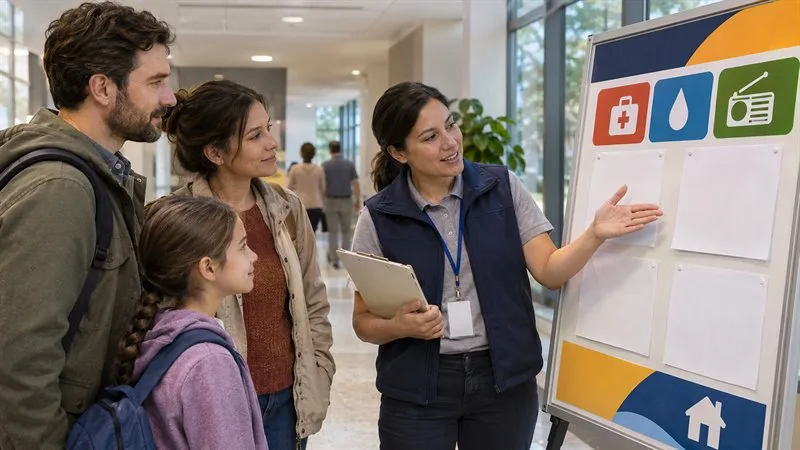
AI-generated illustration. Check shelter details with official local sources before an emergency.
Online lists promising the “top 10 bunkers to survive World War 3” often mix public disaster shelters, underground buildings, tourist attractions, private properties and unsupported rumors. A list can sound precise while leaving out the most important questions: Is the place real? Is it open to the public? Is it currently open? Was it designed or approved for the hazard being discussed?
There is no useful universal ranking for “the safest bunker.” Shelter access and emergency plans differ between communities, and a location that is open during a hurricane or wildfire is not automatically a designated fallout shelter. The practical approach is to verify what local authorities have actually published and make a plan for places you visit often. The steps below use U.S. federal guidance; readers elsewhere should check their own national and local emergency-management agencies.
In this guide: distinguish shelter types, find official local information, confirm access and status, evaluate viral claims, and make a realistic household plan.
Before you begin
What you need: the official city or county emergency-management site, your state emergency agency, and a list of the places where your household spends time.
Time required: about 15 minutes to check local sources and record contact details.
Difficulty: easy. Save links and phone numbers offline in case power or internet service is interrupted.
How to verify public shelter information
Step 1: Identify what kind of shelter a post is describing
First decide whether the claim concerns an open emergency shelter, a building that might provide short-term fallout protection, or a private bunker. These are different things. A public shelter may be opened for a particular disaster and provide temporary housing or basic services. A building with a basement or a central area can provide shielding in a radiation emergency, but that fact alone does not make it a staffed public shelter.
For example, FEMA’s shelter system tracks statuses such as open, closed and full, along with details such as accessibility and pet accommodations. That information can help people find disaster shelter options; it is not a federal certification that a listed facility is a nuclear bunker or is appropriate for every hazard. Check the system’s purpose and the facility’s own instructions before drawing conclusions.
Step 2: Start with the emergency authority for your area
Search for your city or county emergency-management office, then check the state or territorial emergency agency. Look for an official shelter page, an alert-signup page and instructions for radiation or other hazards. Save the non-emergency contact number and sign up for local warnings if available. For U.S. residents, USAGov says people can search for open FEMA shelters during a disaster through the FEMA app, online disaster resources or by texting “SHELTER” and a ZIP code to 43362. These are disaster services, not a pre-event list of hardened bunkers.
If a radiation emergency actually occurs, do not set out for a rumored location based on a social-media post. CDC guidance says local authorities will tell people when and where to go to an emergency shelter and how to get there safely. Until officials give other instructions, CDC’s general public message is to get inside, stay inside and stay tuned. A shelter location and route may depend on conditions at that time.
Step 3: Confirm that the listed site is real, open and accessible
Check the source’s publication date, the facility’s exact name and address, and whether the entry says it is currently open or only a potential location. Call the listed facility or local emergency office using a number found on its official website. Ask whether the public can enter, when it operates, whether registration is required, and whether it supports mobility, medical, language or communication needs.
Also check policies for children, service animals and pets, plus whether essential medication or supplies should be brought. These details can vary by shelter. FEMA’s public shelter records include fields for wheelchair access, accessibility, generator availability and pet accommodations, but a field in a database is not a substitute for confirming current operations with local officials.
Keep a copy of useful information in more than one format. A saved web page, printed note or offline map can help if mobile data is unavailable. Record the official source and the date you checked it so you know when it may need to be refreshed.
Step 4: Test viral bunker claims before sharing them
Look for a primary source: a current page from a government emergency-management agency, a dated public notice, or a direct confirmation from the facility owner or operator. A viral list without an agency, date, address or access instructions is not a verified public shelter directory. Photos of a basement, tunnel or reinforced building do not establish that the public can enter or that the site is approved for a radiological emergency.
Be cautious with claims that label a city, landmark or building “the safest” without publishing comparable criteria and evidence. A place may be private, closed, restricted, inaccessible or unsuitable under current conditions. Do not enter restricted property or circulate directions to a facility whose owner has not made it public. If a post conflicts with local government updates, follow the current official instruction and ask the local emergency office to clarify.
Step 5: Make a plan around places you actually use
Choose likely shelter options near home, work, school and other regular destinations, then check the building’s accessible basement or central interior area with its owner or manager. CDC recommends going to a basement or the middle of a building during a radiation emergency, away from the outside walls and roof. A building’s structure and the nature of an incident matter, so this is general preparation—not a guarantee that any particular building is a certified shelter.
Discuss how household members will receive alerts and stay in contact. Include prescription medicines, mobility or communication needs, children, older relatives and pets. CDC advises checking plans with community leaders, schools, care facilities and employers. Keep a battery-powered or hand-crank radio available, and use official radio, television, mobile alerts or government channels for updated directions.
If an emergency is announced, follow the instructions for the specific area and hazard. Do not drive across town to reach a “top-ranked” location unless officials tell you to evacuate there. CDC says that during a radiation emergency people should remain in their building or shelter until officials say it is safe to leave, except in a life-threatening situation.
Common problems and how to handle them
A shelter map lists a place, but its status is unclear. Check the map’s update time and call the facility or local emergency-management office. Treat a stale listing as unconfirmed.
A public shelter is listed as open, but someone says it is fallout-proof. Verify the specific hazard designation with local emergency and radiation-control authorities. General disaster-shelter status does not prove radiation protection.
A viral list gives an exact “best bunker” ranking. Ask what data and criteria support the ranking. If there are no dated official sources and comparable criteria, do not repeat it as fact.
Frequently asked questions
Is there an official top-10 list of bunkers for World War 3?
This guide does not identify a verified federal “top 10” list. Federal and local resources can help people find disaster shelters and prepare for hazards, but that does not make them a ranked directory of public nuclear bunkers. Verify the purpose and status of each location with local authorities.
Does an open FEMA or Red Cross shelter automatically protect people from fallout?
No. An open-shelter listing describes disaster shelter availability; it is not by itself a certification of protection from fallout. Ask local emergency-management or radiation-control officials for hazard-specific guidance.
What should I do if officials announce a radiation emergency?
Follow instructions from local authorities. CDC’s general advice is to get inside, stay inside and stay tuned. If officials direct evacuation to a community shelter, use their stated location and travel instructions rather than an unverified online list.