Home
» Wiki
»
How to Assess a Hypothetical Strike on Iran’s Nuclear Program: 5 Steps
How to Assess a Hypothetical Strike on Iran’s Nuclear Program: 5 Steps
Updated: November 6, 2026. The phrase “nuclear strike on Iran” can mean two very different things: a conventional attack on a site connected with Iran’s nuclear program, or the detonation of a nuclear weapon. The first is a military strike on a nuclear-related facility; it is not itself nuclear weapon use. This guide addresses claims about a hypothetical failed strike and the humanitarian and diplomatic risks around such a scenario. It does not describe targets or military operations.
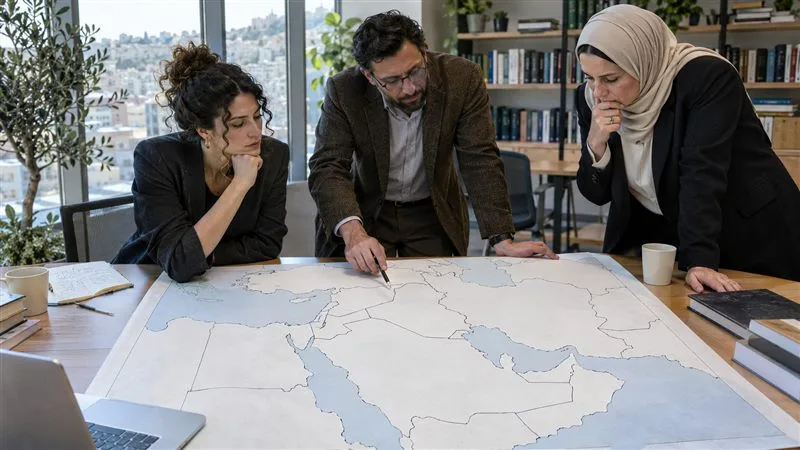
AI illustration of a fictional policy briefing. The people and documents are illustrative and do not depict a real meeting or officials.
The United Nations’ February 2026 statements and humanitarian reporting describe air and missile attacks and their effects in the region. IAEA event reports also discuss incidents at nuclear facilities. These are reports of conventional military action and facility-safety events; they do not establish that a nuclear weapon was detonated. As of November 5, 2026, the public sources cited here do not report nuclear weapon use in this conflict. A “failed” outcome is also not a settled fact unless reliable evidence defines what objective was supposed to be achieved.
What you need before assessing a claim
Preparation
Details
Sources
Dated statements from the United Nations, OCHA, the IAEA, and the International Committee of the Red Cross (ICRC).
Time
About 15 minutes to check the wording, date, source, and what is confirmed.
Difficulty
Beginner. No technical or military expertise is needed to separate a verified report from a hypothetical claim.
Notes
Write down the claim, whether it means a facility was attacked or a nuclear weapon was used, the evidence, and what remains unknown.
How to evaluate a hypothetical failed strike in five steps
Step 1: Clarify what “nuclear strike” means
Start by translating the headline into a precise statement. “A strike on Iran’s nuclear program” may refer to a conventional attack on a nuclear-related site. “A nuclear strike” can instead mean use of a nuclear explosive. These are not interchangeable. An attack on a facility can raise serious safety concerns, but it does not prove that a nuclear weapon was used or that radioactive material was released.
For this article, any nuclear weapon use is hypothetical. The United Nations Secretary-General’s February 28, 2026 remarks describe U.S. and Israeli military strikes against Iran and subsequent Iranian attacks across the region. OCHA’s March humanitarian update describes airstrikes, civilian harm, displacement, and disruption to services. That is evidence of a conventional conflict; it is not evidence of a nuclear detonation. Keep the distinction visible in any summary you share.
Step 2: Check the event against dated official reporting
Look for a primary source that states what happened, when it happened, and what the reporting agency actually confirmed. The UN Secretary-General called for de-escalation and a return to negotiations in his February statement. OCHA’s update covers February 28 through March 17 and reports humanitarian effects of airstrikes. A later UN statement in July described renewed military confrontations and efforts to preserve a ceasefire. These reports can establish context and civilian impact, but they do not answer every question about military objectives or results.
IAEA event entries are useful for a separate question: what was reported about nuclear-facility safety? For example, an entry dated March 21 records information from Iran’s nuclear regulatory authority about aerial and missile attacks at Natanz and says no increase in off-site radiation levels had been reported at that time. Another entry dated March 27 records a report that a projectile struck the premises of the Bushehr plant, with no damage or injuries reported at the time. Treat each entry as a dated incident report, not a permanent guarantee about later conditions and not proof of nuclear weapon use.
When sources disagree or a report is attributed to a party, preserve that attribution. Do not turn an allegation into a verified fact simply because it appears in an official document.
Step 3: Define “failure” without guessing about operations
A headline may say a strike “failed,” but that word needs a defined measure. Does it mean the stated political objective was not achieved, that a facility’s status is uncertain, or that the conflict continued? Public reporting may not provide enough evidence to answer those questions. Avoid speculation about exact damage, target locations, weapons, defenses, or operational plans.
Separate three kinds of statements: confirmed events, an analyst’s interpretation, and a future scenario. For example, “OCHA reported displacement after airstrikes” is a dated humanitarian finding. “The attack permanently eliminated a program” is a much broader conclusion that requires evidence about long-term outcomes. “A failed strike will cause a particular response” is a forecast, not a verified fact. Label each category so readers can see where evidence ends and interpretation begins.
Step 4: Assess the human and nuclear-safety risks separately
Conventional attacks can cause civilian deaths and injuries, damage homes and public services, displace families, and hinder access to health care. OCHA documents such effects during the 2026 conflict. Those are humanitarian harms even when no nuclear weapon is involved. If a nuclear-related facility is affected, the possibility of a radiological safety problem is a distinct concern that needs assessment by competent authorities and current monitoring; it should not be inferred from the word “nuclear” in a headline.
A nuclear weapon detonation would be a different and far more severe emergency. The UN General Assembly’s 2025 resolution on the humanitarian consequences of nuclear weapons describes their immense destructive capability and unacceptable humanitarian consequences. The ICRC’s 2026 NPT Review Conference paper likewise emphasizes catastrophic humanitarian effects and the need to reduce risks through restraint and diplomacy. These sources support taking nuclear-use claims seriously, not inventing a casualty count or presenting use as inevitable.
For any incident, check whether official reporting confirms a release, evacuation order, or public-health advice. A facility attack, a warning about a possible hazard, and a confirmed radiological release are separate facts. Use the latest local emergency instructions if you are in an affected area.
Step 5: Examine diplomatic options and keep the conclusion conditional
A failed or inconclusive military action does not determine what happens next. Outcomes depend on decisions by governments, diplomacy, compliance with international law, regional responses, and later verified information. The UN Secretary-General has repeatedly called for de-escalation and negotiations. The ICRC and UN sources explain why preventing nuclear weapon use and reducing humanitarian harm matter across political disagreements.
A careful conclusion could say: “Public sources document conventional military action and serious humanitarian concerns in the 2026 conflict. The sources reviewed here do not report nuclear weapon use. Whether any strike achieved its stated objectives cannot be determined from a headline alone; a nuclear escalation remains a hypothetical risk, not a confirmed event.” Update that wording when new, authoritative evidence appears. Do not assign a probability or forecast retaliation unless a credible source explains its evidence and assumptions.
Troubleshooting
A headline says “nuclear strike.” How can I tell whether it means a nuclear weapon?
Read the article’s first source and look for an explicit statement that a nuclear explosive was used. If it refers to an attack on a nuclear facility, enrichment site, or nuclear program, describe it as an attack on a nuclear-related site. Do not infer weapon use from the word “nuclear.”
A post claims a facility incident caused radioactive fallout. What should I check?
Look for a dated statement from a competent nuclear-safety authority or the IAEA that identifies monitoring results or a confirmed release. Distinguish a warning about a possible hazard from a measured release. Check whether the information is current and whether it applies to the location being discussed.
Sources do not say whether the strike succeeded. What should I publish?
Say that the outcome is not established in the public sources you reviewed. Explain what is confirmed, what is attributed or disputed, and what is unknown. Avoid filling gaps with operational guesses or certain predictions.
Frequently Asked Questions
Did the 2026 conflict involve a nuclear weapon detonation?
The UN and OCHA reports cited here describe military strikes, airstrikes, and missile attacks. IAEA event entries describe incidents at nuclear facilities. These cited sources do not report a nuclear weapon detonation; this guide treats nuclear use as hypothetical.
Does an attack on a nuclear facility count as a nuclear attack?
It is an attack on a nuclear-related facility, but it is not the same as using a nuclear weapon. Any radiological consequences must be established separately through current monitoring and official reporting.
Can anyone know whether a strike “failed” from public reports?
Sometimes public evidence can confirm immediate events, but a broad claim of success or failure depends on the objective and evidence over time. If reliable sources do not establish the outcome, describe it as unknown rather than guessing.