Updated: November 5, 2026. A nuclear strike on Tehran is a hypothetical scenario in this guide. The official reporting reviewed for this article describes conventional hostilities in Iran, including attacks on nuclear-related sites; it does not report a nuclear weapon detonating in Tehran. A strike on a nuclear facility, a radiological release, and a nuclear weapon detonation are different events. If you are in Tehran, do not treat this scenario guide as an alert or evacuation order. Follow current instructions from Iranian emergency authorities and recognized humanitarian organizations.
This guide gives readers a five-step method to assess claims and organize humanitarian questions without inventing casualty estimates. It also explains what people should do if authorities confirm a radiation emergency. It cannot predict the consequences of a hypothetical strike or replace official emergency instructions.
What you need before assessing the scenario
| Preparation | Details |
|---|
| Sources | Official updates from the UN Office for the Coordination of Humanitarian Affairs (OCHA), the International Atomic Energy Agency (IAEA), the World Health Organization (WHO), and the International Committee of the Red Cross (ICRC). |
| Time | About 20–30 minutes to verify a claim and organize a short situation brief. |
| Difficulty | Intermediate. The main task is distinguishing confirmed facts from scenario assumptions. |
| Working document | A simple table with columns for claim, source, publication time, evidence, confidence, and what remains unknown. |
How to assess a hypothetical nuclear strike on Tehran
Step 1: Label the event correctly
Start by identifying what the report actually alleges. A conventional airstrike on a city, an attack on a nuclear facility, an accident involving radioactive material, and a nuclear weapon detonation are not interchangeable. Each has different evidence, health risks, emergency agencies, and response needs. Avoid using “nuclear strike” as shorthand for any military action involving a nuclear site.
For context, the UN’s OCHA update covering February 28–March 17, 2026, documented conventional airstrikes and damage in Iran, including refinery fires in Tehran on March 7. That update describes the reporting period in its title and is not a live November situation report. IAEA’s Nuclear Events Web-based System also published incident records about attacks on nuclear-related facilities in 2026. Those records describe facility attacks; they are not reports of a nuclear weapon detonation in Tehran. Always read the event type, author, date, and exact location before repeating a headline.
As of November 5, 2026, I found no verified UN, OCHA, WHO, ICRC, or IAEA report in the sources reviewed that a nuclear weapon had detonated in Tehran. This is a statement about the sources checked, not proof that every event everywhere has been reported. For an incident that may have just occurred, check fresh official notices before publishing or sharing claims.
Step 2: Separate confirmed facts from the hypothetical
Make three lists: confirmed observations, unverified reports, and scenario assumptions. Record the publication time and the time period covered by every source. Do not carry March figures forward as if they describe conditions in November, and do not infer a radiological release from a facility attack alone.
The ICRC reported on October 9, 2026, that Iranian Red Crescent responders had assisted people injured or trapped in damaged buildings during hostilities affecting Iran in 2025 and 2026, and said humanitarian needs remained high. This describes the real consequences of hostilities and response activity; it does not establish a nuclear detonation or the impact of a hypothetical one. The UN OCHA updates from March and April 2026 are also dated snapshots. Label them as historical context and seek a newer update for current needs.
When an important claim has only appeared in a social media post, mark it “unverified.” Look for confirmation from the responsible national authority, IAEA emergency information, WHO, OCHA, or the Red Crescent. If reports conflict, state the conflict and what has not been independently verified. Do not fill gaps with estimates that have no stated method or source.
Step 3: Map humanitarian needs without forecasting casualties
Assess needs by service and population rather than by guessing a death toll. Ask what is known about emergency medical care, hospitals, water, power, communications, shelter, food, displacement, family tracing, and access for responders. Note which neighborhoods or groups may face barriers, such as older people, children, people with disabilities, hospital patients, or people who cannot safely leave home.
For a confirmed radiological event, add questions about official radiation monitoring, the affected area, contamination pathways, medical assessment, and instructions for food and water. WHO explains that health effects depend on factors such as radiation type, dose, route, and duration of exposure. A facility attack alone cannot answer those questions. Do not claim a citywide contamination zone, a specific exposure level, or a number of radiation injuries unless the responsible authorities publish evidence for it.
Use a compact needs matrix: need; location; source and time; people affected; response already underway; access or safety constraint; information gap. This lets readers see what is established and what still needs assessment without turning a hypothetical into a forecast.
Step 4: Explain who verifies and coordinates information
Use agencies for the roles they actually have. National authorities issue public protective actions and manage the domestic response. WHO provides health guidance and coordinates the international health response; WHO says it does not issue evacuation or shelter orders. The IAEA is the international focal point for nuclear and radiological emergency information and coordinates technical assistance on request. OCHA leads humanitarian coordination across the UN system, while the ICRC and National Red Cross and Red Crescent Societies provide protection and humanitarian assistance within their mandates.
Keep those roles distinct when describing a response. An IAEA technical update about radiation monitoring is not a complete assessment of civilian needs. A WHO health notice does not confirm an attack. An OCHA needs update may summarize several agencies and have a defined reporting period. Cross-check the date, place, agency, and scope of each notice before treating it as evidence for a different claim.
The IAEA’s 2026 incident records illustrate why exact wording matters: entries concerning attacks on nuclear facilities include a reporting authority and a time-specific statement about off-site radiation. Such an entry should be quoted only for the event and time it covers. It cannot establish conditions in another city or at a later date.
Step 5: Follow official protective instructions if an emergency is confirmed
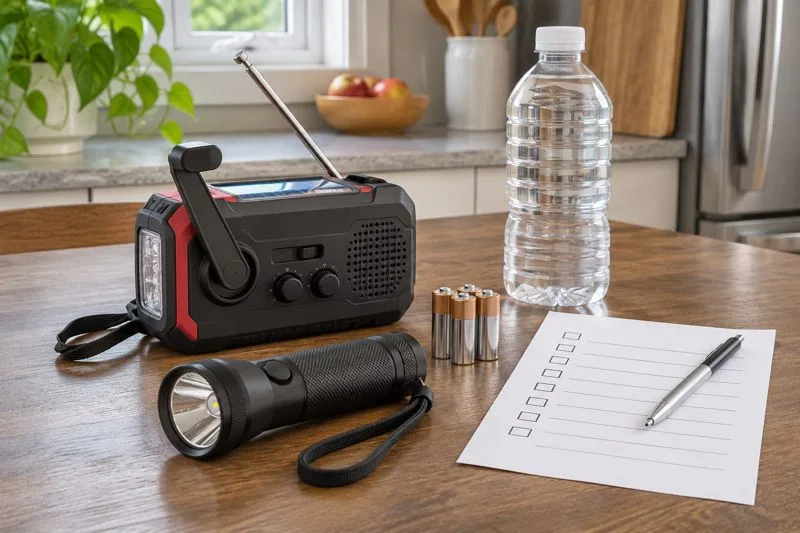
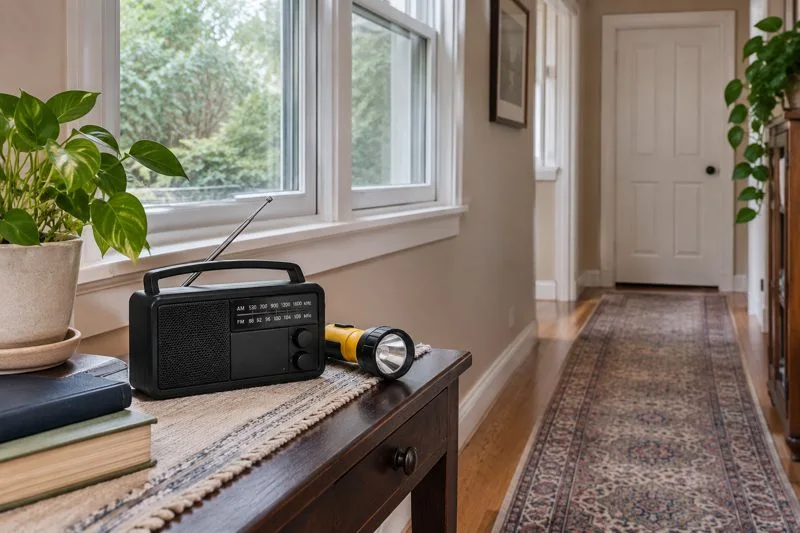
This article is not an alert. If authorities confirm a radiation emergency affecting your location, follow their immediate instructions and use official channels for updates. WHO describes the general public guidance as “Get in, Stay in, Tune in”: go inside a substantial building, remain sheltered, and listen for official instructions. If told to shelter, close doors and windows and follow local advice about ventilation and when it is safe to leave. Do not travel toward an incident site or enter damaged buildings to investigate.
For a suspected detonation or radiological release, do not rely on a map, wind estimate, or social media post to decide whether an area is safe. Do not take potassium iodide or other medical countermeasures unless public health authorities instruct you to do so; such medicines are not a general antidote to radiation and can cause harm if used incorrectly. Seek urgent medical help for injury or illness through local emergency services, while following authorities’ instructions about contamination and decontamination.
Humanitarian response planning should prioritize life-saving care, safe access, protection of civilians and responders, continuity of essential services, and verified public communication. The ICRC warns that there is no adequate humanitarian response capacity for the catastrophic effects of a nuclear weapon used in a populated area. That makes prevention, preparedness, and accurate information essential; it is not a basis for inventing a casualty forecast.
Troubleshooting
A headline says “nuclear attack.” What should I check?
Open the underlying official statement. Determine whether it reports a nuclear weapon detonation, an attack on a nuclear facility, a radiological release, or a claim that has not been verified. Check the location and timestamp. If the source does not establish a detonation, do not rewrite the claim as one.
Sources publish different casualty or damage figures. Which number is correct?
Do not combine numbers with different dates, geographic coverage, or definitions. Attribute each figure to its source and reporting period, explain the difference, and use the most recent verified figure that fits the question. If no figure is sufficiently supported, say it is not known.
There is no current OCHA update. Can I reuse its last numbers?
You can cite a dated historical update as historical context, but do not present it as a current count. Label the “as of” date and explain that later conditions may have changed. Seek current notices from national authorities, WHO, ICRC, and the Red Crescent for current instructions and operational information.
Frequently Asked Questions
Has a nuclear weapon been confirmed to have hit Tehran?
The official sources reviewed for this guide do not report a nuclear weapon detonation in Tehran. They document conventional hostilities and attacks involving nuclear-related facilities. Check current official statements because emergency information can change.
Does an attack on a nuclear facility mean radiation has spread?
No. The type and extent of any release must be assessed with monitoring and official technical information. A facility attack, by itself, does not prove that radioactive material escaped or that people were exposed.
What should someone in Tehran do if a radiation emergency is announced?
Follow local authorities’ protective instructions. WHO’s general guidance is to get inside, stay inside, and tune in to official updates. Do not self-evacuate or take medicine based on an unverified post.
Official sources
This guide describes an assessment method for a hypothetical scenario. It is not a prediction, live emergency alert, medical diagnosis, or substitute for instructions from local authorities.