Home
» Wiki
»
How to Prepare Electronics and Your Household for an EMP: A Practical Guide
How to Prepare Electronics and Your Household for an EMP: A Practical Guide
An electromagnetic pulse (EMP) is a burst of electromagnetic energy that can disrupt or damage some electronics. A high-altitude nuclear detonation is one potential source, but the effects on any particular device or power system depend on the event, its location and the equipment involved. This guide describes preparation for a hypothetical event; it does not report an attack.
You can improve household readiness by preparing for an extended power outage, backing up essential information and learning where to shelter. Shielding may reduce exposure under appropriate conditions, but a homemade container or ordinary surge protector cannot be assumed to make electronics EMP-proof. If a nuclear explosion actually occurs, protect people first: get inside a substantial building and follow official emergency instructions.
Before you start: what you need
Time: about 30–60 minutes for an initial household plan, plus time to gather supplies.
Difficulty: easy for an outage kit; assessing specialized shielding requires technical expertise.
Useful supplies: battery-powered or hand-crank radio, flashlight, compatible spare batteries, water, nonperishable food, paper contacts and medication information.
For data protection: a backup drive or another backup method and a secure place to store important records.
For optional shielding: a manufacturer-tested enclosure with clearly documented performance, if available; do not assume any particular container is certified without evidence.
Adapt the plan to the people in your home, including anyone who relies on medical equipment, refrigerated medicines or mobility aids. You do not need to buy specialized EMP equipment to begin preparing for a power outage.
How to prepare electronics and your household
Step 1: Identify essential devices and a backup plan
List the devices you depend on for communication, lighting, medical care and access to records. Write down what each device needs: batteries, charging cables, a power source, connectivity or a working network. A phone that survives an event may still be unable to connect if nearby infrastructure is disrupted.
For life-sustaining equipment or refrigerated medication, speak with your healthcare provider and the equipment supplier about a power-failure plan, backup power and when relocation or replacement medication may be needed. The FEMA power-outage guidance recommends planning these needs in advance.
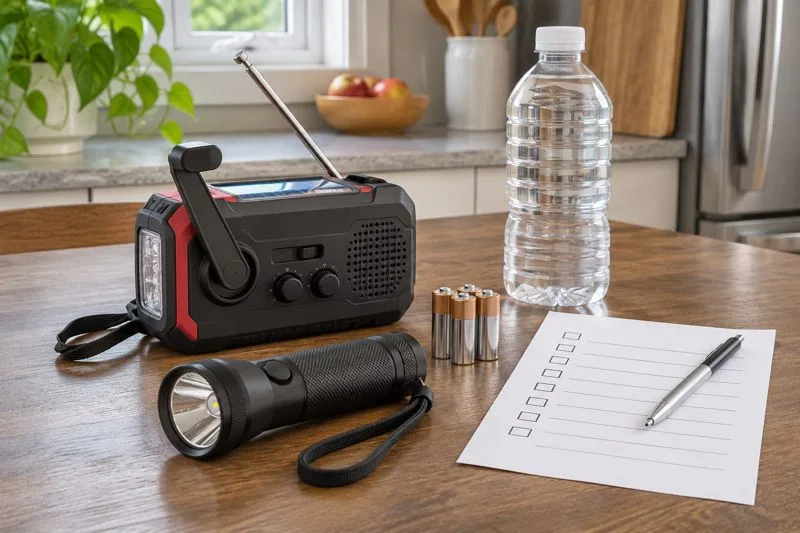
AI-generated illustration of household emergency supplies; not a depiction of an actual incident.
Step 2: Assemble an outage kit and paper contacts
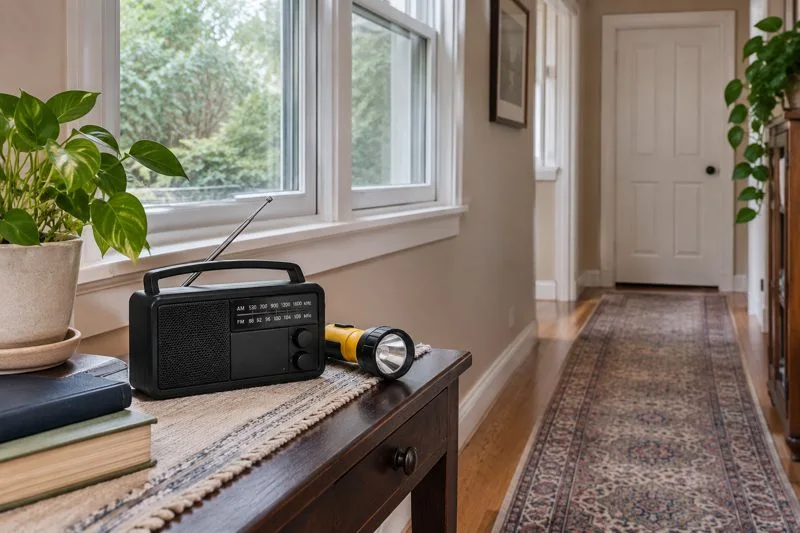
Keep a working battery-powered or hand-crank radio, flashlights and compatible spare batteries together with drinking water, nonperishable food and necessary medications. Record emergency contacts, medical information and a family meeting or communication plan on paper. Check and replace supplies regularly, including batteries before their expiration dates.
Practice finding a local emergency broadcast station before you need it. Radio reception still depends on a functioning transmitter and local conditions; no single device guarantees contact. FEMA’s preparedness guide recommends a battery or hand-crank radio for receiving information when other services may be unavailable.
Step 3: Back up important records in more than one place
Keep copies of essential documents and data using a method appropriate to their sensitivity. Consider an offline backup that is disconnected after copying, alongside another secure copy in a separate location. Test whether you can actually restore files and note any passwords or recovery steps in a secure form.
An offline backup is useful against many everyday problems, including accidental deletion and some power disturbances. Disconnecting it does not by itself prove it will survive an EMP. Store backup media according to the manufacturer’s temperature, humidity and battery instructions.
Step 4: Understand what shielding can and cannot do
Conductive enclosures, often called Faraday cages, can reduce the electromagnetic energy reaching equipment inside when they are appropriately designed and tested. CISA identifies shielding among potential mitigation techniques in its EMP and geomagnetic disturbance summary. Performance depends on the enclosure, openings and seams, connected cables, frequencies and the strength of the exposure.
For equipment you consider especially important, look for independently substantiated shielding performance relevant to the intended use and follow the manufacturer’s instructions. A closed metal box or a phone signal test alone does not establish protection against the full range of a nuclear EMP. Ask a qualified specialist if the consequence of failure would be serious. Do not enclose or disconnect essential medical equipment without guidance from its supplier and your clinician.
Likewise, a common surge protector is useful for certain everyday electrical surges but is not a guarantee against all EMP effects. FEMA advises unplugging electronics during an ordinary outage to reduce damage from electrical surges when power returns. That advice should not be represented as proof of complete protection from a nuclear pulse.
Step 5: Plan safe power and communications alternatives
Keep phones charged when practical and identify an alternative charging method appropriate to your devices. Check the battery capacity and operating instructions of any backup power unit. Electrical safety and ventilation matter: never run a generator inside a home, garage or other enclosed space. FEMA recommends keeping generators outdoors at least 20 feet from building openings.
Use battery-powered lights rather than candles during an outage. Never use a gas stove or oven to heat a home. Keep a paper plan for contacting household members, since normal mobile and internet services can become unavailable during many kinds of emergencies.
Step 6: Know the nuclear-emergency priorities
If officials warn of a nuclear explosion or radioactive fallout, follow their instructions immediately. Move into a substantial building as quickly as safely possible, then get to a basement or the middle of the building, away from exterior walls and windows. Do not delay sheltering to retrieve or protect electronics. Vehicles offer limited fallout protection compared with substantial buildings.
FEMA’s nuclear detonation planning guidance describes basements and the centers of large buildings as better shelter options and advises initial sheltering for at least 12–24 hours. Follow local authorities’ instructions about when it is safe to move; conditions and instructions may differ. If you were outside and may have fallout on you, remove your outer layer of clothing and follow official decontamination instructions.
What is known about EMP and the power grid?
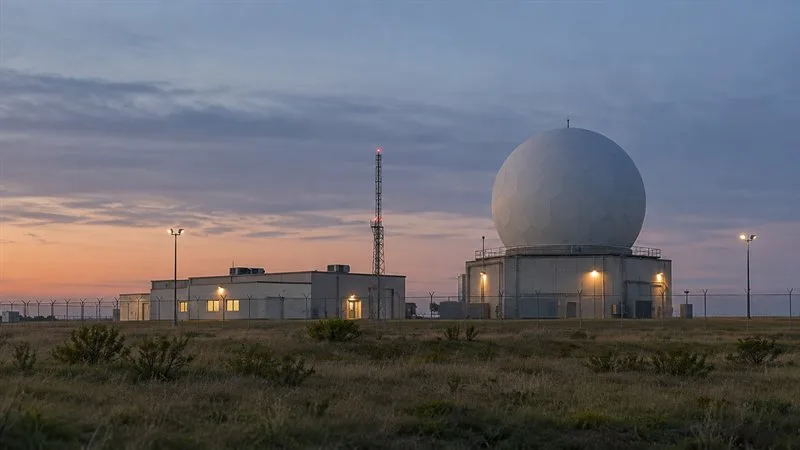
CISA describes a high-altitude nuclear EMP as a potential threat to electronic systems and critical infrastructure. The U.S. Department of Energy describes ongoing testing, modeling and mitigation work with government and industry partners to assess grid vulnerabilities. That research demonstrates a recognized risk and ongoing resilience work; it does not establish that every device would fail or predict how long every outage would last.
Effects vary with the characteristics of the pulse, geography, electrical connections and the resilience of individual systems. Avoid claims that an EMP will inevitably destroy all electronics, or that one inexpensive product will protect a household under every scenario.
Troubleshooting common problems
The backup radio does not work
Check battery orientation and expiration, try fresh compatible batteries, and test the receiver in a location with known reception. If the radio powers on but no station is heard, the local transmitter or reception may be unavailable. Keep another means of receiving official information in your plan.
A backup drive is not recognized
Try the manufacturer’s basic connection and compatibility checks on a known working device. Confirm whether an alternate backup can be restored. If the drive contains irreplaceable information, avoid repeated risky repair attempts and seek qualified data-recovery help. Test backups before an emergency.
An enclosure claims to block a phone signal
That result alone is not an EMP certification: phone reception tests only particular radio conditions and cannot establish performance against an entire pulse. Review independently documented test methods and product specifications, and maintain other preparedness measures rather than relying on a single box.
Frequently asked questions
Will a nuclear EMP destroy every phone and appliance?
Not necessarily. The impact depends on the event and the equipment. Federal agencies study potential effects and mitigation; a universal outcome for all devices cannot be assumed.
Does a surge protector make a computer EMP-proof?
No. Surge protection can help with certain ordinary electrical surges, but it does not establish complete protection against every type or intensity of electromagnetic pulse.
Should I leave a shelter to recover my electronics?
No. In a nuclear emergency, prioritize shelter and official instructions. Do not leave a protective location merely to retrieve devices; follow authorities’ guidance about when movement is safe.