Checked: November 11, 2026, 10:50 p.m. GMT (London, UTC+00:00).
New HMRC Valuation Office photo guidance has put “mansion tax inspections” in the headlines, but the latest official records draw an important line: the November 5 parliamentary answer describes photography for existing Council Tax valuation casework, not a new inspection power created for the High Value Council Tax Surcharge. Photos taken from a public highway do not require the occupier’s permission; photos taken from within a property boundary do. Separately, the government’s October 28 surcharge guidance says most homes should be banded from existing data and that any necessary visits will be arranged by prior agreement.
The surcharge—often called a mansion tax—is due to start in England in April 2028. It applies to owners of homes valued at £2 million or more using 2026 values. The Valuation Office, which sits within HMRC, will set bands; local authorities will send bills and collect the charge. That means an exterior photograph from the street is not itself a bill, inspection notice, or finding that a property qualifies.
Destaques
- The November 5 ministerial answer confirms that photos from a public highway do not require permission; photos taken inside a property boundary require the occupier’s permission.
- That answer concerns existing Council Tax valuation work, not a new mansion-tax-specific power to enter homes.
- For the surcharge, officials say most banding decisions can use data already held; any necessary property visit is by prior agreement and under the existing entry code.
- The new charge is planned for April 2028, while Finance Bill 2026–27 legislation and detailed enforcement powers remain part of the implementation process.
What changed in the HMRC inspection guidance?
On November 5, Treasury minister James Murray answered a written question from MP David Simmonds about photographs taken during Council Tax valuation inspections. The answer said HMRC guides Valuation Office caseworkers to treat interior and exterior photographs as part of a property survey. It also said permission is required for photographs taken from within a property boundary, while permission is not required for photographs from a public highway. Photos forming part of Council Tax casework are retained under the Valuation Office’s information-retention schedules.
The question and answer were about Council Tax valuation. They did not announce that inspectors can enter a home without consent, nor did they create a special right to photograph gardens or driveways for the new surcharge. Existing GOV.UK guidance says a Valuation Office visit is arranged when outside information is not enough; visits are by appointment, require consent, and any interior photographs require permission. Staff carry photo identity cards. If a caller’s identity is in doubt, residents can check with the Valuation Office before allowing access.
So the practical distinction is location and purpose: photographing a visible exterior from a public highway is different from crossing a gate or entering a garden, and both are different from entering a home. The recent parliamentary response clarifies the first rule for valuation casework; it is not notice that a particular home is under investigation.
How will the new high-value surcharge be assessed?
The official name is the High Value Council Tax Surcharge (HVCTS). It applies in England, not across Scotland, Wales, and Northern Ireland. The threshold is based on whether a residential property is worth at least £2 million in 2026. Existing Council Tax bands, which rely on 1991 values, will not decide eligibility.
The updated government guidance describes a model-assisted valuation process. The Valuation Office will use comparable sales evidence around the April 2026 valuation date and details such as property type, age, size, room count, and parking. Automated valuation models will provide an initial estimate, but professional valuers will review and place homes into bands. The office may ask an owner to confirm or clarify property information. It says most cases can be decided using records already held; visits are expected only in limited circumstances and, where needed, will be by prior agreement and in line with the government’s Powers of Entry Code of Practice.
The planned annual charges are:
- £2,000,000 to £2,500,000: £2,500
- £2,500,000 to £3,500,000: £3,500
- £3,500,000 to £5,000,000: £5,000
- Above £5,000,000: £7,500
These amounts are in addition to Council Tax. The surcharge does not begin until April 2028, so owners do not owe it under the new scheme today. Draft bands are expected in late 2027, giving owners an opportunity to correct factual property details before final bills. The first bills are expected in March 2028.
What are the planned enforcement updates?
The government’s October 28 consultation outcome outlines how it intends to identify owners, bill them, and pursue unpaid amounts. Local authorities—not HMRC—will administer collection. If a bill remains unpaid, the plan is to adapt the Council Tax enforcement framework. Under that framework, councils can issue reminders and, in persistent non-payment cases, seek a liability order from a magistrates’ court; the order can enable measures such as deductions from earnings or enforcement agents. The surcharge guidance presents this as the intended framework, not as an active new collection regime before the charge starts.
The policy response also proposes information-request penalties. If a person appears to be the owner and does not respond to a notice asking who is liable, the proposed penalty is 10% of one year’s surcharge after 21 days, rising to 30% after another 21 days. A local authority would have discretion, with a right of appeal to the Valuation Tribunal. The proposal says no penalty would apply if someone who is not the owner replies within 21 days to clarify that fact. These penalty powers require legislation; the government says the surcharge itself will be legislated for in Finance Bill 2026–27, with secondary legislation to follow in 2027.
This is the key enforcement distinction: the new policy sets out future billing and information rules, but the recent photo answer is about established Council Tax survey practice. It does not state that a homeowner can be fined for refusing an unsolicited visit under the new surcharge. The legal framework and safeguards for the scheme still depend on the legislation and implementation rules to come.
How can owners challenge a valuation?
The Valuation Office will decide a property’s surcharge band, while the local authority will decide who is liable and what the bill says. Owners will be able to raise a challenge with the body responsible for the decision and, if dissatisfied with the result, appeal to the Valuation Tribunal for England. The government says banding evidence and instructions on how to challenge will be published ahead of implementation. When the draft list appears in late 2027, owners can first ask for factual errors to be corrected before the final list and bills.
For now, the most useful step is not to arrange for an inspection that has not been requested. Keep property records accurate, treat an official information request as distinct from a visit, and verify any caller through the published Valuation Office contact route. Owners in England should watch for the draft list in 2027 and use the formal challenge route if the band or liability is wrong.
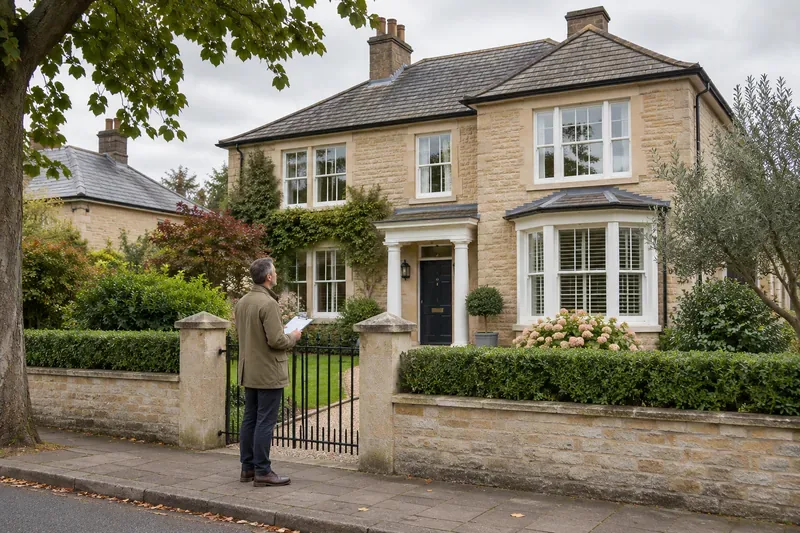
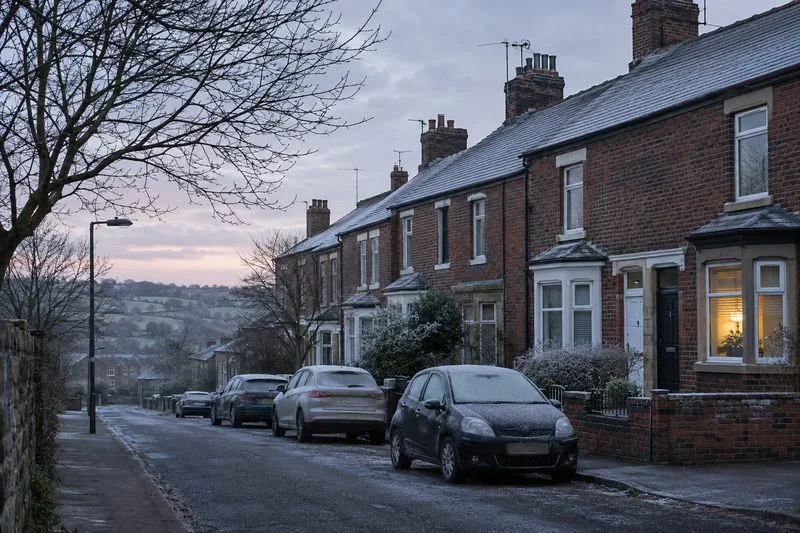
Cover image caption: An illustrative English home viewed from a public sidewalk. The image is AI-generated and does not show an actual Valuation Office inspection or a specific property.
FAQ
Can HMRC photograph my house without permission?
The November 5 answer says permission is not required for photos taken from a public highway. Photos taken from within the property boundary require the occupier’s permission. The answer concerns Council Tax valuation casework.
Can an inspector enter my home for the new surcharge without consent?
The current surcharge guidance says necessary visits will be arranged by prior agreement. It does not announce a new power to enter homes without consent.
When does the mansion tax start?
The High Value Council Tax Surcharge is planned to start in England in April 2028 for owners of properties valued at £2 million or more in 2026.
Sources: UK Parliament written answer on Council Tax valuation photographs, November 5, 2026; GOV.UK High Value Council Tax Surcharge guidance, updated October 28, 2026; GOV.UK guidance on how Council Tax bands are assessed; HMRC tax information and impact note.