Verified and updated: November 11, 2026, 10:48 p.m. London time (GMT, UTC+00:00).
England’s new High Value Council Tax Surcharge (HVCTS), often called a mansion tax, is scheduled to begin in April 2028. The latest government guidance says the Valuation Office will assess properties using evidence around an April 2026 valuation date; a property visit may be needed in limited cases. Owners should start organizing records now, especially evidence of the home’s condition, layout, size, and relevant comparable sales. The charge is based on value bands, so a valuation near a threshold could affect the annual bill.
This is not a new routine HMRC home inspection program. The surcharge valuation exercise is led by the Valuation Office, while local authorities are expected to bill and collect the charge. Existing HMRC inspection powers relate to checks of particular tax positions, such as Capital Gains Tax, Inheritance Tax, or Stamp Duty Land Tax. Current government guidance says any visit for the surcharge will be arranged by prior agreement and follow the powers-of-entry code of practice.
Destaques
- The HVCTS is planned for residential properties in England valued at £2 million or more in 2026, starting in April 2028.
- The Valuation Office will use comparable sales, property characteristics, and professional valuation judgment to assign bands.
- Keep dated records of renovations, defects, floor area, annexes, and comparable sales that could explain a valuation.
- Official guidance describes visits as limited and by prior agreement; prepare to verify any inspector’s identity and authority.
What is changing for high-value property owners?
The HVCTS is an annual charge on owners of residential property in England that meets the £2 million threshold on the 2026 valuation basis. The government’s published starting charges are £2,500 for the £2.0 million–£2.5 million band, £3,500 for £2.5 million–£3.5 million, £5,000 for £3.5 million–£5 million, and £7,500 for properties valued at £5 million or more. The government says these charges will increase with CPI inflation from 2029–30. These are announced figures, not a forecast of what any particular home will owe.
Owners will pay the surcharge alongside Council Tax, and local authorities will collect it for central government. The measure applies in England; Scotland and Wales have separate property-tax systems. The existing Council Tax band is not a direct estimate of current market value: England’s Council Tax bands are based on 1991 values. The Valuation Office explains the existing banding basis.
What records should you prepare before a property valuation?
Create one organized file for the property and retain original documents where possible. Start with a floor plan, measurements, planning records, and a clear timeline of extensions or conversions. Note whether an annex or outbuilding is self-contained, and document any changes to its use or physical layout. Keep dated photographs of significant defects, unfinished work, or features that may affect value.
Collect invoices, contracts, planning approvals, building-control records, and survey reports for major work. These records help explain what changed and when; they do not automatically prove that a feature raises or lowers the valuation. If condition is an issue, get a professional report and itemized repair estimates rather than relying only on an informal estimate.
Also save evidence of comparable properties sold near the relevant valuation date. Choose genuinely similar homes by location, type, size, condition, and distinctive features. Record the sale date and price, and explain any major differences. Government guidance says the valuation exercise will draw on comparable sales around April 2026, property type, age, number of rooms, and area, followed by model-assisted assessment and professional valuer judgment.
Can the Valuation Office inspect the inside of a home?
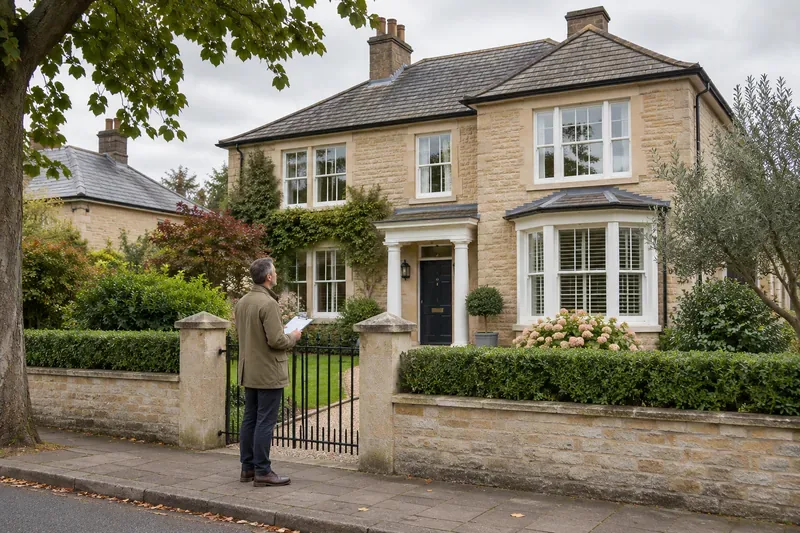
The published HVCTS guidance says most homes can be banded from information already held, and only some cases may need a visit. For existing Council Tax assessments, the Valuation Office says it usually gathers information externally; if an internal inspection is needed, it asks for consent and arranges a convenient time. Do not assume that the exact process for the new surcharge will be identical in every detail, because the scheme is still being implemented.
If someone requests access, ask for the purpose of the visit, the property and valuation being reviewed, and written confirmation of the appointment. Check official identification. For a separate HMRC tax compliance inspection, HMRC’s manual says valuation inspections must be at a time agreed with a relevant person or approved by a tribunal. If a tribunal approves an inspection, written notice must generally give at least seven days’ notice. See HMRC’s valuation-inspection guidance for the scope and conditions.
What should owners do if they disagree with a valuation?
First, check that the property description is accurate: address, size, number of rooms, layout, condition, and annexes. Compare the assigned band with the official criteria and identify specific errors with supporting evidence. Keep copies of all notices, submissions, and correspondence, and note response deadlines. The government says a review and appeals process is part of the scheme, but owners should follow the formal instructions issued with their valuation rather than assume the route or deadline.
There is also a confirmed deferral scheme for qualifying homeowners who meet one of the government’s stated circumstances, including household income of £35,000 or less, capital savings of £16,000 or less, or a household member meeting disability criteria. Deferral delays payment until ownership changes and interest applies. Eligibility details and practical steps should be confirmed with the relevant authority when the scheme opens.
What remains uncertain: official assessments and bills are still ahead. The government expects first bills in March 2028 and says the targeted valuation is based on 2026 values. Owners can use the period before then to build a clear, dated evidence file; they should not treat online estimates or a current Council Tax band as a binding HVCTS valuation.
FAQs
Does the mansion tax apply across the UK?
No. The announced HVCTS applies to qualifying residential property in England. Scotland and Wales have separate property-tax arrangements.
Will HMRC visit every home worth more than £2 million?
No such universal inspection is announced. Valuation Office guidance says most properties can be assessed from existing information, with visits only in limited cases.
What is the most useful preparation now?
Keep dated plans, renovation and repair evidence, survey reports, photographs, and well-matched comparable-sale records in one file.
Sources