Home
» Today
»
UK Yellow Cold-Health Alert Issued: Affected Areas and Key Dates
UK Yellow Cold-Health Alert Issued: Affected Areas and Key Dates
Checked November 11, 2026, at 10:45 p.m. GMT (UTC+00:00). A yellow cold-health alert is set to begin at 9 a.m. Thursday, November 12, across England’s North West and West Midlands, according to the UK Health Security Agency (UKHSA). It is scheduled to remain in effect until noon Saturday, November 14. The agency says other regions of England are not currently included.
The alert is the first cold-health alert of the 2026–27 winter season. It is aimed at helping health and social care services prepare for cold-related health effects, particularly among vulnerable people. It does not mean that a severe-weather warning has been issued for the whole United Kingdom. The Met Office’s separate National Severe Weather Warning Service covers broader weather hazards and can have different areas and warning periods.
Highlights
Affected regions: North West England and West Midlands, with no other English regions listed in the UKHSA alert.
Start and end: 9 a.m. Thursday, November 12, to noon Saturday, November 14, in London, GMT (UTC+00:00).
Who is most at risk: People 65 and older, people with existing health conditions, and people sleeping rough or otherwise exposed to cold.
What to check: UKHSA’s live regional dashboard for health alerts and the Met Office for local weather warnings.
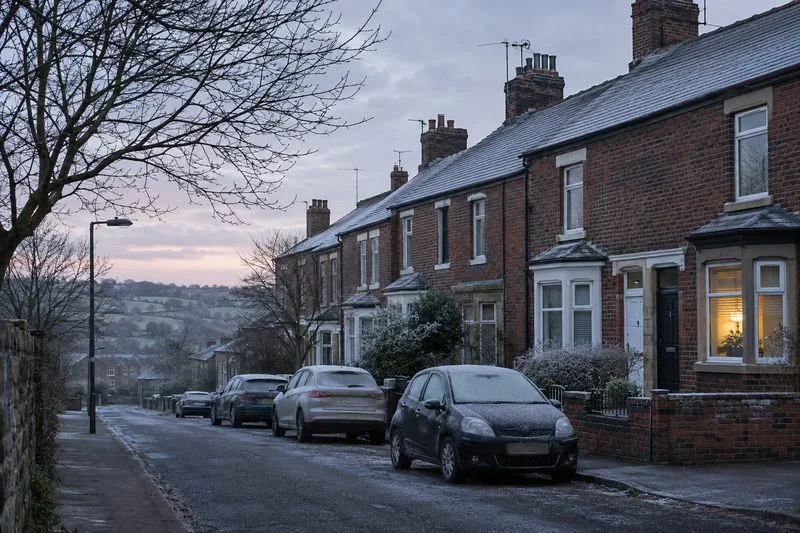
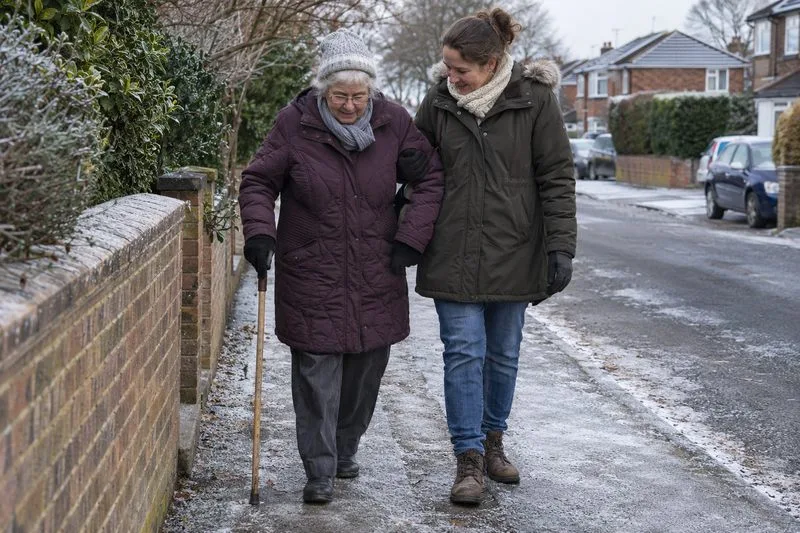
An illustrative image of a frosty residential street; it is not a photograph of an alert area. (Image generated for this article.)
Which areas are covered by the yellow alert?
The official alert names two broad public-health regions: North West and West Midlands. UKHSA’s notice does not provide a town-by-town or local-authority list, so residents should use the regional designation rather than assume that the alert applies only to a particular city or county.
The alert is limited to England’s health-alert system. It should not be read as a yellow cold-weather warning covering all four UK nations. Scotland, Wales and Northern Ireland have their own weather and public-health information channels. Within England, the UKHSA announcement says other regions are currently unaffected by this cold-health alert; that status can change if the agencies issue a new update.
Readers can check the official UKHSA cold-health alert dashboard for the latest regional status. For hazards such as snow, ice, fog or strong wind that may affect travel and infrastructure, consult the Met Office warning map and local forecasts. A health alert and a weather warning serve different purposes and do not necessarily match in geography or timing.
What prompted the alert, and what does yellow mean?
UKHSA and the Met Office issue Cold-Health Alerts when forecast cold could affect health. The system operates in England and is designed to give health and social care organizations advance notice. The yellow level indicates that most people are unlikely to be affected in the same way, while vulnerable people may face greater difficulty and services may need to take targeted action. It is not a statement that everyone in the named regions faces immediate danger.
UKHSA identifies adults aged 65 and older, people with pre-existing conditions—including respiratory and cardiovascular illness—and people sleeping rough as groups that can be more exposed to cold-related harm. Cold can also increase demand on health care services. The agency’s advice is to keep homes heated where possible, dress warmly, and check in on friends, relatives and neighbors who may need support.
The Met Office’s November 9 outlook said colder air was expected to spread south across the UK on Thursday and Friday, with temperatures falling below average in many places and frost becoming more widespread. That is a forecast, not a guarantee of identical conditions in every town. Local temperatures and frost risk depend on the latest forecast, so check your location before traveling or making plans.
What should residents do next?
For people in the North West and West Midlands, the alert is a prompt to plan ahead, especially if they care for someone medically vulnerable or work in health, social care or community support. Check whether anyone who may struggle to stay warm has heating, suitable clothing and a way to ask for help. If someone relies on regular medication or care, follow their established clinical advice and contact a health professional if their condition worsens.
Use official sources for changes. UKHSA publishes regional cold-health status, while the Met Office provides local forecasts and any separate severe-weather warnings. Check again before the alert begins on Thursday morning and during the period through Saturday at noon. The alert’s planned end time is not a forecast that cold conditions will stop immediately; it marks the period currently covered by this health notice.
Frequently asked questions
When does the UKHSA cold-health alert begin and end?
It is scheduled for 9 a.m. Thursday, November 12, through noon Saturday, November 14, 2026, in London, GMT (UTC+00:00).
Which parts of the UK are affected?
The yellow Cold-Health Alert covers England’s North West and West Midlands regions. UKHSA says other English regions are currently unaffected; the notice is not a UK-wide severe-weather warning.