Home
» Today
»
How HMRC Mansion Tax Property Inspections Work and Who Is Affected (November 11, 2026)
How HMRC Mansion Tax Property Inspections Work and Who Is Affected (November 11, 2026)
Checked November 11, 2026, at 10:50 p.m. Greenwich Mean Time (GMT, UTC+00:00). The so-called “mansion tax” is not yet being collected. The government plans to introduce an annual High Value Council Tax Surcharge (HVCTS) in England from April 1, 2028, and says the Valuation Office will use a targeted valuation exercise to identify homes in scope. Most assessments are expected to rely on existing property records and sales evidence; a visit is described as necessary only in limited cases and arranged by prior agreement.
Destaques
The planned charge concerns owners of residential property in England valued at £2 million or more; it does not apply across the whole UK.
The Valuation Office, part of HMRC, will assign a surcharge band. Local councils are expected to issue bills and collect the charge alongside Council Tax.
Officials say most homes can be valued using data already held. The government says any needed visit would be by prior agreement and follow the powers-of-entry code.
The surcharge is scheduled for April 2028. Draft valuations are expected in advance, with an opportunity to check and challenge a band.
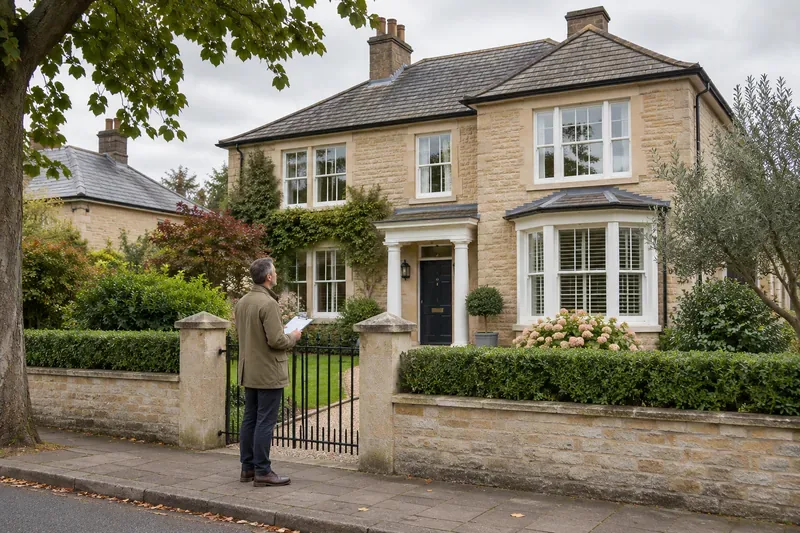
Illustration only: this is not an actual HMRC or Valuation Office visit.
What does “HMRC mansion tax” mean?
“Mansion tax” is a media shorthand. The government’s official name for the planned charge is the High Value Council Tax Surcharge. It is an annual charge on owners of residential property in England, intended to sit alongside existing Council Tax. The measure is scheduled to begin on April 1, 2028; as of this check, it is a future policy being legislated for through the Finance Bill 2026–27 and related secondary legislation planned for 2027. It is not a tax bill currently due, and the announced valuation exercise is not a general HMRC tax-compliance raid.
The relevant office is the Valuation Office (VO), which is part of HMRC. It assesses property values and bands; local authorities will administer the surcharge with Council Tax and collect it on behalf of central government. That distinction matters if a homeowner receives a valuation query: a valuation contact is different from a conventional HMRC enquiry into income or tax returns. The government says the charge is expected to affect fewer than 1% of homes in England.
Who could be affected by the surcharge?
The government’s current plan covers owners of residential property in England with a valuation of at least £2 million. The liability is attached to ownership, rather than the person living in the home. A tenant may live at an affected address, but the owner—not the tenant or occupier—is the person expected to be liable. The measure is England-specific; Scotland, Wales and Northern Ireland are not included in this announced scheme.
The proposed annual charges are grouped by the property’s assessed value:
£2 million to £2.5 million: £2,500 a year
£2.5 million to £3.5 million: £3,500 a year
£3.5 million to £5 million: £5,000 a year
£5 million or more: £7,500 a year
These are the published planned rates, in addition to Council Tax. The government says charges are expected to rise with CPI inflation from 2029–30, while decisions on changing the bands will be considered alongside revaluations. Discounts, exemptions for certain property types, and a deferral scheme for eligible households are also planned. The published criteria for deferral include household income of £35,000 or less, capital savings of £16,000 or less, or a household member meeting disability criteria; payment would be delayed until ownership changes, with interest. Final rules will depend on legislation and secondary regulations.
How will the Valuation Office decide a home’s value?
The surcharge is based on a separate targeted valuation exercise, not a homeowner’s income and not simply the property’s existing Council Tax band. England’s current Council Tax bands reflect 1991 values, so they are not a current market valuation and do not decide by themselves whether the £2 million threshold is met.
The government says the VO will use sales of comparable homes around an April 2026 valuation date, along with property type, age, room count and area. A model-assisted process will produce an initial estimate, then a professional valuer will exercise judgment to place a property in the relevant surcharge band. Official material says the office already has enough information to assess most properties. If details are missing or a property’s features need clarification, officials may contact the owner or occupier.
Will HMRC inspect inside every high-value home?
No blanket inside-inspection program has been announced. The government’s consultation response says visits may be needed in limited circumstances to ensure an accurate band and that they will be arranged by prior agreement in line with the government’s powers-of-entry code. HMRC chief executive John-Paul Marks told Parliament’s Treasury Committee on September 9, 2026, that home visits would be a “last resort” and only with the homeowner’s agreement; he said they would normally happen when the homeowner requests a visit to provide additional evidence.
Existing Valuation Office guidance for domestic Council Tax assessments gives a practical picture of how a routine visit works: where a visit is needed, it is arranged for a convenient time and usually lasts 10 to 30 minutes. Staff carry photo identification, and the office advises people to verify a caller’s identity if uncertain. The guidance says assessors can often gather what they need from outside; if interior photographs are needed, those are not taken without permission. This is current Council Tax guidance, while the new surcharge’s own process will be governed by its published rules when finalized.
If someone contacts you claiming to be an HMRC or VO inspector, use contact details from the official GOV.UK website to verify the request rather than relying on an incoming caller’s number or link. Ask what property record or feature needs clarification, what information will be used, and whether an appointment is needed. Do not assume an unexpected visit is genuine.
When will owners see a valuation, and how can they challenge it?
Ministers have said that a draft list is intended to be published in advance of the charge, giving owners time to check the proposed band and challenge it if they believe it is inaccurate. The government’s consultation material describes an autumn 2027 draft list and an appeal route, though the precise procedure and deadlines should be checked against the final rules. First bills are planned for March 2028, before the surcharge starts in April.
Owners who receive a draft valuation should compare it with relevant evidence, such as recent sales of genuinely similar homes near the valuation date and accurate records of the property’s size, layout and condition. Keep correspondence and supporting documents, and follow the official check-and-challenge process when it opens. Questions about a valuation or band belong with the Valuation Office; questions about a bill, payment, exemption or deferral will generally go to the local council administering the charge.
The clearest practical takeaway is that the upcoming measure is a value-and-banding exercise affecting a small share of English property owners. The announced design relies mainly on data, gives affected owners a chance to review a draft valuation, and treats visits as limited and agreed appointments. It does not mean that every owner of a valuable home should expect an unannounced inspection.
No. The High Value Council Tax Surcharge is scheduled to start on April 1, 2028. It is not being billed as of November 11, 2026.
Can a Valuation Office inspector enter without arranging a visit?
The announced surcharge process says any necessary visit will be by prior agreement. Existing domestic assessment guidance also says inspections require consent and should be arranged for a convenient time.
Do tenants have to pay the surcharge?
No. Under the current plan, the owner is liable, not the tenant or other occupier.