Home
» Today
»
UK Yellow Cold-Health Alert: What It Means for Health and Travel on Nov. 12
UK Yellow Cold-Health Alert: What It Means for Health and Travel on Nov. 12
Information checked: Wednesday, November 11, 2026, at 10:50 p.m. London time (GMT, UTC+00:00).
A yellow cold-health alert is scheduled to begin in England’s North West and West Midlands at 9 a.m. Thursday, November 12, and run until noon Saturday, November 14 (London GMT, UTC+00:00). The UK Health Security Agency (UKHSA) says the alert is intended to help people and services prepare for health effects among vulnerable groups; it does not mean everyone will become ill or that travel services have been canceled.
The key practical step is to check the right information for your concern: use UKHSA’s alert dashboard for health coverage, and check the Met Office and transport operators for local weather and journey changes. The current cold-health alert applies to two regions of England, not the whole United Kingdom.
Highlights
UKHSA has issued the first cold-health alert of the 2026–27 winter season for the North West and West Midlands of England.
It is scheduled for 9 a.m. Nov. 12 through noon Nov. 14, with both times in London GMT (UTC+00:00).
Yellow means cold weather may place particular pressure on vulnerable people and health or care services; it is not a blanket instruction to stay home.
Check separate Met Office weather warnings and live transport updates before traveling.
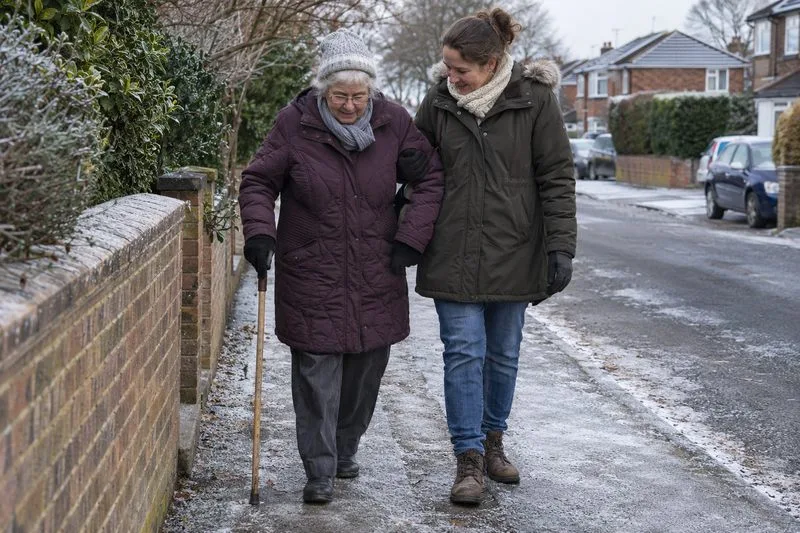
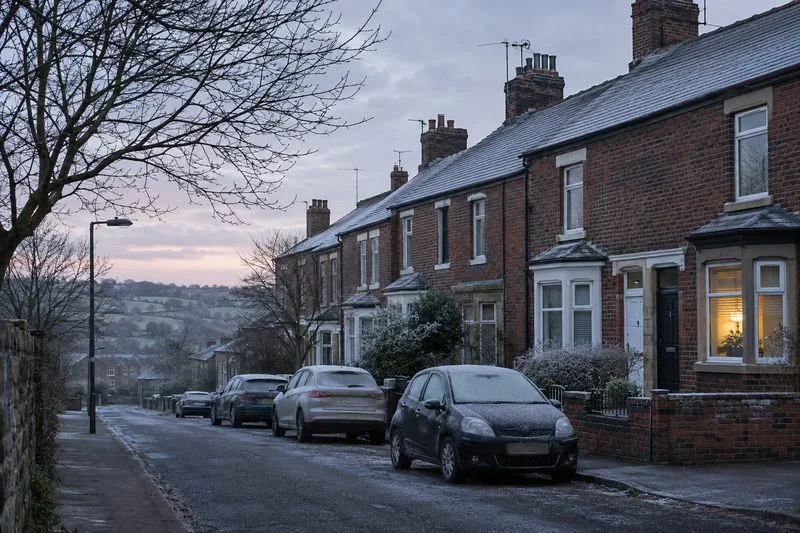
Illustrative image: a companion supports an older adult on a frosty sidewalk; it does not depict a confirmed location or alert scene.
What does a yellow cold-health alert mean?
UKHSA issues Cold-Health Alerts with the Met Office when forecasts suggest cold weather could affect health. The alert color reflects both the possible impact and the likelihood of that impact. A yellow alert is a response-level signal: conditions may be manageable for most people, while people who are especially vulnerable could have difficulty coping. It can also be used when forecast confidence is limited but a more serious outcome remains possible.
It is a health alert, not the same as a Met Office National Severe Weather Warning. UKHSA’s cold-health system applies to England. The Met Office’s separate warnings address broader severe-weather hazards across the UK, including risks to infrastructure and travel. One alert may be in force without an identical warning elsewhere. Read the specific wording and map for each notice rather than assuming a yellow label predicts a particular amount of snow, ice, or disruption.
For this alert, the UKHSA announcement names the North West and West Midlands and gives the alert period as 9 a.m. Thursday to noon Saturday. The live UKHSA dashboard is the place to recheck the current regional status, since alerts can be revised.
Who may face greater health risks in cold weather?
UKHSA highlights adults age 65 and older, people with pre-existing conditions—especially cardiovascular or respiratory disease—and people sleeping rough as groups who may be more affected. England’s public guidance also lists young children, pregnant people, people with limited mobility or a risk of falling, and people living alone or in deprived circumstances among those who may need extra support.
Cold exposure can worsen existing health problems and increase the chance that someone needs care. Icy surfaces add a separate risk of slips and falls, and winter respiratory infections can put additional strain on people already managing long-term illness. A yellow alert is a prompt to plan and check in; it is not a diagnosis or a prediction that any individual will become unwell.
What should people do to protect their health?
UKHSA’s public advice is practical: heat the rooms you use most to a comfortable temperature, aiming for at least 18°C (about 64°F) where possible; wear several light layers; reduce drafts; and keep bedroom windows closed at night. If staying active is safe for you, avoid sitting still for long periods. Do not use unsafe or malfunctioning heating equipment, which can create a carbon monoxide hazard.
Check that relatives, neighbors, or friends who are older, live alone, have a health condition, or have limited mobility have food, medicines, and a way to keep warm. If you are eligible, staying current with recommended winter vaccinations can also reduce the risk of serious respiratory illness. If you feel unwell, contact a pharmacist, your GP, or NHS 111 for advice; call 999 in an emergency. If someone may have hypothermia—signs can include shivering, slow breathing, tiredness, or confusion—seek urgent medical help.
For support with energy costs or keeping a home warm, the government’s cold-weather guidance outlines available advice and support routes. The specific options depend on a household’s circumstances.
Does a yellow cold-health alert mean travel will be disrupted?
No. A cold-health alert alone does not announce road closures, train cancellations, or airport disruption. Those depend on the actual forecast and operating conditions. Check the Met Office’s UK weather warnings for snow, ice, wind, or other hazards in the area and at the time of your journey. Then check your rail operator, National Rail, local transit agency, or airport for service-specific updates.
National Rail notes that snow and ice can affect tracks and electrical equipment, but that general winter risk is not evidence that a particular service is disrupted. Its journey checker and operator updates can show current plans. Recheck shortly before departure, especially for early trips when icy conditions may persist.
If you do travel, allow extra time, wear shoes with good grip, and take medication and warm clothing you may need if a journey takes longer than expected. People at higher risk of illness or falls can consider whether a trip is essential and whether a companion or alternative travel arrangement would make it safer. Follow local advice and do not drive if conditions make the route unsafe.
What could happen next?
Forecasts and alert coverage can change. UKHSA’s announcement says other regions of England were unaffected when it was published, but that status should not be treated as a guarantee for the full alert period. Check the dashboard and local forecast again before making plans. If the cold episode intensifies or the likelihood and expected impact change, authorities may update the alert; any such change should be confirmed through the official dashboard or announcement.
FAQ
Is the yellow cold-health alert for all of the UK?
No. The current UKHSA alert covers the North West and West Midlands of England. The cold-health alert system applies to England; check separate national weather warnings for other parts of the UK.
Should I cancel travel because of the alert?
Not automatically. Check the forecast and your transport operator for actual disruption, then decide based on local conditions and your own health or mobility needs.
When is this alert in force?
It is scheduled from 9 a.m. Thursday, November 12, through noon Saturday, November 14, 2026, in London GMT (UTC+00:00). Check UKHSA’s dashboard for any changes.