Home
» Today
»
How a Hurricane Watch Works: What to Do Before Conditions Change
How a Hurricane Watch Works: What to Do Before Conditions Change
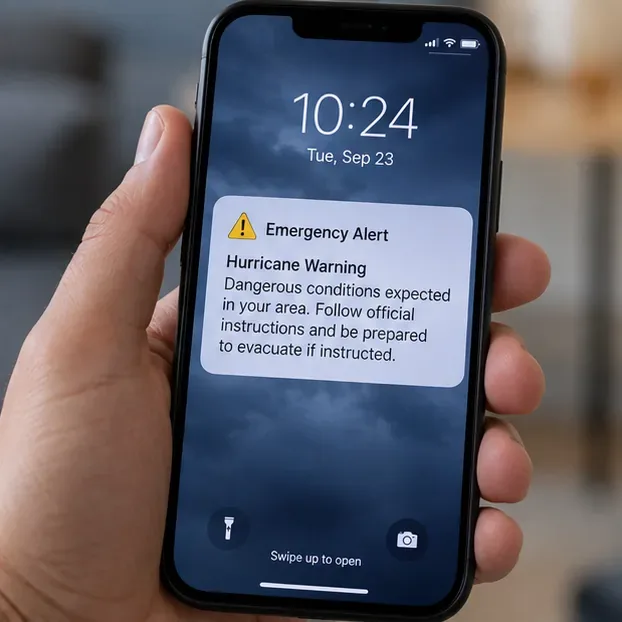
You see “Hurricane Watch” on your phone while the sky outside is still calm. It is easy to wonder whether you should leave immediately, wait for a warning, or simply keep checking the forecast. A watch is the time to make those decisions and finish preparations while roads, power, and weather may still be manageable.
The National Weather Service (NWS) defines a hurricane watch as a notice that sustained winds of at least 74 mph are possible in the specified area. It is generally issued about 48 hours before tropical-storm-force winds are anticipated, because preparing can become difficult once those winds arrive. “Possible” matters: a watch does not promise that hurricane conditions will reach every location inside it, and it does not identify a certain landfall point. It does mean that the risk is high enough to act now. Check the current NWS watch and warning definitions and local instructions.
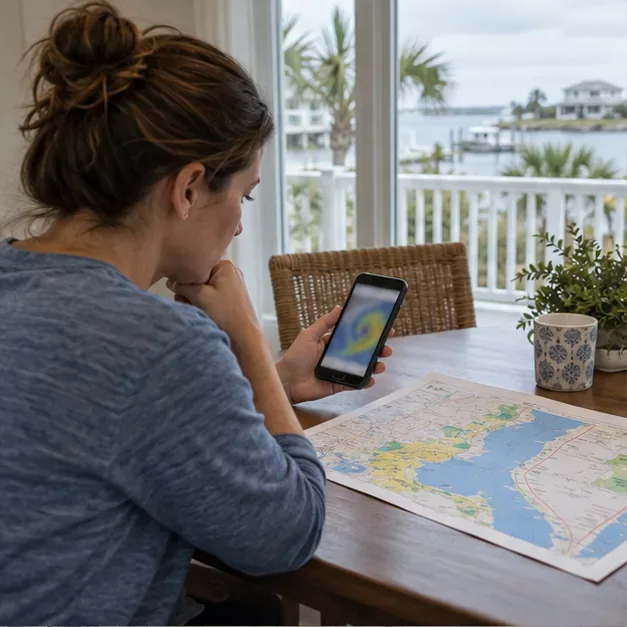
A resident checks an alert and studies a local map before deciding on the next steps.
Why a watch can change your plans
Forecasters issue watches for a defined area when hurricane-force winds could occur there. Forecast tracks and impact zones are uncertain and can shift as new observations arrive. The storm’s centerline is not a boundary for danger: rain flooding, tornadoes, rough surf, and damaging winds can affect places well away from the center or outside a forecast cone. A watch is also not the same as an evacuation order. Local officials determine whether particular neighborhoods should leave based on hazards such as storm surge, flood exposure, building type, and evacuation time.
Keep separate hazards in view. A storm surge watch means life-threatening coastal inundation is possible, generally within 48 hours; a storm surge warning means it is dangerous and expected, generally within 36 hours. These notices can cover different areas from a hurricane wind watch. Inland residents still face heavy rain, freshwater flooding, tornadoes, and power outages. The NWS summarizes these hazards in its hurricane safety guide.
What to do next, from easiest to most time-sensitive
1. Confirm whether your location is covered
Read the alert details rather than relying on a headline or a shared map. Confirm the counties or coastal zones named, when the notice was issued, and the next expected update. Use the National Hurricane Center’s official Atlantic and eastern Pacific forecasts at Hurricanes.gov, your local NWS forecast office, and your local emergency-management agency. Turn on local emergency alerts and keep a battery-powered or hand-crank radio available if you have one. Forecasts may be updated several times daily, and public advisories become more frequent when coastal watches or warnings are in effect.
Do not interpret the forecast cone as a complete map of who could be affected. It shows the probable track of the storm’s center, not the full footprint of wind or flooding. Read local statements for the hazards and timing forecast in your area. NWS hurricane planning guidance recommends knowing local evacuation zones and understanding your home’s exposure before a storm threatens.
2. Decide whether your household needs to evacuate
Find your official evacuation zone and route through your city or county emergency-management website. If authorities issue an evacuation order for your zone, leave when directed; do not wait for hurricane-force winds or for a warning to replace the watch. People in mobile or manufactured homes, low-lying coastal areas, flood-prone neighborhoods, or locations with limited road access may need to move sooner if local officials advise it. If you rely on accessible transport, medical equipment, regular medication, or help from another person, arrange that early. Include pets and service animals in the plan and check which shelters accept them.
If you are outside an evacuation area, do not assume you are automatically safe or that you must leave. Follow local instructions, consider whether your building is sturdy and outside flood risk, and choose a safe place before conditions deteriorate. A watch alone is not a blanket instruction to evacuate; an official local order is the signal to act. When uncertain about your zone or transport, contact local emergency management before roads become busy.
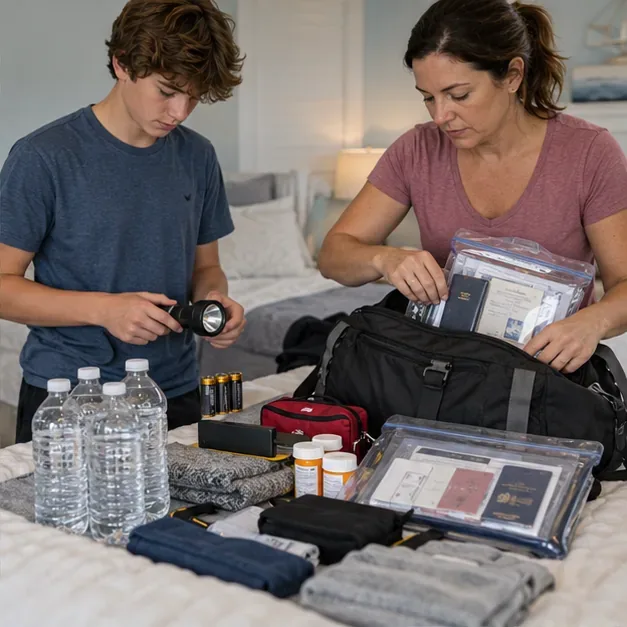
A household gathers water, medicines, batteries, and protected documents in one place.
3. Put essentials together and plan for interruptions
Gather drinking water, ready-to-eat food, medications, first-aid supplies, flashlights, extra batteries, a phone power bank, hygiene items, and supplies for babies, older adults, or pets. Keep identification, insurance information, prescriptions, and important contact details in a waterproof pouch. If you may evacuate, pack the items you cannot replace first and keep the bag near an exit. Fill vehicle fuel tanks or charge an electric vehicle while services remain available, and bring some cash in case card networks or power fail.
Write down an out-of-area contact and a meeting place in case family members are separated. Keep phones charged and check that alerts work; do not rely on a single phone if power or cellular service may fail. For a practical supply list, use the official Ready.gov emergency kit guidance. Adjust the list for your household’s needs rather than assuming one kit fits everyone.
4. Protect the home and remove outdoor hazards
Bring inside patio furniture, trash cans, tools, potted plants, and other loose objects that wind could move. Close shutters or install window protection according to its instructions, secure doors, and clear gutters only if it is safe to do so. Move vehicles away from trees and places that flood. Take photos of property and belongings for your records if there is time. Avoid climbing ladders or doing exterior work once wind and rain make it hazardous. Do not tape windows as a substitute for storm shutters or approved protection.
Residents move furniture and a plant inside before winds make outdoor work unsafe.
5. Leave early if ordered, or prepare a safe room if staying
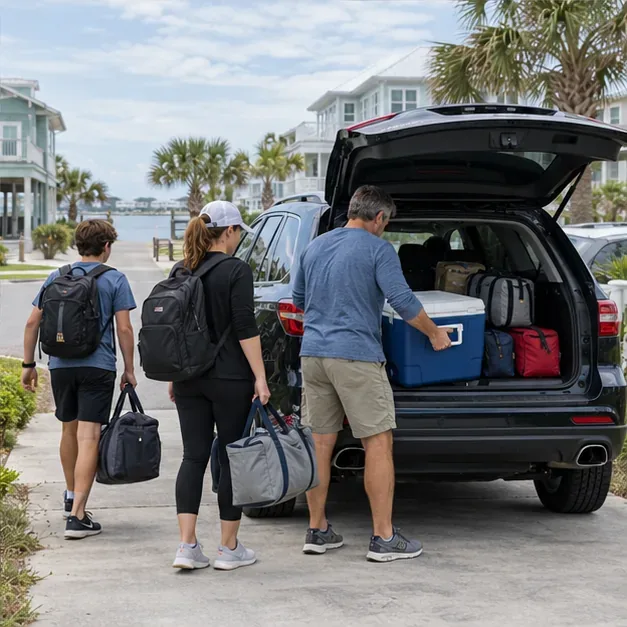
Follow the evacuation route and destination announced by local officials; do not choose a route across a bridge, causeway, or low-water road unless it is confirmed open. Leave early enough to avoid driving in heavy rain, darkness, or gridlock. Never drive or walk through floodwater. If you are told to evacuate, go even if the weather at your home still looks calm: storm surge and dangerous winds can arrive before the center of the storm.
If local officials tell you to shelter in place and your home is outside evacuation and flood zones, move to a small interior room on a lower floor, away from windows. Keep shoes, a flashlight, medications, water, and a charged phone nearby. Know how to receive official updates and follow any instructions to turn off utilities. Do not use a generator indoors, in a garage, or near doors and windows because carbon monoxide can be fatal. Stay inside during the storm’s apparent lull; the eye can be followed by dangerous winds from another direction.
A family loads essentials into a vehicle for an early departure from a coastal neighborhood.
Common mistakes to avoid
Waiting for a hurricane warning to start preparing. A watch is issued because preparations may become unsafe once tropical-storm-force winds begin. Use the watch period to complete tasks.
Assuming “possible” means unlikely enough to ignore. It describes forecast uncertainty, not a guarantee that impacts will miss your address. Keep checking official updates and follow local instructions.
Using the storm centerline as your safety boundary. Rain, surge, wind, and tornado risks extend beyond it. Check hazard-specific local information.
Leaving after roads become hazardous. If officials order evacuation, go promptly. Floodwater can hide road damage, and a small depth of moving water can sweep people away.
Assuming a cleared watch means every hazard is over. Continue monitoring official alerts for rain flooding, storm surge, tornadoes, and dangerous surf even if wind headlines change.
How to check that you are ready
Before you stop preparing, confirm these five things: you know whether your address is in a local evacuation zone; every household member knows where to go and how to reconnect; medications, documents, water, food, and power supplies are accessible; loose outdoor objects and vehicles are addressed while conditions are safe; and you can receive official updates if electricity or cellular service fails. If an evacuation order is issued, follow it immediately and use the route local officials recommend.
A hurricane watch is an early decision window, not a prediction that your neighborhood will definitely experience hurricane-force winds. Use it to check the exact hazard, make a household decision, finish preparations, and leave early if instructed. Keep the latest guidance from the NWS, the National Hurricane Center, and local emergency managers at the center of your plan; weather forecasts can change, and local orders take priority over a general article.