5 Halloween Cocktails That Are Easy to Serve at Your 2026 Bash

Mix five vivid, approachable Halloween cocktails with measured recipes, simple prep tips, and an alcohol-free option for your party guests.
On average, how many liters of air does a person breathe per day? This article will give you the answer to the question of how much oxygen a person breathes per day .
Breathing is such a natural activity that people often don't pay attention to it. We inhale and exhale about 22,000 times a day.
We are powered by breathing. The lungs provide oxygen, the gas that sustains life, to the body. The lungs take in air, then remove the oxygen and send it through the bloodstream, where it is transported to the tissues and organs that allow us to walk, talk, and move.
Our lungs also take carbon dioxide from the blood and release it into the air when we exhale.
Our brain controls how fast our lungs take in air. When we exercise or play, our brain tells our lungs to work faster. When we sleep or rest, our lungs work slower.
Our breath and lungs are precious. We need to protect them.
We breathe (inhale oxygen, exhale carbon dioxide) to survive. So, how much air does the average human body need to breathe each day?
According to statistics, when the body is in a static state, it will breathe 16 times per minute, each time inhaling about 500 ml of air. Accordingly, to meet the body's breathing needs, a person needs 10,000 liters of new air per day.

How to breathe properly to help your body always feel full of energy
Who does not know how to breathe, but most of us breathe unconsciously. In adults, we often breathe through the chest, when inhaling and exhaling, only the chest rises and falls, the volume of the abdomen hardly changes. Natural chest breathing also meets the body's needs. But people can control their breathing to breathe properly to help the body always feel full of energy.
The correct way to breathe is to breathe from the bottom of the lungs. When you inhale, your abdomen and chest expand, and the time to exhale is longer than the time to inhale. This breathing method is called abdominal breathing or deep breathing.
Deep breathing brings many benefits to the body including:
Abdominal breathing technique
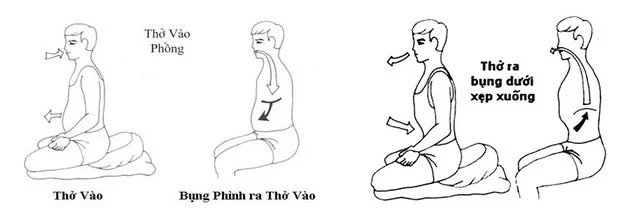
Every day, we should do abdominal breathing 4 times, divided into 2 sets, each time 20 breaths (inhale - exhale). Set 1, 10 deep breaths, pause - breathe normally 10 times, then continue with 10 more abdominal breaths.
Note: During the exercise, you must completely focus on your breathing, without thinking about anything else.
Mix five vivid, approachable Halloween cocktails with measured recipes, simple prep tips, and an alcohol-free option for your party guests.
Find 15 office-friendly Halloween costume ideas for 2026, with practical checks for dress codes, respectful themes, comfort, and workplace safety.
Plan a fun elementary school Halloween party with easy crafts, games, inclusive treats, costume tips, and a sample 75-minute classroom schedule.
Compare realistic side hustles for 2026 by startup cost, fees, flexibility, and income control, with current tax and scam guidance from official sources.
Upgrade your home office ergonomics with current OSHA and NIOSH guidance on chair fit, monitor height, laptop setup, lighting, and movement.
Learn why emotional intelligence matters in leadership, where it helps most, how to strengthen it, and how to tell whether your approach is working.
A practical roadmap for moving into tech without a degree: choose an accessible role, build job-ready skills, prove them with projects, and use hiring feedback to improve.
Build a credible LinkedIn personal brand in 2026 with current profile, content, newsletter, analytics, verification, and visibility guidance from LinkedIn.
Quiet quitting and quiet firing are catchy labels, not diagnoses. Learn what is verified, what depends on context, and what employees and managers can do next.
Fractional executives offer senior leadership without a full-time hire. Learn when the model works, what to ask, and the risks to manage.