As we all know Internet Download Manager (IDM) is a very popular download support program. However, during the process of using IDM, automatically starting the download link on Coc Coc browser makes you feel very uncomfortable.
So what to do in this case? Please refer to the article on how to fix IDM error automatically starting the download link on Coc Coc to comfortably listen to online music on the browser:
Method 1: Set up on Coc Coc browser
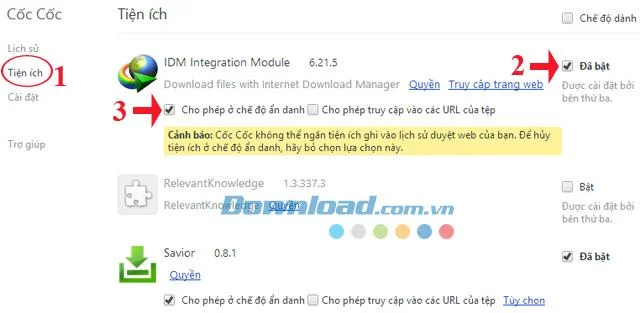
Step 1: Open up Coc Coc browser, click on the Coc Coc icon in the top left corner of the screen, select Settings.
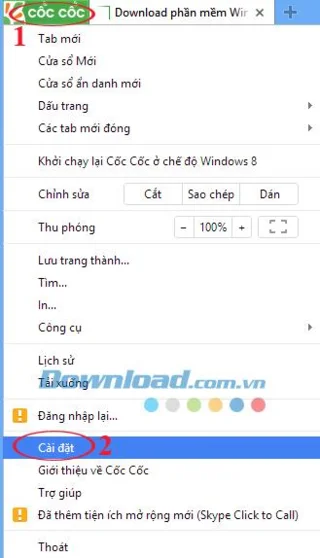
Step 2: Click on Utilities, then navigate to IDM Integration Module, then check the Enabled and Allow in incognito mode box.

Step 3: Then restart Coc Coc browser when surfing the web, you will no longer encounter this situation.
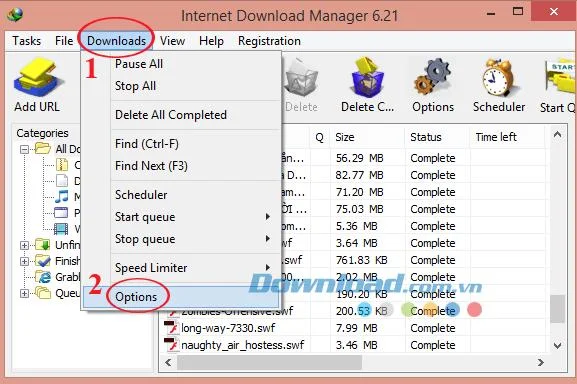
Step 1: Open the Internet Download Manager tool , on the menu bar, click the Downloads tab , then select Options.

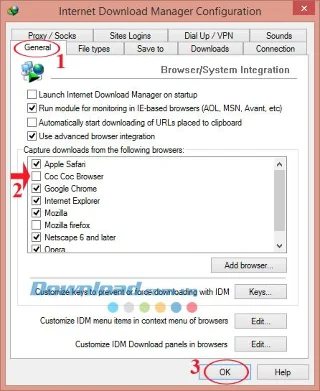
Step 2: The Internet Download Manager Configuration window appears, click the General tab , in the Capture downloads from the following browsers box, clear the Coc Coc Browser check box , then click OK to save the settings.

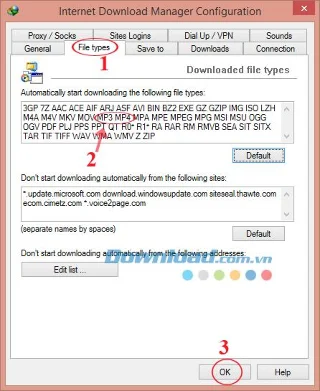
Alternatively, you can click the File types tab , and in the Automatically start downloading the following file types table, delete the file extension that does not need to be downloaded automatically (MP3, MP4). Then click OK to save.

In this table you can also add file formats to download more music and video formats. Thus, you can comfortably listen to music online in the browser without having to download it as before. Very interesting, right?
In addition, you can refer to Orbit Downloader , FlashGet software to support free download.
I wish you successful implementation!