When to Start Decorating for Halloween in 2026

Use a simple 2026 Halloween decorating timeline for indoor décor, outdoor displays, and fresh pumpkins, with practical adjustments for weather and events.
You tell yourself you'll write it down later, but then you forget. That's because memory is unreliable, especially when life gets busy. A good memory habit starts with reminders—they come at the right time to capture those fleeting thoughts.
Table of Contents
We are constantly bombarded with information and other distractions—notifications, emails, ads, and the constant pull of social media. This constant inundation fragments our attention and makes it easy to forget important tasks, ideas, or commitments. Worse yet, great ideas often come when we least expect them.
The journaling habit was inspired by David Allen's Getting Things Done (GTD) method, which emphasizes the importance of putting tasks and ideas into a reliable system as soon as they come to mind to free up mental space.
Although it originated from GTD, journaling is flexible and can be incorporated into any productivity system.
However, a good note-taking habit isn’t about jotting down ideas and to-dos in random notebooks, sticky notes, or apps. That approach often leads to chaos and missing details. Instead, it’s about deliberately and consistently moving everything into a trusted external system that fits your lifestyle and workflow.
This ensures that everything is stored in one central location, making it easy to access, organize, and act on when the time is right. Apple’s Reminders app is a great tool that you can use as a reliable external system to quickly jot down items and improve your personal knowledge management system.
Why? First, it’s free and intuitive, making it accessible to anyone with an Apple device. Second, it syncs across all your Apple devices, so you can jot down ideas on your iPhone on the go and organize them later on your Mac. Third, its simplicity lets you quickly add tasks or notes without getting bogged down in unnecessary features.
To truly unlock the potential of Reminders for quickly jotting down items, it's important to set it up for optimal use. Here's how.
Lists in the Reminders app are a great way to organize and categorize related tasks. The first step to getting started is to create a dedicated Capture or Inbox list — or better yet, rename the default Reminders list.
This step is necessary because the default Reminders list is where tasks are automatically added when using Siri or other methods. So while you can create other custom lists to record items, your tasks won't be automatically recorded there.
Renaming the default Reminders list to something like Inbox or Capture helps clarify its purpose and makes it easier to integrate into your workflow.
Here's how to rename the default Reminders list:
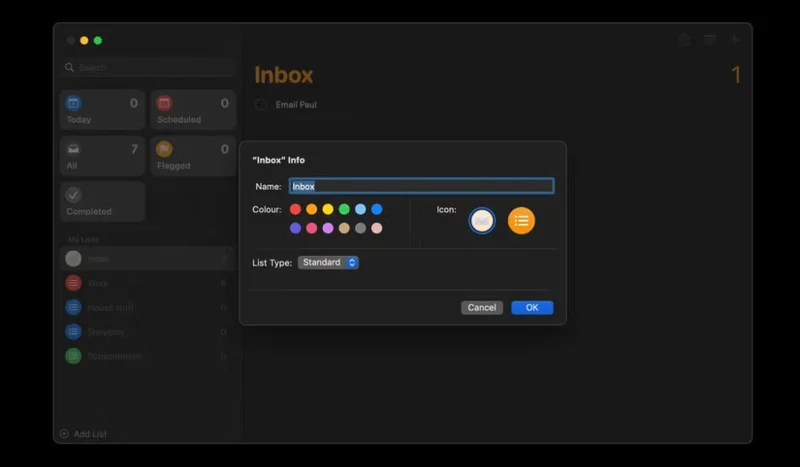
Once your Capture List is set up, it becomes a temporary storage place for all your incoming and pending tasks and ideas. Think of it as a digital dumpster where you can quickly move anything that pops into your head without worrying about immediate organization.
In the future, any time you use Siri, the Reminders widget, a shared sheet, or any other method to add tasks, they will automatically be added to your Inbox or Capture list . From there, you can review and organize them into appropriate lists during your daily or weekly review sessions.
The purpose of recording tasks and ideas is to get them out of your head and into a reliable system so you can focus on what matters most. However, given that you can still forget about those recorded items and end up missing deadlines, the system only works if you continually go back to review and organize what you've recorded.
That's why it's important to schedule a daily or weekly review process to keep your to-do list on track.
This review allows you to review the items you've recorded, clarify their purpose, and organize them into appropriate categories or projects. It also allows you to set deadlines, assign tasks, or remove items that are no longer relevant.
The frequency of your reviews will depend on your workflow and the amount of work you handle. You may prefer a quick daily review or choose a more comprehensive weekly review to plan for. Whatever you prefer, the important thing is to choose a consistent day and time for your reviews and stick to it.
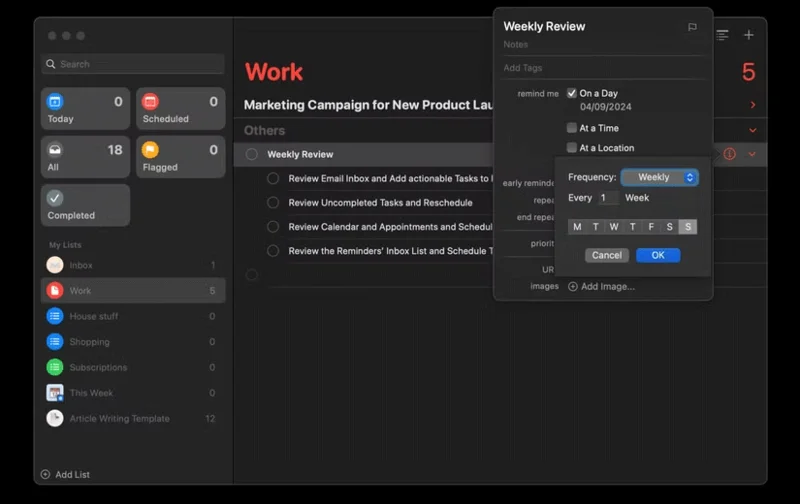
Here's how to schedule daily or weekly reviews in the Reminders app:
By setting up regular review reminders, you create a structured routine that helps you consistently process and organize your recorded items. This also allows you to maintain a neat and organized recording system, reducing mental clutter and approaching each day or week with confidence.
Speed is important when it comes to jotting down tasks and ideas — you want to add items to Reminders as quickly as possible to avoid forgetting them. Reminders offers a number of ways to easily jot down items, including:
While Reminders doesn’t currently offer a system-wide shortcut (like OmniFocus’ Quick Entry shortcut) for quickly adding tasks, Spotlight offers a decent alternative. While this method involves a few extra steps compared to the dedicated shortcut, it’s still a reliable way to quickly open Reminders and start jotting down tasks.
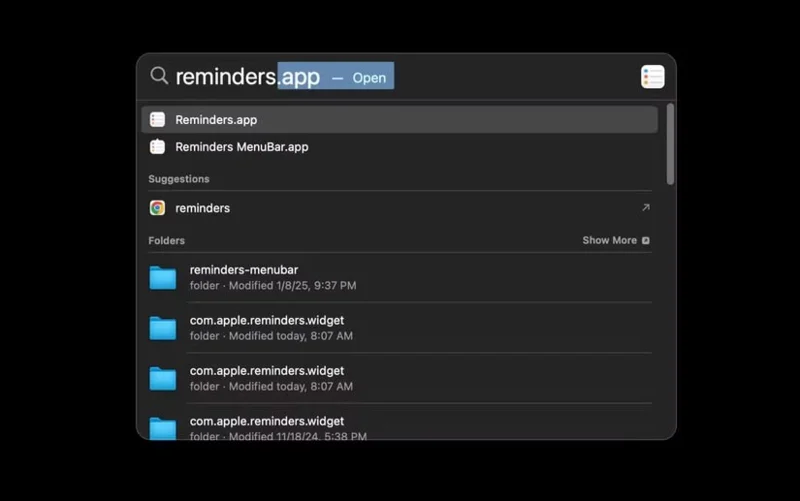
To open Reminders using Spotlight, press Command + Space on your Mac, then type Reminders and press Enter to open the app and add your task.
Siri is one of my favorite ways to jot down items in Reminders, especially when my hands are full. Just activate Siri by saying, Hey Siri, followed by your task. For example:
If you've renamed the default Reminders list to Capture or Inbox (as described above), any tasks added through Siri will automatically go straight to this list.
Adding interactive widgets to your Mac desktop creates visual shortcuts that make it easy to access your favorite tools. Adding the Reminders widget to your desktop lets you quickly view, check, and open apps.
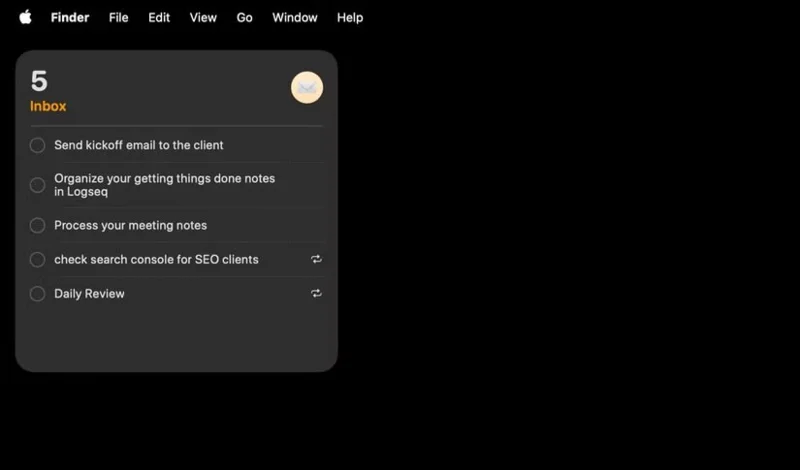
To add the Reminders widget to your Mac desktop, Control - click your desktop wallpaper and select Edit Widgets to open the widget browser. Search for Reminders , then choose the widget size you like and drag it to your desktop.
While the Reminders widget primarily lets you view and check completed tasks directly, you can also click the widget to quickly open the Reminders app and add new items as usual.
Good note-taking habits are a productivity hack that can help you regain mental clarity and focus on what matters most. With these tips, you can easily use the Reminders app to take notes and organize tasks on your Mac.
Use a simple 2026 Halloween decorating timeline for indoor décor, outdoor displays, and fresh pumpkins, with practical adjustments for weather and events.
Mix five vivid, approachable Halloween cocktails with measured recipes, simple prep tips, and an alcohol-free option for your party guests.
Find 15 office-friendly Halloween costume ideas for 2026, with practical checks for dress codes, respectful themes, comfort, and workplace safety.
Plan a fun elementary school Halloween party with easy crafts, games, inclusive treats, costume tips, and a sample 75-minute classroom schedule.
Compare realistic side hustles for 2026 by startup cost, fees, flexibility, and income control, with current tax and scam guidance from official sources.
Upgrade your home office ergonomics with current OSHA and NIOSH guidance on chair fit, monitor height, laptop setup, lighting, and movement.
Learn why emotional intelligence matters in leadership, where it helps most, how to strengthen it, and how to tell whether your approach is working.
A practical roadmap for moving into tech without a degree: choose an accessible role, build job-ready skills, prove them with projects, and use hiring feedback to improve.
Build a credible LinkedIn personal brand in 2026 with current profile, content, newsletter, analytics, verification, and visibility guidance from LinkedIn.
Quiet quitting and quiet firing are catchy labels, not diagnoses. Learn what is verified, what depends on context, and what employees and managers can do next.








