Close Matrix Sign-Ups or Require Invite Tokens on Synapse
Stop open account creation on a self-hosted Synapse server, or keep sign-ups invite-only with limited-use registration tokens.
Did you notice that when booting the computer, Windows 10 does not play any boot sound? The boot sound that is present on many versions of Windows has been removed by Microsoft on Windows 10. Although you can make the audio playback system boot by tweaking some settings, but what you have Just a customized computer voice message.
Download Windows 10 S
Download Windows 10 Creators Update
So the following article will show you how to create your own custom voice message to play each time you start your Windows 10 computer.
To make the Windows 10 system play a custom voice message at startup, you need to create a Visual Basic Script in Notepad. This is not difficult at all, you just need to follow the instructions below.
First, open Notepad by searching for Notepad in the Start menu or typing notepad in the Run dialog box . Now, simply copy and paste the following code into the blank Notepad file.
dim speech
welcome = "Welcome, ... .."
set speech = CreateObject ("sapi.spvoice")
speech.speak welcome
You can change "Welcome, ..." with another message at will. Just don't forget to include quotes.
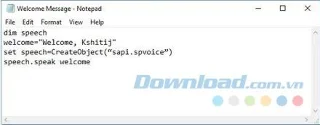
Next, save the file with any name, but make sure you save it with the .vbs extension . If you try to open this file, you will hear your customized voice message.
To play this voice message at startup, you need to move this file to the Windows Startup folder . You can do this by opening the Run dialog box ( Windows + R ) and entering shell: start without quotes.
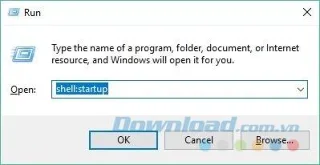
This will open the Startup folder . Now, you have moved your file into this directory.
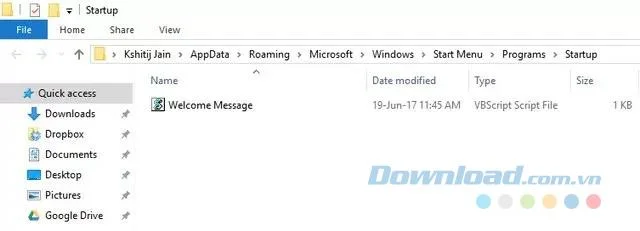
That's it From now on, every time you log in to Windows, you will hear greetings using your custom voice message.
Now that you know how to set up a custom voice message on Windows 10 at startup, you can go ahead and start experimenting with everything you want.
Stop open account creation on a self-hosted Synapse server, or keep sign-ups invite-only with limited-use registration tokens.
Clear Element's unverified-session warning using a trusted device or recovery key, with checks that protect your encrypted chat history.
Distinguish database lock contention from expired WebDAV locks, then choose and configure the right ownCloud 10 fix.
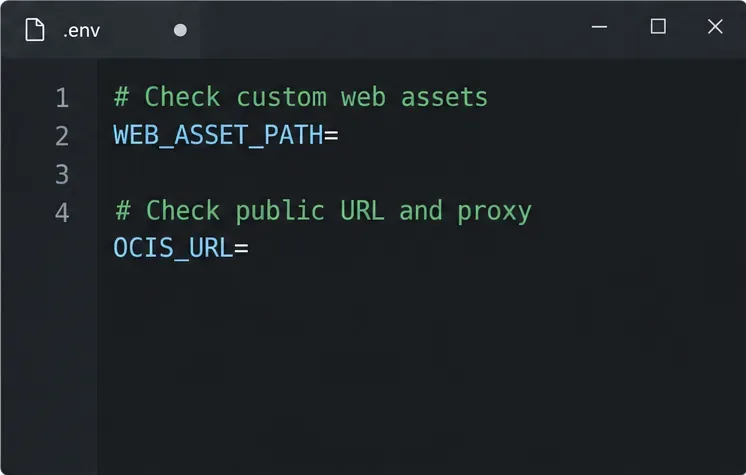
Trace a blank ownCloud Web screen to browser cache, missing web assets, service errors, or reverse-proxy URL settings with targeted checks.
Set ownCloud’s web PHP memory limit, restart the matching service, and verify the active value without confusing it with CLI settings or upload limits.
Find out whether MySQL, PHP, socket settings, or database permissions are blocking ownCloud 10, then verify a safe fix.
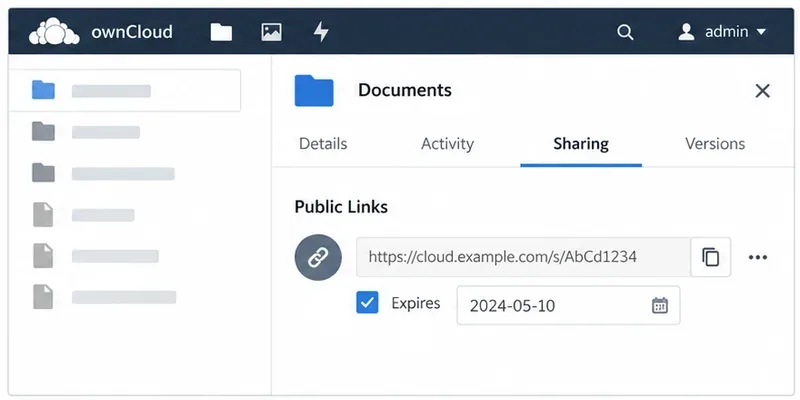
Make public link expiration mandatory in ownCloud Classic, set a maximum lifetime, and check existing shares that may need separate cleanup.
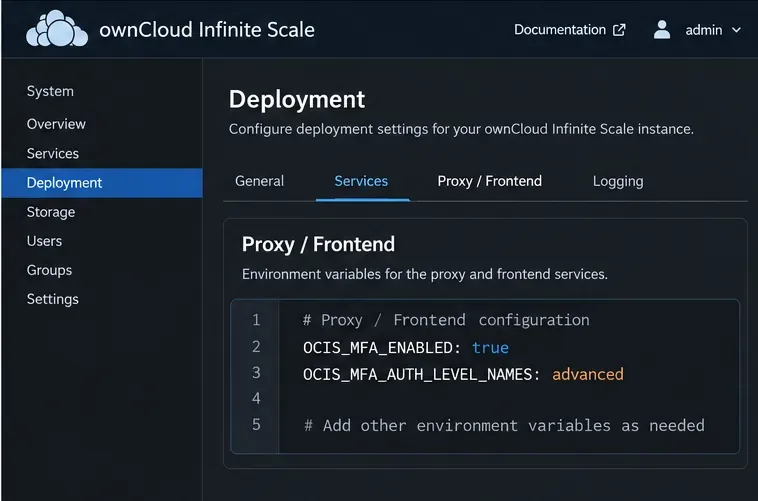
Enable TOTP through Keycloak, enroll users safely, and understand when Infinite Scale’s route-level MFA settings apply.
Check whether the issue is an OC10 and 7.x compatibility break or a damaged CSync journal, then apply the right fix without deleting synced files.
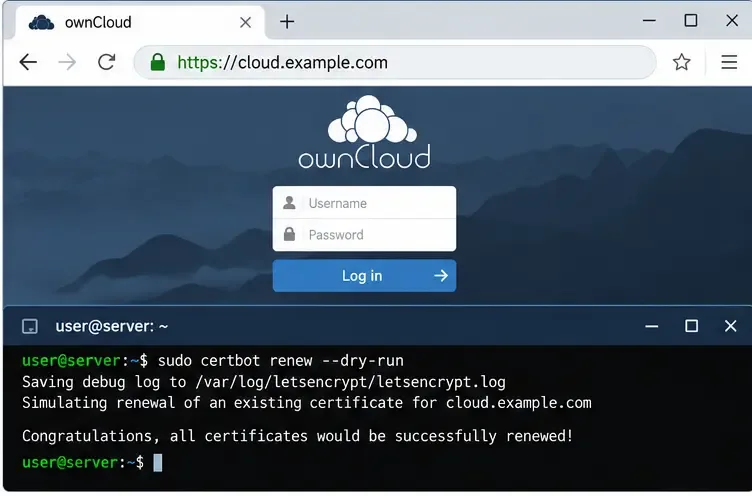
Choose HTTP-01 or DNS-01, configure an ownCloud reverse proxy, and verify Certbot renews HTTPS certificates automatically.